- The declaration was signed by 18 clerics who claimed to be from the Jamiat Ulema Islam religious party, but the JUI distanced itself from it
- It comes less than two weeks before Pakistan goes to national polls and candidates, including women, make last-ditch efforts to sway voters
PESHAWAR: A group of clerics in Pakistan’s northwestern Upper Kohistan district on Friday declared in a decree that women’s campaigning for votes ahead of the upcoming national elections was “against the Islamic law.”
The decree comes less than two weeks before Pakistan goes to national elections on Feb. 8 and the candidates, including women, make last-ditch efforts to sway voters in their constituencies.
The six-point declaration, seen by Arab News, was signed by 18 clerics who claimed to be from the Jamiat Ulema Islam (JUI) religious party, but the JUI distanced itself from the decree.
“Voting for a candidate who has any ideology against the Islamic system is a false testimony, which is a major sin,” it read. “Taking women to the homes of voters to pressurize them is against Sharia (Islamic law).”
The decree further said that voting in return for money was the “worst kind of bribery” and differentiating between national and provincial assembly votes was against the “Jamiat’s ideology.”
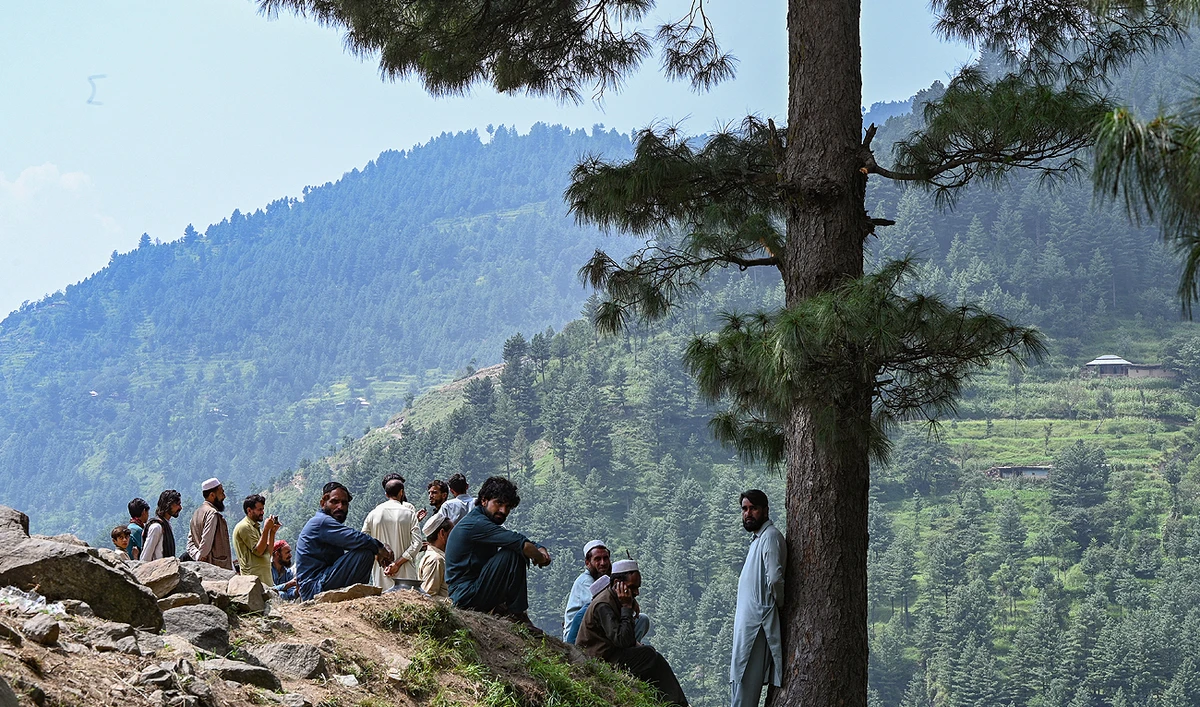
Kohistan, which comprises Upper Kohistan and Lower Kohistan districts, is a conservative region in Pakistan’s Khyber Pakhtunkhwa (KP) province where women are often forced to live within the confines of strict tribal norms.
Three women candidates, including two backed by former prime minister Imran Khan’s Pakistan Tehreek-e-Insaf (PTI) party, are currently running for provincial assembly seats in the Upper Kohistan district.
They include Tehmina Faheem and Momina Basit, who are backed by the PTI, and Sannaya Sabeel.
Reached for comment, JUI’s KP general-secretary Maulana Atta-ul-Haq Darwaish distanced his party from the decree.
“This (decree) is not the stance of the JUI but it could be the wish of some individuals and tribal members,” he told Arab News. “This is simply not the policy of the JUI to stop women from electioneering or campaigning.”
Darwaish noted that his party had been urging women to vote on the election day and as per the Election Commission of Pakistan’s (ECP) rules, it had given tickets to at least 5 percent woman candidates to compete in the general elections.
“People in Kohistan areas live under strict tribal norms and make their decisions through jirgas (village councils), so the said decree could be based on tradition and local norms rather than a decision of Jamiat-e-Ulema-Islam,” he said.
The Elections Act, 2017 ensures the participation of women in the electoral process in the South Asian country.
Section 9 of the act says that “if the turnout of the women voters is less than 10 percent of the total votes polled in a constituency, the Commission may presume that the women voters have been restrained through an agreement from casting their votes and may declare, polling at one or more polling stations or election in the whole constituency, void.”
“A political party shall make the selection of candidates for elective offices, including membership of the Majlis-e-Shoora (Parliament) and Provincial Assemblies, through a transparent and democratic procedure and while making the selection of candidates on general seats shall ensure at least five percent representation of women candidates,” reads its section 206.
During the 2018 national elections, woman voter turnout in the National Assembly constituency NA-11 in Kohistan was recorded at 27.94 percent, while it was 26.97, 36.71 and 14.95 percent respectively in PK-25, PK 26 and PK 27 provincial assembly constituencies in the area, according to Free and Fair Election Network (FAFEN), an advocacy group of civil society networks committed to strengthening democracy in Pakistan.
Sohail Ahmad, who speaks for the ECP’s Khyber Pakhtunkhwa chapter, said no one could stop women from canvassing and they would take action, if a complaint was filed against the decree or the individuals who had issued it.
“It is the duty of the ECP to provide equal opportunity to every citizen to participate in the elections,” he said. “No one can stop women from participating in the election process.”