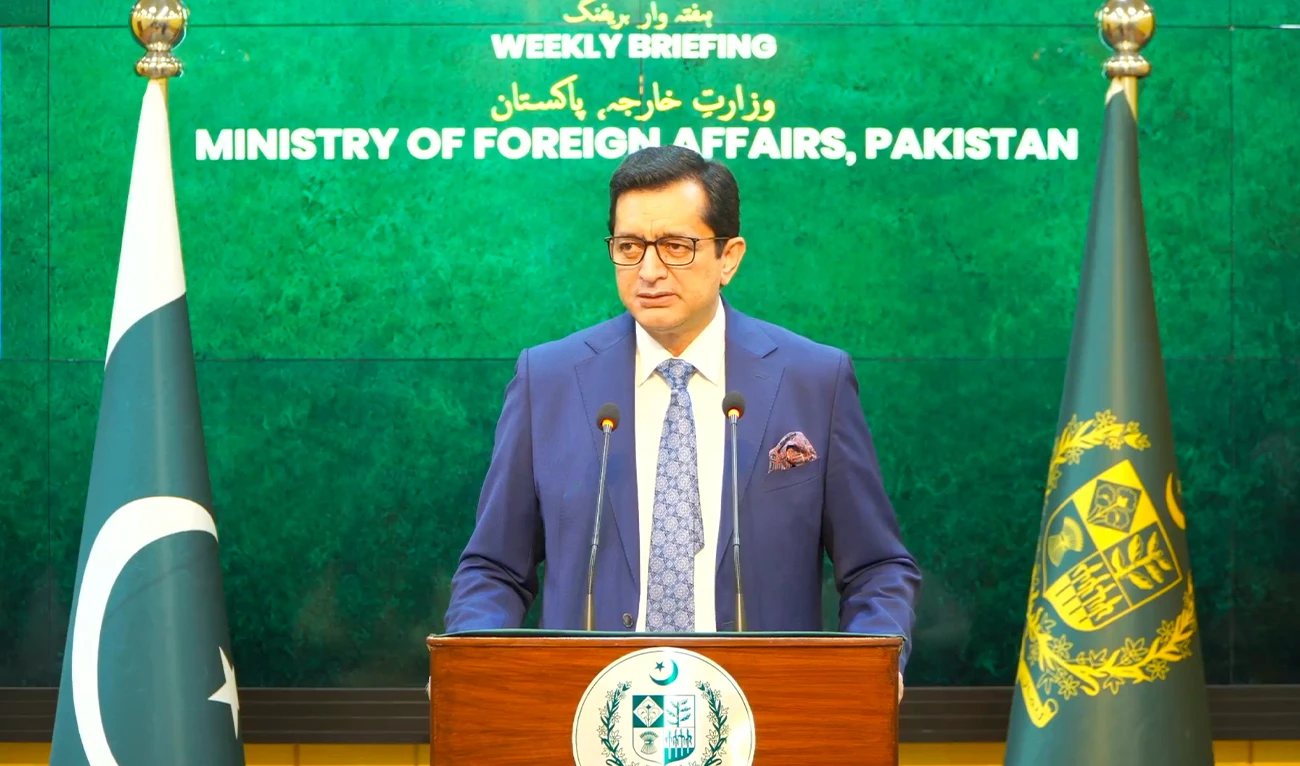
- Pakistan writes letter to UN Alliance of Civilizations High Representative Miguel Angel Moratinos
- India’s Hindus say site was birthplace of Lord Ram long before Muslims build the Babri Masjid in 1528
ISLAMABAD: Pakistan has used the platform of the Organization of Islamic Cooperation (OIC) to reiterate its condemnation of India’s consecration of a grand temple to the Hindu god Lord Ram on a site believed to be his birthplace but where a 16th century mosque was demolished in 1992 in the Indian city of Ayodhya, state-run APP news agency reported on Thursday.
For decades, the temple site was bitterly contested by Hindus and minority Muslims, leading to nationwide riots in 1992 that killed 2,000 people, mainly Muslims, after a Hindu mob destroyed a 16th-century mosque that had stood there.
India’s Hindus say the site is the birthplace of Lord Ram, and was holy to them long before Muslim Mughals razed a temple at the spot to build the Babri Masjid in 1528. In 2019, the Supreme Court handed over the land to Hindus and ordered allotment of a separate plot to Muslims where the construction of a new mosque is yet to begin.
On Monday, Indian Prime Minister Narendra Modi led a grand consecration of the Ram Temple.
“Reiterating its condemnation of the recent consecration of ‘Ram Temple’ on the demolished Babri Mosque’s site, Pakistan has urged the top official for the UN Alliance of Civilizations (UNAOC) to play his part for the protection of Islamic sites in India,” APP reported on Thursday, quoting Pakistan’s Permanent Representative to the UN, Munir Akram as telling an OIC Ambassadorial meeting on Wednesday.
“The Pakistani envoy shared with OIC colleagues a letter he addressed to the UNAOC High Representative, Miguel Angel Moratinos, in which he said that the event in Ayodhya marked a ‘disturbing rise in Hindu majoritarianism in India’,” APP added.
“This trend poses a significant threat to the social, economic, and political well-being of Indian Muslims, as well as to the harmony and peace in the region,” the letter, quoted by APP, said.
“Regrettably, this is not an isolated incident, as other mosques, including the Gyanvapi Mosque in Varanasi and the Shahi Eidgah Mosque in Mathura, face similar threats of desecration and destruction.”
Munir called for the UNAOC’s “urgent intervention” for the protection of religious sites in India.
“Under your esteemed leadership, the United Nations Alliance of Civilizations must play a crucial role in safeguarding Islamic heritage sites and securing the rights of religious and cultural minorities in India,” Munir said.
“The Secretary-General has entrusted you to implement the action plan for the protection of religious sites. We urge you to expedite efforts to implement the action plan and ensure the safeguarding of religious sites in India.”
According to APP, other OIC ambassadors acknowledged the importance of the issue and brought up attacks on mosques in some European countries. The Palestinian Permanent Representative to the UN, Riyadh Mansour, drew attention to the Israeli desecration of the Al-Aqsa mosque and the demolition of other mosques and churches in the occupied Palestinian territories.
The meeting concluded with a decision to put the issue on the agenda of the next OIC ambassadorial meeting.
Reacting to Monday’s consecration, the Pakistani foreign office had said a temple built on the site of a demolished mosque would remain “a blot on the face of India’s democracy for the times to come.”
“The developments of the last 31 years, leading to today’s consecration ceremony, are indicative of growing majoritarianism in India,” the Pakistani foreign office statement said, condemning Monday’s consecration. “These constitute an important facet of the ongoing efforts for social, economic and political marginalization of the Indian Muslims.”
Nearly 8,000 people were invited to Monday’s ceremony, while more than 10,000 police personnel guarded the city of 3 million. Security was also stepped up nationwide, especially in cities and towns that have suffered past Hindu-Muslim tension and strife.
The temple opened to the public on Tuesday this week, and its management expects 100,000 visitors each day for the next few months.