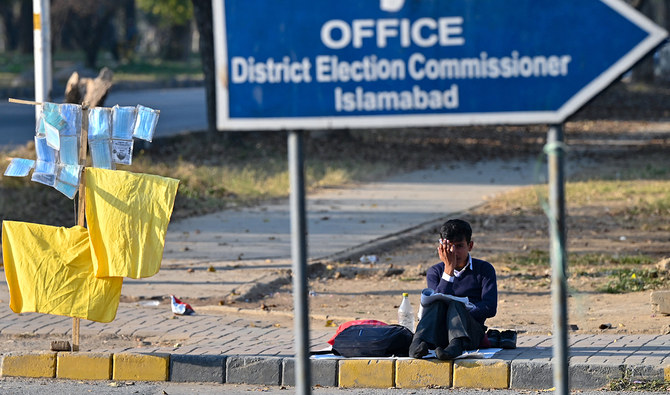
ISLAMABAD: Pakistan has witnessed a concerning surge in the number of out-of-school children that has exceeded 26 million in the past five years, according to a report released on Sunday, which highlights a dire state of access to education in the South Asian country.
The count has risen from 22.02 million out-of-school children in the country in 2016-17, the Pakistan Institute of Education, a subsidiary of the Pakistani education ministry, said in the Pakistan Education Statistics Report for 2021-2022.
The number accounts for 39 percent of all children of school-going age in the South Asian country, according to the report, which is issued after every five years. While there has been an increase in the actual number of out-of-school children, their percentage has dropped by 5 percent percent from 44 percent in 2016-17.
“In Pakistan, 26.2 million children are deprived of going to school,” it said, adding that of these out-of-school children, 11.73 million were in Punjab, 7.63 million in Sindh, 3.63 million in Khyber Pakhtunkhwa (KP) and 3.13 million in Balochistan.
Experts identify population growth, lack of localized strategies, and economic issues as the main causes behind the increase in the number of out-of-school children in the country.
“Despite a marginal improvement in school enrolment, the overall increase in population has outpaced this improvement, resulting in a rise in the absolute number of out-of-school children,” Arshad Mirza, a former federal education secretary, told Arab News.
“Education, being a provincial subject, warrants heightened emphasis, with financial sharing among provinces based on enrolment data to serve as both an incentive and a potential quick fix.”
Yasir Dil, an education advocacy specialist, attributed this staggering number of out-of-school children to poverty and economic hardships that forced many families to prioritize work over education for their children.
“Lack of adequate and equitable financing for education resulted in insufficient and unequal provision of schools, teachers, learning materials and infrastructure, along with socio-cultural barriers and norms that discourage or prevent girls, children with disabilities, ethnic and religious minorities, and other disadvantaged groups from attending school,” he told Arab News.
To address these challenges, Dil said, a comprehensive and coordinated advocacy strategy was needed at the government, private and individual levels. “At the government level, there is a need to increase and allocate more resources for education, especially for the most underserved areas and populations,” he said.
At the private level, there was a potential to leverage the role of non-state actors, such as civil society organizations, private schools, media, and the corporate sector, in providing alternative and complementary education opportunities, raising awareness, mobilizing public support, and holding the government accountable for its commitments, according to Dil.
Dr. Muhammad Waqas Kaleem, a faculty member at the Quaid-e-Azam University in Islamabad, said the federal and provincial governments should formulate localized strategies, tailored to the unique traditions, culture and issues of each area, to enhance the literacy rate and decrease the number of out-of-school children.
“The issues causing out-of-school children in Balochistan are different from Punjab, similarly [they are] different from each other in other areas,” he told Arab News. “So, the strategy should be area-specific so that it can address real issues.”


![]()

Pakistan out-of-school children exceed 26 million amid population growth, economic hardships
Short Url
https://arab.news/27req
Pakistan out-of-school children exceed 26 million amid population growth, economic hardships
- Of them, 11.73 mln are in Punjab, 7.63 mln in Sindh, 3.63 mln in Khyber Pakhtunkhwa, and 3.13 mln in Balochistan
- Education experts call for targeted strategies to meet local challenges in order to increase enrolment in schools


Latest updates



Recommended


© 2026 SAUDI RESEARCH & PUBLISHING COMPANY, All Rights Reserved And subject to Terms of Use Agreement.