

Health ‘red lights are flashing already for the Middle East,’ GAIN’s executive director tells Arab News

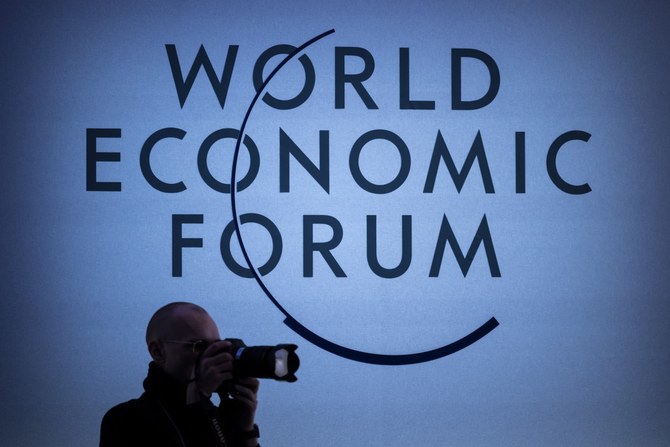
A session of the World Economic Forum (WEF) meeting in Davos (AFP)
Short Url
Updated 19 January 2024
Follow

Health ‘red lights are flashing already for the Middle East,’ GAIN’s executive director tells Arab News

  • Total of 3bn people worldwide cannot afford a healthy diet

DAVOS: Most of the risk factors associated with premature mortality and morbidity, such as obesity, diabetes, and hypertension, are related to what people eat, said Lawrence Haddad, executive director of the Global Alliance for Improved Nutrition.

A diet rich in sugar, salt, or trans fats, combined with portion sizes, is the No. 1 killer and that’s a big problem, he told Arab News during the World Economic Forum in Davos.

“The red lights are flashing already for the Middle East” and it is important for the region to move “towards a healthier diet and a food production system that’s more diverse to protect against shocks,” said Haddad.

The world is currently at the intersection of food systems and nutrition, and people usually think about one or the other, but GAIN aims to connect the two, he said, adding: “Some 3 billion people worldwide cannot afford a healthy diet, which is a massive problem.

“Malnutrition is generated by three things: people not eating enough food; people not eating enough of the right food; and people eating too much of the wrong food.”

Malnutrition tends to be hidden until it is too late. For example, in the US, more people have their legs amputated due to diabetes than from war, he said.

Obesity is a growing concern both in the region and globally. There are multiple reasons for it, such as the affordability of healthier foods, the environment, and marketing.

Haddad said that eating habits and food preferences were hard to change because they are set early on in life, so schools have to become an incubator for good eating habits.

Additionally, he said: “Making healthier foods more affordable is a big issue, but there are some foods that are healthy, and affordable, but not cool.”

Quinoa and kale, for example, are basic, healthy and affordable foods that became popular due to social media and marketing.

Haddad added: “There are ways in which you can reset, reboot, and valorize healthier foods.

“The private sector is brilliant at selling you things you don’t need. We need to get them more involved in making healthy foods desirable.” 

Part of GAIN’s work is in connecting the private and public sectors.

Haddad said: “The public sector is very important to set the rules of the game, but the private sector is the engine of our food system … it is the food system, whether it’s producers, retailers, processors, wholesalers, refrigeration, transport, marketing, or finance.”

The nonprofit has offices in eight African and four Asian countries and is currently in talks with the Islamic Development Bank with plans to enter the Middle East.

Haddad said: “We would very much like to work in the Middle East. Honestly, it’s just a question of how we break into that space and begin to develop the relationships with governments, businesses and funders.”


Saudi minister at Davos urges collaboration on minerals

Global collaboration on minerals essential to ease geopolitical tensions and secure supply, WEF hears. (Supplied)
Updated 20 January 2026
Follow

Saudi minister at Davos urges collaboration on minerals

  • The reason of the tension of geopolitics is actually the criticality of the minerals

LONDON: Countries need to collaborate on mining and resources to help avoid geopolitical tensions, Saudi Arabia’s minister of industry and mineral resources told the World Economic Forum on Tuesday.

“The reason of the tension of geopolitics is actually the criticality of the minerals, the concentration in different areas of the world,” Bandar Alkhorayef told a panel discussion on the geopolitics of materials.

“The rational thing to do is to collaborate, and that’s what we are doing,” he added. “We are creating a platform of collaboration in Saudi Arabia.”

Bandar Alkhorayef, Saudi Minister of Industry and Mineral Resources 

The Kingdom last week hosted the Future Minerals Forum in Riyadh. Alkhorayef said the platform was launched by the government in 2022 as a contribution to the global community. “It’s very important to have a global movement, and that’s why we launched the Future Minerals Forum,” he said. “It is the most important platform of global mining leaders.”

The Kingdom has made mining one of the key pillars of its economy, rapidly expanding the sector under the Vision 2030 reform program with an eye on diversification. Saudi Arabia has an estimated $2.5 trillion in mineral wealth and the ramping up of extraction comes at a time of intense global competition for resources to drive technological development in areas like AI and renewables.

“We realized that unlocking the value that we have in our natural resources, of the different minerals that we have, will definitely help our economy to grow to diversify,” Alkhorayef said. The Kingdom has worked to reduce the timelines required to set up mines while also protecting local communities, he added. Obtaining mining permits in Saudi Arabia has been reduced to just 30 to 90 days compared to the many years required in other countries, Alkhorayef said.

“We learned very, very early that permitting is a bottleneck in the system,” he added. “We all know, and we have to be very, very frank about this, that mining doesn’t have a good reputation globally.

“We are trying to change this and cutting down the licensing process doesn’t only solve it. You need also to show the communities the impact of the mining on their lives.”

Saudi Arabia’s new mining investment laws have placed great emphasis on the development of society and local communities, along with protecting the environment and incorporating new technologies, Alkhorayef said. “We want to build the future mines; we don’t want to build old mines.”