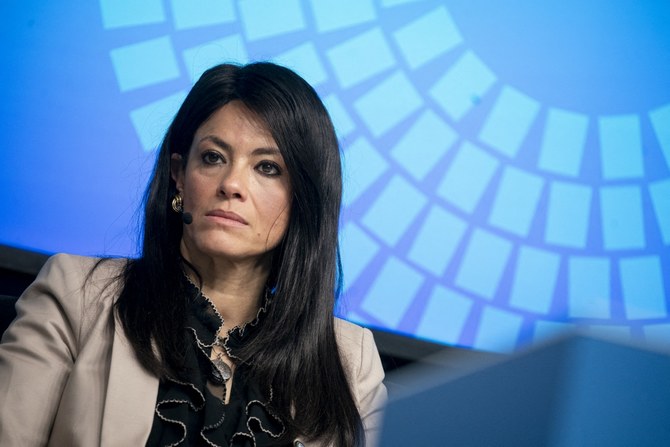

LONDON: Egypt’s Minister of International Cooperation Rania Mashat has issued a warning about the slow pace of international action in addressing the challenges of climate change.
Despite acknowledging a growing momentum in the conversation, she emphasized the need for swifter responses from policymakers and the private sector.
“We are not as fast as we should (be) when it comes to policymakers, private sector, etc. I think that the (climate) discussion has been (going on) for a while but it’s picking up speed now and getting louder,” she said.
Speaking at The Hub Davos 2024, on the sidelines of the World Economic Forum in Switzerland, during a panel titled “Accounting for Nature: Time to Re-balance the Equation,” Mashat argued that the move for change was gaining speed, driven in part by the increasing economic draw of investments in climate change.
She highlighted the emerging trend of nature-related issues becoming an economic imperative.
Much like the gender gap phenomenon, “where everyone wants to close the gap due to its economic outcomes and dividends, (…) our discussion on nature is moving in that direction,” she said.
Mashat highlighted the positive outcomes of the two COPs organized in Egypt in 2022 and Dubai in 2023, emphasizing heightened awareness around issues affecting the region, not only in biodiversity but also economically.
Addressing the economic repercussions of environmental degradation, particularly in sub-Saharan Africa, she noted the economic costs associated with deforestation, disappearing land due to droughts, and pollution.
“If you are in a country that relies on tourism, when your coral reefs disappear, you’re going to lose so many jobs, and the economy is going to suffer so much, let alone the amount of money you need to invest to try and bring it back up,” she said.
In discussing potential actions to address these challenges, Mashat emphasized the need for increased awareness, quantification of nature lost, strengthened government policies for nature protection, and enhanced collaboration with multilateral development institutions.
Proposing innovative solutions, she advocated for countries to invest in nature at a level that was both “conducive and helpful.”
The minister also advanced the concept of “resilience credits,” a carbon credits-type financial instrument where buyers pay companies to take action to reduce greenhouse gas emissions.
Mashat said that the idea was being considered by the Egyptian government and that she had been working with a group where “we’re trying to see how we can monetize these (climate) investments, these assets, so that we protect them.”