

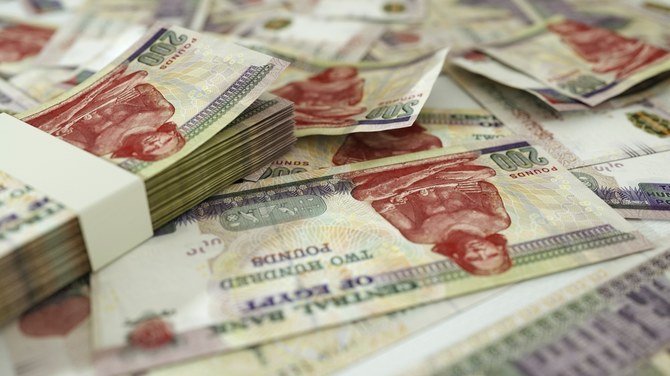

RIYADH: Egypt’s budget attained a primary surplus of 150 billion Egyptian pounds ($4.9 billion) during the second half of 2023, the country’s top finance official said.
The total deficit for this period stood at 4.95 percent of gross domestic product, said Minister of Finance Mohamed Maait.
A primary budget surplus represents the difference between a government’s current revenue and spending, excluding interest payments on its debt. This metric serves as an indicator of fiscal health.
Egypt’s financial year starts in July and concludes in June, meaning these figures cover the first six months of the country’s spending plans.
As for the growth rate of expenses and revenues, Maait said the revenues achieved an annual increase of about 41.6 percent during the first six months of the 2023-2024 fiscal year, and the total tax revenues increased at a yearly maturation rate of 43.4 percent, while other revenues registered a growth of 36.4 percent.
Furthermore, the minister mentioned the rise in the wages and salaries of employees regarding the recently approved increases, adding that sufficient allowances have been provided for support and social protection programs, including allocations for the payment of dues to the Insurance and Pension Fund and subsidies for food commodities, as well as spending on the health and education sectors.
Maait added that the period mentioned above has, in general, witnessed continued improvement in the expenditures, apart from the debt service bill.
The finance minister clarified that there is an annual rise in total expenditures by 56 percent. This pertains to allocations for government investments, the insurance and pension fund, monthly installment dues, and cash support for the Takaful and Karama social protection programs, showing an annual growth rate of 14 percent.
He further noted that expenses for the education sector increased by 16 percent, adding that supporting food commodities, medical supplies and health workers saw an annual growth rate of 36 percent.
Meanwhile, Moody’s credit rating agency said, in its report on Middle East and North Africa for 2024, that finances are generally stable, but weakest sovereigns will continue to face fiscal and liquidity strains.
It highlighted that it expects most MENA governments to run modest fiscal deficits or surpluses in 2024, with debt relatively stable as a percentage of GDP, but generally, the analyst added, still higher than pre-pandemic.
“Fiscal, debt and liquidity risks will largely be contained for the hydrocarbon exporters as well as Morocco and Jordan. By contrast, we expect Egypt will face significant debt affordability and liquidity strains as external imbalances drive currency depreciation and high-interest rates,” Moody’s said in its report.
The agency further anticipated that 60 percent of Egypt’s revenue would continue to be absorbed by interest payments in the fiscal year ending June 2024, leaving the government with minimal budgetary flexibility to respond to shocks, including any stemming from the military conflict between Israel and Hamas.
Moody’s added that Egypt also faces external financing gaps largely because of sizeable external repayments.


