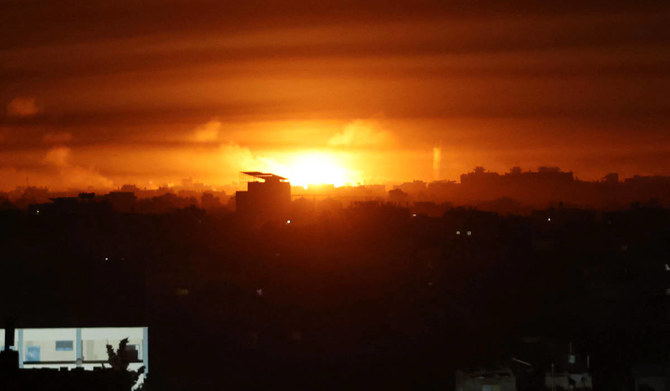

RAFAH, Gaza Strip: Palestinian militants battled Israeli forces in devastated northern Gaza and launched a barrage of rockets from farther south on Tuesday in a show of force more than 100 days into Israel’s massive air and ground campaign against the tiny coastal enclave.
The fighting in the north, which was the first target of Israel’s offensive and where entire neighborhoods have been pulverized, showed how far Israel remains from achieving its goals of dismantling Hamas and returning scores of hostages captured in the Oct. 7 attack that sparked the war.
In other developments, France and Qatar, the Arabian Gulf nation that helped mediate a previous ceasefire, said late Tuesday that they had brokered a deal between Israel and Hamas to deliver medicine to Israeli hostages in Gaza, as well as additional aid to Palestinians in the besieged territory.
France said it had been working since October on the deal, which will provide three months’ worth of medication for 45 hostages with chronic illnesses, as well as other medicines and vitamins. The medicines are expected to enter Gaza from Egypt on Wednesday.
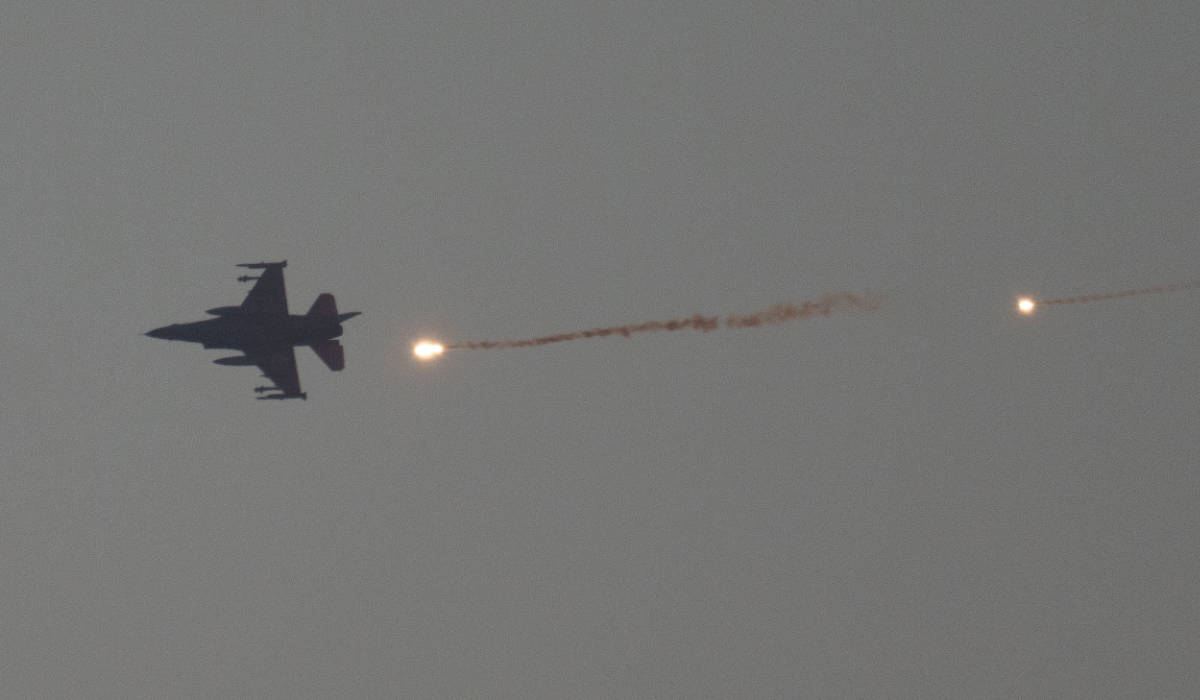
An Israeli fighter jet releases flares as it flies over the Gaza Strip, as seen from southern Israel, Tuesday, Jan. 16, 2024. (AP)
It was the first known agreement between the warring sides since a weeklong truce in November.
Meanwhile, Gaza’s humanitarian crisis is worsening, with 85 percent of the territory’s 2.3 million Palestinians having fled their homes and UN agencies warning of mass starvation and disease. The conflict threatens to widen after the US and Israel traded strikes with Iranian-backed groups across the region.
Israel has vowed to crush Hamas’ military and governing capabilities to ensure that the Oct. 7 attack is never repeated. Militants stormed into Israel from Gaza that day, killing some 1,200 people, mostly civilians, and capturing around 250 people. With strong diplomatic and military support from the United States, Israel has resisted international calls for a ceasefire.
Nearly half of the hostages were released during the truce, but more than 100 remain in captivity. Hamas has said it will not release any others until Israel ends the war.
STRIKES AND COUNTERSTRIKES ACROSS THE REGION
The longer the war goes on, the more it threatens to ignite other fronts across the region.
Iran fired missiles late Monday at what it said were Israeli “spy headquarters” in an upscale neighborhood near the sprawling US Consulate in Irbil, the seat of Iraq’s northern semi-autonomous Kurdish region. Iraq and the US condemned the strikes, which killed several civilians, and Baghdad recalled its ambassador to Iran in protest.
Iranian-backed groups in Iraq and Syria have carried out dozens of attacks on bases housing US forces, and a US airstrike in Baghdad killed an Iranian-backed militia leader earlier this month.

Israeli anti-war and anti-government demonstrators hold a rally in Tel Aviv, on January 16, 2024, amid the ongoing conflict between Israel and the militant Hamas group in Gaza. (AFP)
Elsewhere, Iranian-backed Houthi rebels in Yemen have resumed their attacks on container ships in the Red Sea following a wave of US-led strikes last week. The US military carried out another strike Tuesday. Separately, it said two Navy SEALS are missing after a raid last week on a ship carrying Iranian-made missile parts and weapons bound for Yemen.
Israel and Lebanon’s Hezbollah militant group have exchanged fire along the border nearly every day since the war in Gaza began. The strikes and counterstrikes have grown more severe since an Israeli strike killed Hamas’ deputy political leader in Beirut this month, raising fears of a repeat of the 2006 war.
MILITANTS KEEP FIGHTING IN GAZA’S HARD-HIT NORTH
In Gaza, the Israeli military said its forces located some 100 rocket installations and 60 ready-to-use rockets in the area of Beit Lahiya, a town on the territory’s northern edge. Israeli forces killed dozens of militants during the operation, the military said, without providing evidence.
Mahmoud Abdel-Ghani, who lives in Beit Lahiya, said Israeli airstrikes hit several buildings on the eastern side of the town.
Hundreds of thousands of people fled northern Gaza, including Gaza City, following Israeli evacuation orders in October. Israel shut off water to the north in the opening days of the war, and hardly any aid has been allowed into the area, even as tens of thousands of people have remained there.
Residents reached by phone Tuesday described the heaviest fighting in weeks in Gaza City.
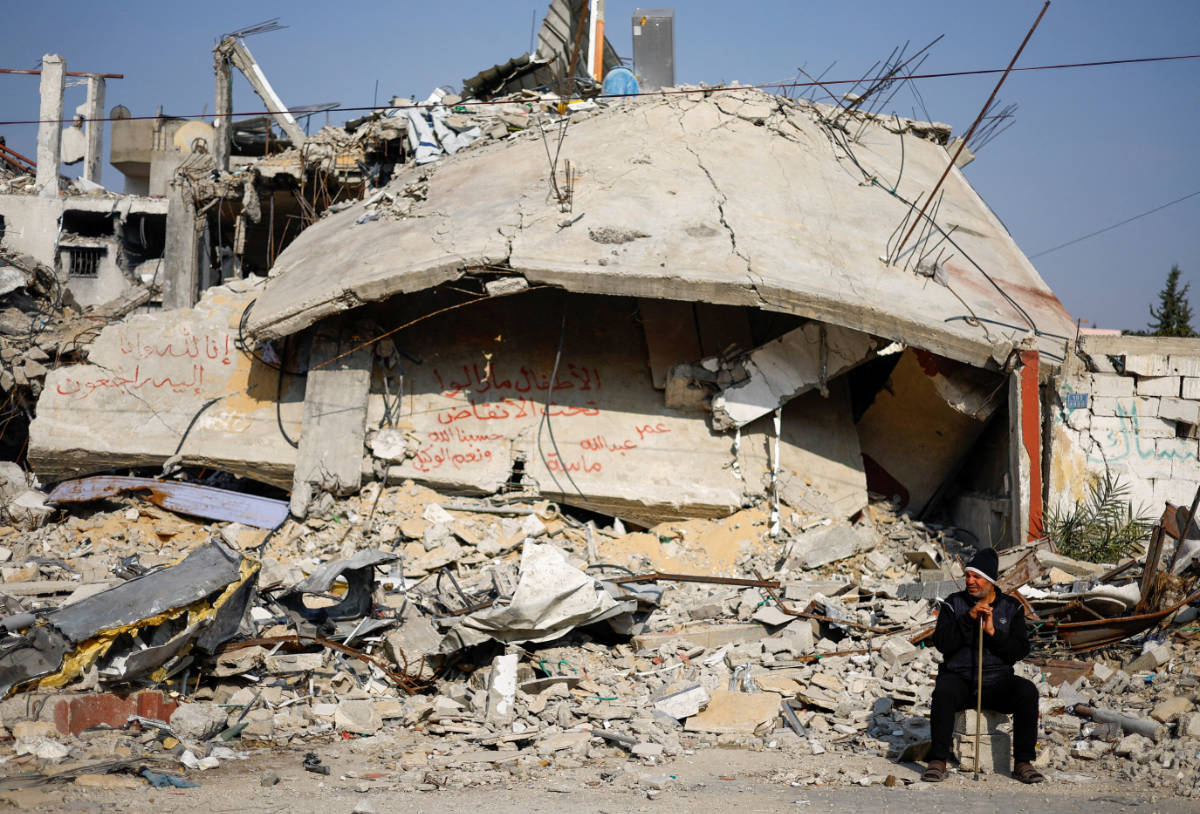
Ziad Mansour, a neighbour of the Abu Aweidah family, sits next to writing painted on a wall amid the rubble of the family's house, which was destroyed in a deadly Israeli strike amid the ongoing conflict between Israel and the Palestinian group Hamas, in Rafah, Gaza Strip, January 9, 2024. (REUTERS)
“The bombing never stopped,” said Faris Abu Abbas, who lives in the Tel Al-Hawa neighborhood. “The resistance is here and didn’t leave.”
Ayoub Saad, who lives near Shifa Hospital downtown, said he heard gunfire and shelling overnight and into Tuesday and saw dead and wounded people being brought to the hospital on carts.
After weeks of heavy fighting across northern Gaza, Israeli officials said at the start of the year that they were scaling back operations there. The focus shifted to the southern city of Khan Younis and built-up refugee camps in central Gaza dating back to the 1948 war surrounding Israel’s creation.
But there too, they have encountered heavy resistance. The military said at least 25 rockets were fired into Israel on Tuesday, damaging a store in one of the strongest bombardments in more than a week. Israel’s Channel 12 television said the rockets were launched from the Bureij camp in central Gaza.
A SPIRALING HUMANITARIAN CRISIS
Gaza’s Health Ministry said Tuesday that the bodies of 158 people killed in Israeli strikes have been brought to hospitals in the past 24 hours, bringing the war’s overall death toll to 24,285. The ministry does not differentiate between civilian and combatant deaths but says around two-thirds of those killed were women and children.
Senior UN officials warned Monday that Gaza faces widespread famine and disease if more aid is not allowed in. While they did not directly blame Israel, they said aid delivery is hobbled by the opening of too few border crossings, a slow vetting process, and continuing fighting throughout the territory — all of which is largely under Israel’s control.
UN Secretary-General Antonio Guterres said UN agencies and their partners “cannot effectively deliver humanitarian aid while Gaza is under such heavy, widespread and unrelenting bombardment.” At least 152 UN staffers have been killed in Gaza since the start of the war.
Israeli officials say they have placed no limits on humanitarian aid and have called on the UN to provide more workers and trucks to accelerate delivery.
Israel completely sealed off Gaza after Hamas’ Oct. 7 attack and only relented under US pressure. The US, as well as the UN, have continued to push Israel to ease the flow of aid.
Israel blames the high civilian death toll on Hamas because it fights in dense residential areas. Israel says its forces have killed roughly 8,000 militants, without providing evidence, and that 190 of its own soldiers have been killed in the Gaza offensive.