

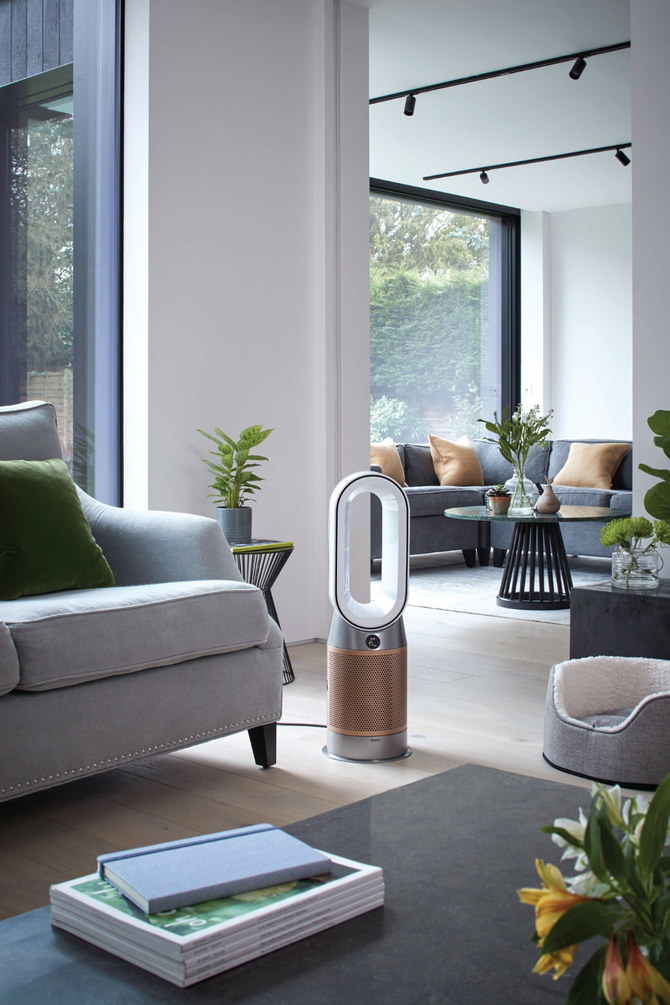
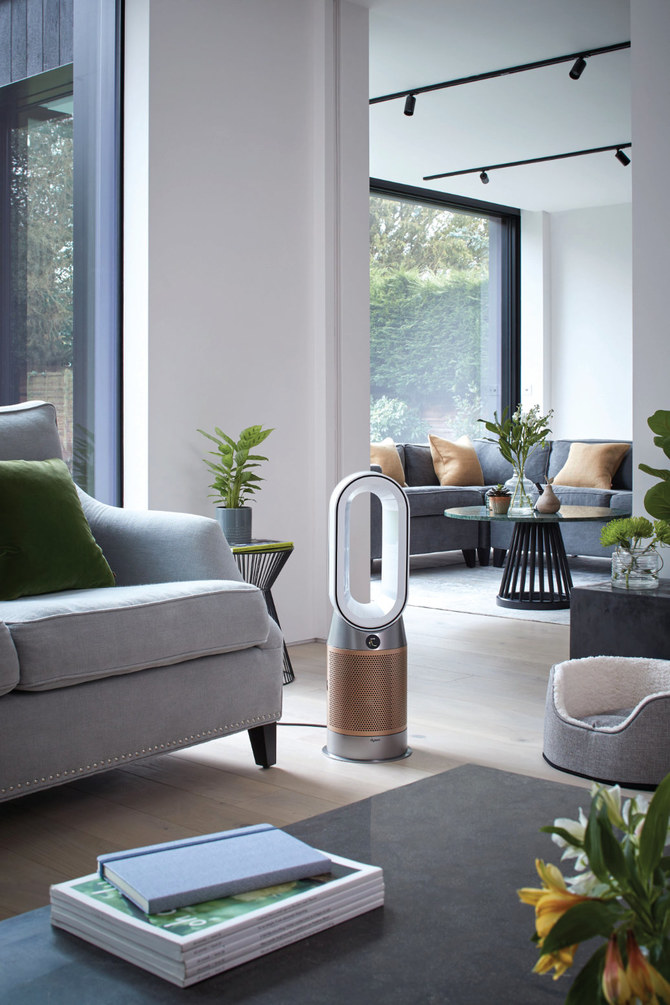
Dyson has unveiled the results of its first Global Connected Air Quality Data project. The project analyzes indoor air quality information collected by more than 2.5 million Dyson Purifiers from 2022 to 2023, landscaping air quality in real homes across the world to a high degree of granularity, breaking down pollution into gas and particle pollutants and profiling trends over days, months, seasons and the full year. The data comes from Dyson Purifiers connected to the MyDyson app; the volume of data exceeds half a trillion data points and paints a precise picture of indoor air quality in cities and countries globally, to help build understanding and awareness of indoor air pollution.
From a wealth of data, this project focuses on two types of pollutants — PM2.5 and volatile organic compounds. PM2.5 refers to particles as small as 2.5 microns in diameter, 1/25th the diameter of a typical human hair. These particles are invisible to the naked eye, can be inhaled and are an area of increasing scientific and health research. Sources include combustion, wood burners, or gas cooking and heating — pet dander, ash and dust. VOCs are gas pollutants including benzene and formaldehyde, which can be emitted from activities like cleaning or gas cooking as well as from products including deodorants and body sprays, candles, furniture and furnishings.
“Our connected air quality data allows us insight into the real problem of indoor air pollution in homes across the world. This gives us a direct understanding of the challenges Dyson Purifiers face in real environments and the knowledge to engineer ever-better machines to tackle those challenges. But the data we capture isn’t just an engineering tool — on an individual basis, this data is shared back through the MyDyson app in real-time and via monthly reports, to help our owners improve their air quality understanding,” said Matt Jennings, engineering director for environmental care.
Professor Hugh Montgomery, chair of intensive care medicine at University College London, and chairperson of Dyson’s Scientific Advisory Board, added: “We all think of air pollution as being an outdoor or roadside problem. Indoor air pollution research is growing but continues to be underdeveloped. Dyson’s findings give us a valuable insight into the real pollution levels in homes across the world, helping us to understand the patterns of pollution daily, monthly and seasonally. The Dyson data is an incredibly powerful education tool and the opportunities for positive impact are boundless — understanding the pollution around us is the first step to reducing our pollution exposure.”
Throughout the year, people generally spend 90 percent of their time indoors — at home, work or for leisure. Dyson purifier data showed that the winter period was the most polluted season globally.
Saudi Arabia and the UAE saw October as the month with the highest air pollution with July being the lowest month. Although the study did not conclude the reason for this, it can be assumed that part of these results could be due to the countries’ residential patterns. Many residents travel out of the country during the hot summer months and return during the cooler winter months, which coincides with peak tourist season in the UAE. With long periods of absence, the purifiers are likely not activated during the summer and would begin to collect a lot of indoor pollutants upon returning in October during high season.
The research found that purifiers are used most intensely in the evenings and overnight. In 30 out of 37 countries studied (including the UAE and Saudi Arabia), the highest levels of PM2.5 were during the evening and night-time hours. This aligns to many owners spending more time at home during these hours, rather than being out at work, school or elsewhere during the day.
The study found that in the UAE the indoor air quality never exceeded that of the outdoor. Markets whose indoor air quality measured higher on average than outdoor experiences included: China, Austria, Spain, Singapore, Australia, Canada, Germany, Romania, UK, France and Malaysia. This could be as these regions have harsh and seasonal climates that may require more reliance on indoor heating or cooling systems.
The total global sample size is 3,441,953. In the UAE, the national sample size is 11,537, and in the Kingdom, the sample size is 1,374. The indoor air quality studied is based on the location of Dyson Purifiers in homes and as such is not nationally representative.


