

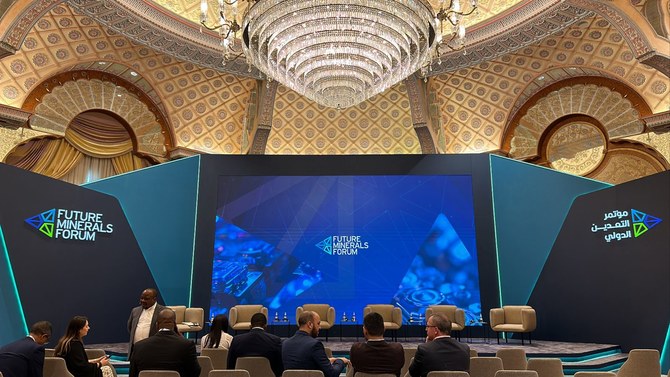

RIYADH: The final day of the Future Minerals Forum took place in the Saudi capital on Jan. 11, with discussions around artificial intelligence, developing responsible supply chains, and investing in capacity building.
The two-day event, which was preceded by a ministerial roundtable meeting, had already seen the Kingdom sign memorandums of understanding with four countries – Egypt, Morocco, Democratic Republic of the Congo, and Russia – to boost cooperation in the mining sector.
There was also an announcement by the Minister of Industry and Mineral Resources Bandar Alkhorayef that the value of the Kingdom’s untapped mineral potential has increased from $1.3 trillion to $2.5 trillion.
He said: “This is based on new discoveries in the form of rare earth elements and the combination of the increase of volumes in phosphate, gold, zinc and copper as well as the revaluation of these minerals.”
See below how the day unfolded
4:58 p.m. Closing remarks from Bandar Alkhorayef
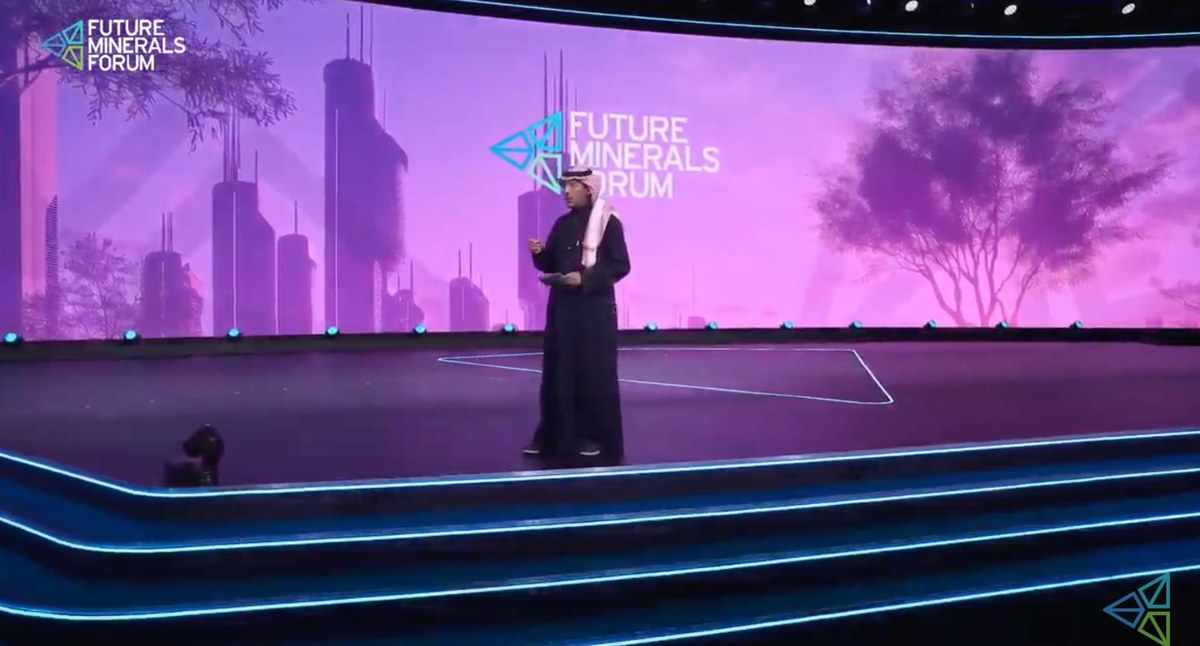
Saudi Arabia’s Minister of Industry and Mineral Resources Bandar Alkhorayef said on Thursday the mining sector is pursuing a “noble cause” as it is “talking about bringing hope to the world.”
In his closing speech at the Future Minerals Forum, the minister urged participants to “think about how we can collaborate all together” to make mining a sector that has a “true impact on the social lives and economic impact for everyone involved.”
Alkhorayef added that he would “hate to see many of the ideas that we have put in the last two days go to waste” as he called for continuous involvement and engagement from stakeholders.
The Kingdom is pushing to expand its mining sector and tap vast reserves of phosphate, gold, copper and bauxite.
Saudi Arabia has established a $182 million mineral exploration incentive program, Alkhorayef told the two-day forum.
“This program will de-risk investments in our exploration, securing to enable new commodities, green field projects and junior miners,” he added.
The country has revised upward estimates for its untapped mineral resources to $2.5 trillion, from a 2016 forecast of $1.3 trillion. Alkhorayef said this was based on 30 percent of the Arabian shields exploration, suggesting there is more to be discovered.
The Kingdom also signed an agreement with a leading technology firm to boost its energy, mining, industrial and logistics sectors with new investments and support for entrepreneurs.
Representatives of the Kingdom’s National Industrial Development and Logistics Program signed the pact with Newlab, the technology logistics firm.
The agreement will see the company, Newlab KSA, establish headquarters in the Kingdom, the Saudi Press Agency reported.
Newlab is currently assisting startups to transition “from concept to impact more rapidly, while also mobilizing industry leaders, governments, and investors to accelerate tangible progress against the most pressing challenges in various fields,” according to SPA.
Newlab has also inked agreements with the Ministry of Industry and Mineral Resources, Ministry of Investment, Saudi Aramco, Saudi Arabian Mining Co., King Abdulaziz City for Science and Technology, Research, Development and Innovation Authority, and the National Technology Development Program.
“These agreements are part of a comprehensive initiative to stimulate an integrated technological innovation ecosystem in Saudi Arabia and the Middle East, accelerating climate-driven economic diversification,” the SPA reported.
“They aim to develop a new regional platform for deep technology projects, integrating innovative capabilities, operational excellence, and infrastructure assets to advance the goals and outcomes of the regional platform.”
3:24 p.m Ma’aden ready to show the world what it can do
Robert Wilt, CEO of Ma’aden told the forum his mining company aims to demonstrate its “serious commitment” to the world in 2024.
1:03 p.m. Global investors set to be attracted to Jubail and Yanbu

Khalid Al-Salem, president of the Royal Commission for Jubail and Yanbu, told the forum he is expecting SR350 billion in investments in both cities.
This will be helped by a “big hub for green hydrogen for carbon capture and for renewables,” which will be “an attractive measure” for global investors.
12:44 p.m.
10:54 a.m. Kingdom starting with blank sheet when it comes to mining practices

The “human part” of the mining process must be remembered in order to create “a really sustainable and resilient supply chain,” Khalil Ibrahim Ibn Salamah, vice minister for industry, told the event.
He added that because the Kingdom has “no legacy” in the sector, that gives a “really good starting point” for finding the best practices.
10:28 a.m. - Workforce training key to delivering sustainability
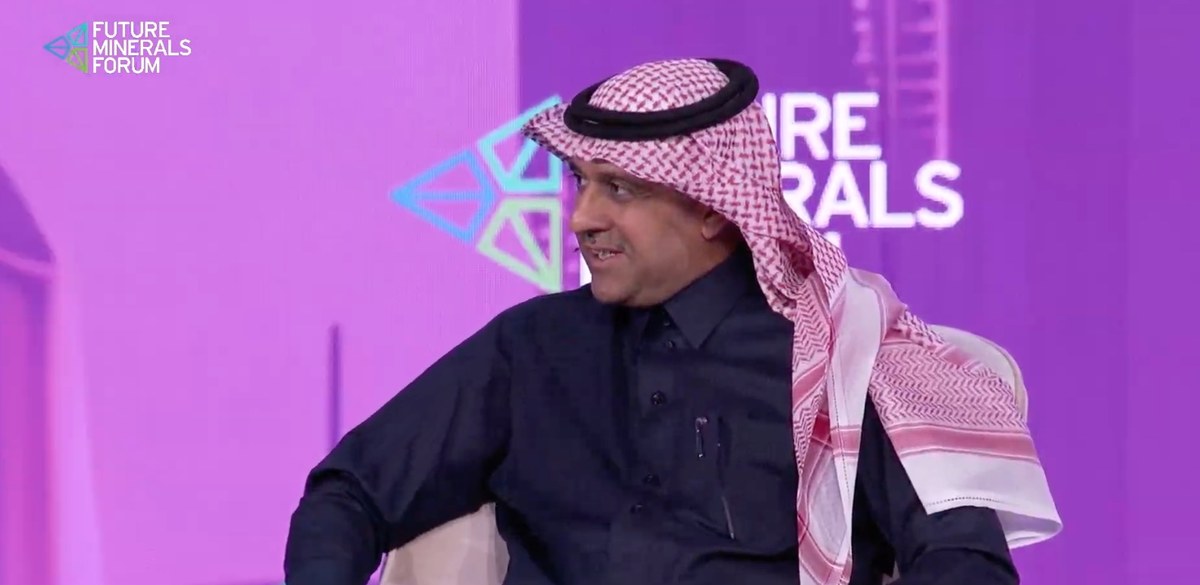
Saleh M. Saleh, vice president of Characterization and Field Development Geosciences at Saudi Aramco also spoke about the importance of workforce training in the sector (see below for previous comments on this).
He said the energy giant has invested a lot in ensuring it has a skillful, competent workforce.
10:21 a.m. - Sustainability is a buzzword that needs clarification.

Princess Mashael Al-Shalan, co-founder of AEON Collective, expressed concern that sustainability is a buzzword that is heard day in and day out, but “sustain what?” is the key question.
“Sustain the status quo? I fear not because it's really messy especially within the mining sector,” she said, adding that what needs to be tackled is what are the source of skill sets that are needed to be integrated or embedded to a center of excellence to actually deliver change.
9:57 a.m - More and better trained professionals needed in the sector.
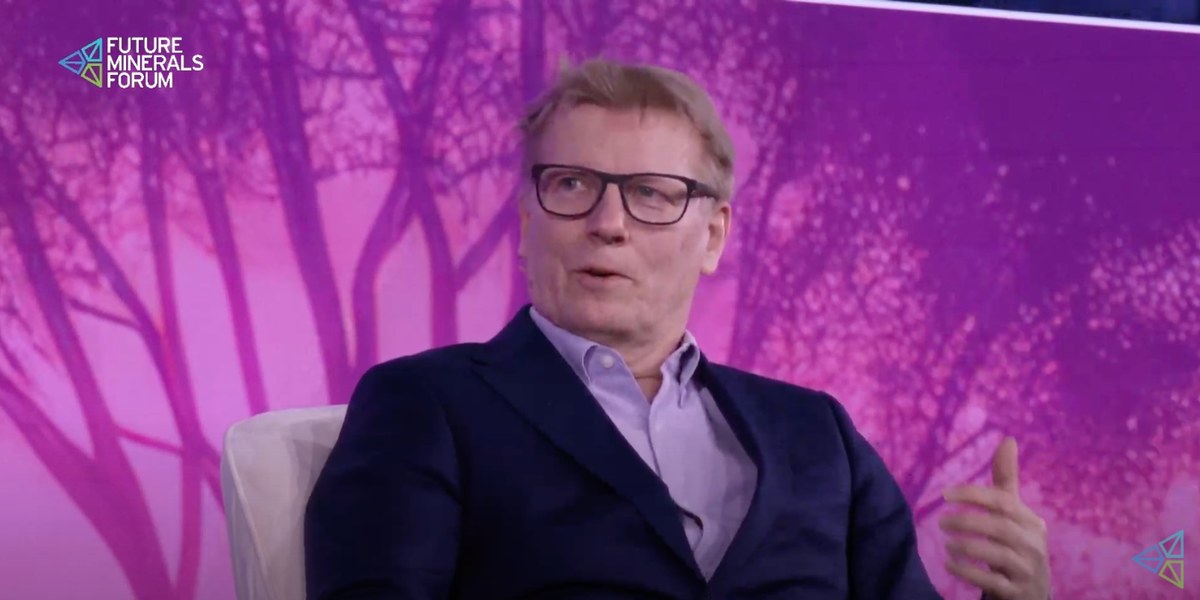
Speaking during a panel discussion, Kimmo Tiilikainen, director general of the Geological Survey of Finland, said if the mineral sector needs expansion, it means that there needs to be more professionals; so, there needs to be an increase in geosciences education around the region.


