

Saudi Arabia’s SWCC to ink several investment deals during FMF

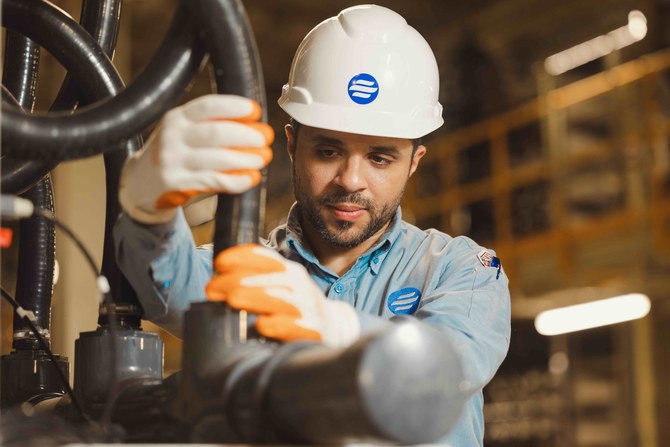
The company’s exhibition pavilion will highlight its achievements in enhancing the value of desalination by-products, projecting its commitment to supporting supply chains across various industries. Supplied
Short Url
Updated 08 January 2024
Follow

Saudi Arabia’s SWCC to ink several investment deals during FMF

RIYADH: Saudi Arabia’s mining sector is poised to receive a significant boost as Saline Water Conversion Corp. is set to sign several agreements during the upcoming Future Minerals Forum in Riyadh.

The Kingdom’s state-owned water desalination company seeks to enter into partnerships with various local and global companies and academic institutions, according to a press release issued on Monday.

These collaborations will help contribute to SWCC’s strategic efforts to enhance sustainable mining practices in the Kingdom.

A key aspect of these deals will be enabling companies to invest in the innovative field of salt reject mining, which involves extracting minerals and reproducing desalinated water efficiently and cost-effectively.

The likely deals include a notable collaboration for investment with top-tier Chinese companies, aligning with SWCC’s vision of leveraging international expertise and technology.

These joint ventures with global and local entities, such as China’s Ningxia TB, the JSG Alliance, and the Saudi Investment Recycling Co., focus on the collaborative development of investment opportunities, enhancing local content, and empowering national industries.

Furthermore, SWCC anticipates that the projected investment in regional brine mining from desalination systems is expected to reach SR8 billion ($2.1 billion) by 2030.

Correspondingly, the firm’s revenues are expected to hit SR1 billion, with a substantial contribution of SR1.5 billion to the gross domestic product in the same year.

The Future Minerals Forum, to be held under the patronage of King Salman, will see SWCC play a pivotal role as a strategic sponsor.

The corporation will showcase its initiatives, projects, and breakthrough technologies in salt reject mining and mineral extraction.

The forum will also serve as a platform for SWCC to discuss innovative solutions for maximizing the benefits of by-products from the water desalination industry, focusing on sustainable and environmentally friendly techniques that support the circular economy.

Moreover, the company’s exhibition pavilion will highlight its achievements in enhancing the value of desalination by-products, projecting its commitment to supporting supply chains across various industries.

These efforts resonate with the objectives of Saudi Vision 2030, aiming to develop a diversified industrial sector that bolsters the national economy’s growth and sustainability.


Saudi Arabia’s foreign reserves rise to a 6-year high of $475bn

Updated 22 February 2026
Follow

Saudi Arabia’s foreign reserves rise to a 6-year high of $475bn

RIYADH: Saudi Arabia’s foreign reserves climbed 3 percent month on month in January to SR1.78 trillion, up SR58.7 billion ($15.6 billion) from December and marking a six-year high.

On an annual basis, the Saudi Central Bank’s net foreign assets rose by 10 percent, equivalent to SR155.8 billion, according to data from the Saudi Central Bank, Argaam reported.

The reserve assets, a crucial indicator of economic stability and external financial strength, comprise several key components.

According to the central bank, also known as SAMA, the Kingdom’s reserves include foreign securities, foreign currency, and bank deposits, as well as its reserve position at the International Monetary Fund, Special Drawing Rights, and monetary gold.

The rise in reserves underscores the strength and liquidity of the Kingdom’s financial position and aligns with Saudi Arabia’s goal of strengthening its financial safety net as it advances economic diversification under Vision 2030.

The value of foreign currency reserves, which represent approximately 95 percent of the total holdings, increased by about 10 percent during January 2026 compared to the same month in 2025, reaching SR1.68 trillion.

The value of the reserve at the IMF increased by 9 percent to reach SR13.1 billion.

Meanwhile, SDRs rose by 5 percent during the period to reach SR80.5 billion.

The Kingdom’s gold reserves remained stable at SR1.62 billion, the same level it has maintained since January 2008.

Saudi Arabia’s foreign reserve assets saw a monthly rise of 5 percent in November, climbing to SR1.74 trillion, according to the Kingdom’s central bank.

Overall, the continued advancement in reserve assets highlights the strength of Saudi Arabia’s fiscal and monetary buffers. These resources support the national currency, help maintain financial system stability, and enhance the country’s ability to navigate global economic volatility.

The sustained accumulation of foreign reserves is a critical pillar of the Kingdom’s economic stability. It directly reinforces investor confidence in the riyal’s peg to the US dollar, a foundational monetary policy, by providing SAMA with ample resources to defend the currency if needed.

Furthermore, this financial buffer enhances the nation’s sovereign credit profile, lowers national borrowing costs, and provides essential fiscal space to navigate global economic volatility while continuing to fund its ambitious Vision 2030 transformation agenda.