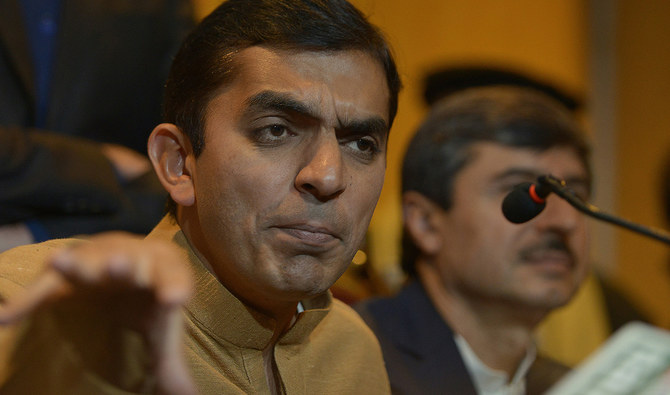
PESHAWAR: Police in Pakistan’s northwestern Khyber Pakhtunkhwa province confirmed on Wednesday former National Assembly lawmaker Mohsin Dawar was targeted by a group of unidentified gunmen in North Waziristan tribal district while carrying out election activities but remained unharmed in the attack.
Political parties and candidates have kicked off their election campaigns amid mounting security concerns ahead of the February 8 national polls in the country.
The situation is particularly difficult for politicians contesting the electoral contest from Khyber Pakhtunkhwa where a workers’ convention of the Jamiat-e-Ulama-e-Islam (JUI-F) party was attacked last year.
The JUI-F also called for election delay after the convoy of its top leader, Maulana Fazlur Rehman, came under fire while traveling on Islamabad-Dera Ismail Khan motorway on Sunday.
“Mohsin Dawar’s vehicle was targeted while his convoy reached between two mountains, but the police party escorting him exchanged fire with the gunmen and the convoy remained safe,” District Police Officer of North Waziristan Rokhanzeb Khan said while speaking to Arab News.
“One person is said to have received slight injuries, and some bullets hit the front and side mirrors of his bullet proof vehicle,” he continued.
Soon after receiving information of the incident, a police contingent was rushed to the crime scene to secure the area.
A large number of people also came out after the announcement of the attack from local mosques to express support for the former lawmaker, the police officer added.


![]()

Former Pakistani lawmaker Mohsin Dawar escapes unharmed in attack during election campaign in North Waziristan
Short Url
https://arab.news/4k3a9
Former Pakistani lawmaker Mohsin Dawar escapes unharmed in attack during election campaign in North Waziristan
- The incident happened amid mounting security concerns ahead of the February 8 national polls in the country
- Dawar was in a bullet-proof vehicle and escorted by a police contingent while carrying out his election campaign
Latest updates


© 2026 SAUDI RESEARCH & PUBLISHING COMPANY, All Rights Reserved And subject to Terms of Use Agreement.