United Nations, US: A senior UN official condemned Russia on Friday for its “appalling assaults” on Ukraine which saw some 158 missiles and drones launched, which Kyiv blamed for the deaths of at least 30 people.
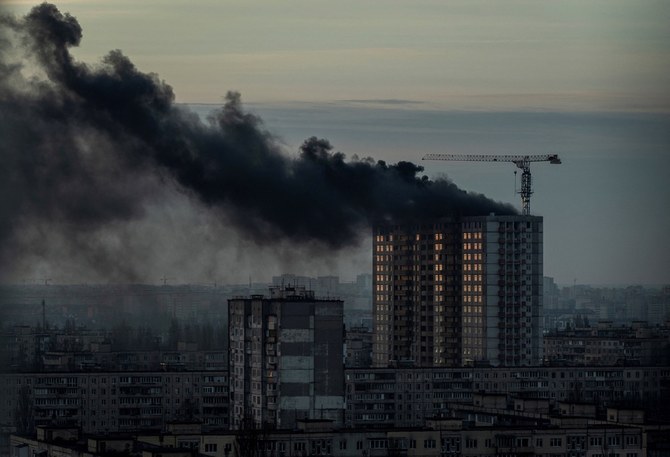
Schools, a maternity hospital, shopping arcades and blocks of flats were among the buildings hit in the nationwide barrage that also wounded over a hundred, said Ukrainian officials.
“Regrettably, today’s appalling assaults were only the latest in a series of escalating attacks by the Russian Federation,” said UN assistant secretary-general Mohamed Khiari.
“The (UN) Secretary-General unequivocally condemns, in the strongest possible terms, today’s appalling attacks on cities and towns across Ukraine. Attacks against civilians and civilian infrastructure violate international humanitarian law, are unacceptable and must stop immediately.”
The attacks — which also saw a Russian missile passing through Polish airspace — triggered international condemnation and fresh promises of military support to Ukraine, which has been fighting off invading Russian troops since late February 2022.
“We mourn this tragic loss of life,” said the US representative to the UN Security Council, calling it the largest aerial assault by Russia against Ukraine since the start of the war.
“Russia launched 158 combined drones and missiles against Ukraine — including 36 Shahad UAVs and 122 missiles... (Russian President Vladimir) Putin’s objective remains unchanged, he seeks to obliterate Ukraine and subjugate its people.”

Russian strikes on Ukraine ‘appalling assaults’: senior UN official
https://arab.news/2jgtb
Russian strikes on Ukraine ‘appalling assaults’: senior UN official
- The attacks triggered international condemnation and fresh promises of military support to Ukraine
EU says Ukraine to spend bulk of 90-bn-euro loan on military needs
- The European Commission said it was pushing for Kyiv to receive the first disbursement in April
- Von der Leyen said the funds will be used to buy weapons mainly from Ukraine and European nations
BRUSSELS: Two-thirds of a vital 90 billion euros ($105 billion) EU loan for Ukraine will go to cover Kyiv’s military apparatus with the rest earmarked for general budget support, Brussels said Wednesday.
Agreed by EU member states in December after months of diplomatic wrangling, the loan offers cash-strapped Ukraine a desperately needed lifeline as Russia’s invasion of its neighbor grinds toward its fifth year.
The European Commission said it was pushing for Kyiv to receive the first disbursement in April, as it provided details of the facility at a press conference in Brussels.
“With this support, we make sure that Ukraine can on one hand bolster its defense on the battlefield and strengthen its defense capabilities — so, its military needs — and on the other hand keep the state and basic services running,” EU chief Ursula von der Leyen told reporters.
Von der Leyen said the funds will be used to buy weapons mainly from Ukraine and European nations — something France and others have long said is key to bolster the EU’s defense industry and ease dependence on the United States.
But if the necessary equipment were not to be readily available in Europe, it would be occasionally possible for Kyiv to shop outside the continent, the commission president added.
“For us it is a lot of money. These are billions and billions that are being invested. And these investments should have a return on investment in creating jobs, in creating research and development,” said von der Leyen.
The loan, which is to cover two-thirds of Ukraine’s financial needs for the next two years, has to be approved by the European Parliament and member states before the money can start to be paid out.
It was agreed last month by European Union leaders who settled on a loan backed by the bloc’s common budget, after plans to tap frozen Russian central bank assets fell by the wayside.
The EU has said Ukraine would only need to pay back the money once Moscow coughs up for the damages it has wrought.
Brussels will cover interest costs, expected to hover around three billion euros per year, through the EU budget.


