

Riyadh exhibition unveils literary and artistic career of Prince Khalid Al-Faisal

1 / 3
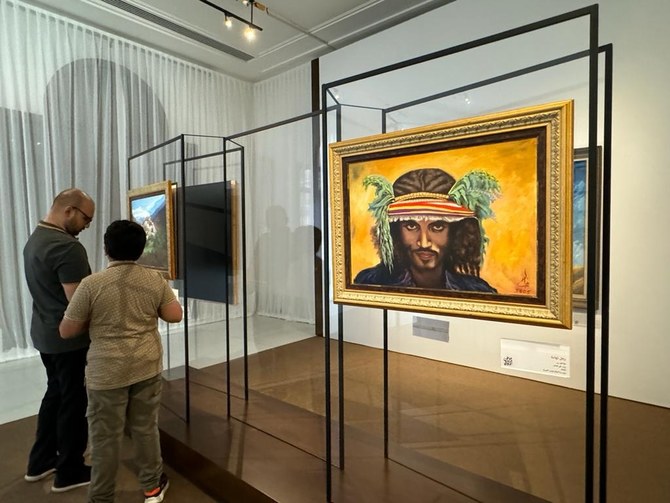
The Visual Arts Commission celebrates Prince Khalid Al-Faisal’s artistic and cultural journey in the “Home of My Thoughts” exhibition. (AN/Dhai Al-Mutairi)
2 / 3
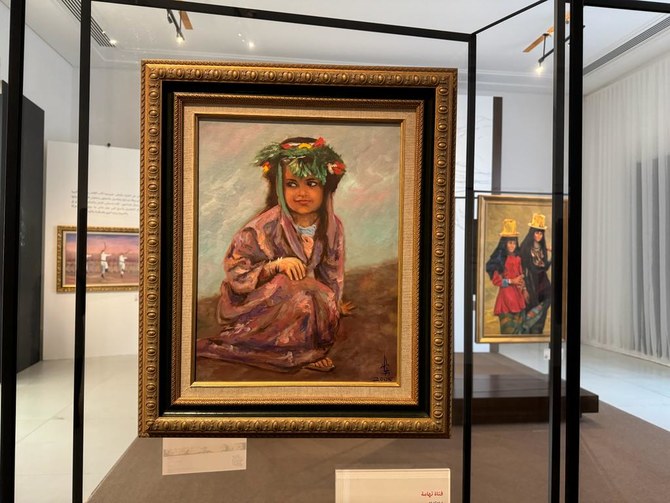
His love for Aseer region is showcased in the poetry and paintings displayed in the Country and its People section of the exhibition.(AN/Dhai Al-Mutairi)
3 / 3
His love for Aseer region is showcased in the poetry and paintings displayed in the Country and its People section of the exhibition.(AN/Dhai Al-Mutairi)
Short Url
Updated 29 December 2023
Follow

Riyadh exhibition unveils literary and artistic career of Prince Khalid Al-Faisal

Riyadh: A politician, an avid painter, a poet and a patron of the arts, Prince Khalid Al-Faisal redefined creativity in his cultural work, defining its components while serving the Kingdom and its people as the governor of Aseer region, minister of education, and currently as the governor of Makkah region.

The journey of this politically-minded poet-prince is showcased in an exceptional exhibition held by the Visual Arts Commission, titled “Home of My Thoughts” at Hittin Palace in Riyadh.

The exhibition sheds light on the rich legacy of a prominent national figure, influencing Saudi culture with distinguished literary and artistic creations.

“This exhibition celebrates the prince of art and culture, it celebrates the inspired and inspiring prince, his inspirations in nature, poetry, literature, and art, and how he inspired other poets and artists,” said Raghad Amin, the general manager of program delivery at the Saudi Visual Arts Commission.

The show artistically narrates the journey of Prince Khalid through two main themes, the inspired and the inspiring.

“It has been a great honor to be the curator of this exhibition, but it was a big challenge to celebrate his royal highness’s legacy in one exhibition as he is a multi-faceted figure and an inspiration to all of us,” said Lulwah Al-Homoud, Saudi artist and curator of the exhibition.

“To have a simple yet rich narrative, there were two themes complementing each other in the exhibition: The inspired and the inspiring. We were working intensely for six months.”

The inspiring theme of the exhibition narrates the journey of a figure who derives his creativity by employing language in formulating poetry and literature, prompted by the spirit of the homeland and the originality of its people.

The inspired theme of the exhibition is represented by the prince who contributed to inspiring generations of thinkers, artists, poets, and music pioneers in the Arab world and beyond.

The inspired theme, meanwhile, includes testimonies of three artists greatly influenced by Prince Khalid: Ahmed Mater, a significant cultural voice documenting the realities of contemporary Saudi Arabia; Abdullah Hammas, whose paintings are acquired in several ministries, airports, government departs, and international museums; and Zena Amer, the director of art residencies and programs at Al-Muftaha fine arts village.

Al-Muftaha village is located in Abha, and is one of the most significant tourist destinations in the Aseer region, particularly for artists as it provides them with a space to express and share their creativity.

Founded in 1989 by Prince Khalid, then governor of the Aseer region, Al-Muftaha incorporates artists’ studios and accommodation, exhibition galleries, shops, and a bookstore.

“One of his most prominent contributions was the establishment of Al-Muftaha fine arts village, a center for artists and is considered one of the first centers in the Arab world for art,” said Amin.

Among the many projects founded by Prince Khalid are the literary club of Abha, the Abha singing festival, and the Abha Prize for Cultural Excellence.

From 1971 to 2007, Prince Khalid served as governor of Aseer, and his love for it is showcased in his poetry and paintings displayed in the “Country and its People” section of the exhibition.

Other paintings reflect renowned poems and poets from the pre-Islamic period, a period which greatly influenced the work of Prince Khalid.

“The strategy was to have a holistic approach by introducing sound and written words beside his paintings as well as an immersive digital installation that takes the audience into the world of his paintings,” said Al-Homoud.

She added: “I was really touched by the amount of interaction with the paintings by the audiences and proud to show the diversity of his great talents.”

The exhibition enriches visitors’ experience with a range of activities, unique discussions, and artistic and cultural programs and workshops, including one on the influence of the environment on color choices.

Some of the dialogue sessions scheduled include meetings between artists from Al-Muftaha, and discussions on the impact Prince Khalid had on them.

The exhibition opens daily from 2 p.m. to 10 p.m. and will continue until Jan. 3.


Threat to Kingdom’s security is ‘red line’ that will be ‘addressed and neutralized,’ Saudi envoy says

Updated 14 January 2026
Follow

Threat to Kingdom’s security is ‘red line’ that will be ‘addressed and neutralized,’ Saudi envoy says

  • Abdulaziz Alwasil tells UN Security Council the situation in southern Yemen is ‘a just cause with social and historic dimensions’ that can only be resolved through dialogue
  • Recent military activity in the south was unilateral, resulting in an escalation that harms the interests of Yemeni people and undermines efforts to address issues in the south, he said

NEW YORK CITY: Any attempt to threaten Saudi Arabia’s national security is a “red line” and will be met with decisive action, the Kingdom’s ambassador to the UN told the Security Council on Wednesday.

Speaking during a meeting of the council to discuss Yemen, Abdulaziz Alwasil said the situation in the south of the country is “a just cause with social and historic dimensions” that can only be resolved through dialogue.

“We stress that any attempt to threaten our national security is a red line, and we will not hesitate to take the necessary actions and steps to address it and neutralize it,” he added.

Alwasil reaffirmed Saudi Arabia’s support for Yemeni President Rashad Al-Alimi, the Presidential Leadership Council, and the Yemeni government in their efforts to achieve security, stability, development and peace while preserving national unity.

He said military activity by Southern Transitional Council forces in Hadramout and Al-Mahra on Dec. 2, 2025, was unilateral, did not have the approval of the Presidential Leadership Council, and was not carried out in coordination with the Coalition to Restore Legitimacy in Yemen.

It had resulted in an unjustified escalation that harmed the interests of the Yemeni people, undermined efforts to address the issues in the south, and ran counter to the coalition’s objectives, Alwasil added.

The Kingdom, working with its coalition partners, the Presidential Leadership Council and the Yemeni government, had moved to contain the situation by dispatching a military force to coordinate arrangements with the Southern Transitional Council in Aden, he said.

The aim was to ensure the return of the southern council’s forces to their previous positions outside of Hadramout and Al-Mahra, and the handover of camps to legitimate government forces and local authorities in line with agreed procedures, Alwasil added.

He expressed regret over the military operations that took place in Hadramout and Al-Mahra, close to Saudi Arabia’s southern border, which he said posed a direct threat to the Kingdom’s national security, as well as the security of Yemen and regional stability. Such steps were extremely dangerous, he added, and contradicted the principles on which the Coalition to Restore Legitimacy in Yemen had been founded.

Alwasil welcomed a prisoner and detainee exchange agreement signed in Muscat on Dec. 23, which he described as an important humanitarian measure to alleviate suffering and build confidence.

He praised Oman for hosting and sponsoring the consultations and supporting negotiations, and commended the efforts of UN’s special envoy for Yemen, Hans Grundberg, the International Committee of the Red Cross and all others that has played a part.

Regarding the political efforts to resolve the crisis, Alwasil said Saudi Arabia welcomed President Al-Alimi’s call for an inclusive conference in Riyadh to bring together all stakeholders to discuss just solutions to the situation in southern Yemen.

Preparations for the conference have begun, he added, in cooperation with the Yemeni government and southern representatives, reflecting the close ties between the two countries and their shared interests in stabilizing Yemen.

He urged all southern stakeholders to participate actively and constructively in the talks, to help find comprehensive and just solutions that meet the legitimate aspirations of the people of southern Yemen.

Alwasil called on all Yemeni forces and stakeholders to cooperate and intensify their efforts to reach a lasting political settlement that would ensure security and stability.

He described the southern issue as “a just cause with social and historic dimensions,” adding that “the only way to address it is through dialogue that leads to a comprehensive political solution” based on nationally and internationally agreed terms of reference.