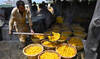
SFDA obtains WHO certificate on food free of artificial trans fats

The Kingdom, represented by the Saudi Food and Drug Authority, obtained the credentials alongside Denmark, Lithuania, Poland, and Thailand. Supplied
Short Url
Updated 28 December 2023
Follow

SFDA obtains WHO certificate on food free of artificial trans fats

RIYADH: Saudi Arabia is among five countries to have received a recognition certification from the World Health Organization for eliminating artificial trans fats in food products. 

The Kingdom, represented by the Saudi Food and Drug Authority, obtained the credentials alongside Denmark, Lithuania, Poland, and Thailand. 

This came after providing the international team with a report detailing the efforts to prevent the use of partially hydrogenated oil. 

The exclusion of artificial trans fats from food items enhances the nutritional content of these products, playing a crucial role in achieving the health sector’s transformation objectives and indicators related to increasing the average human lifespan in the region.

In line with the Kingdom’s Vision 2030, the absence of these substances reduces the incidence of chronic conditions such as cardiovascular diseases and helps individuals achieve a higher quality of life.

With the introduction of Saudi technical regulations, which establish specific restrictions on harmful elements in oils and other domestically produced or imported food items, the SFDA initiated its efforts to reduce specific products in 2015.

A survey was then conducted on food products in neighborhood markets, examining their trans fat content. Food product compliance reached about 94 percent, and the authority outlawed the use of partially hydrogenated oils in 2020.

This policy prohibits food importers and factories from using these substances in manufactured foods. It applies to all edible items intended for human consumption, except for hydrogenated oils and trans fats derived from natural sources.

This reflects the Kingdom’s commitment to human health and the implementation of policies and regulations aimed at safeguarding the general well-being of the population in all aspects.

In alignment with Vision 2030 and WHO recommendations, the SFDA has developed legislation in recent years to eliminate trans fats, prohibiting the use of partially hydrogenated oils. 

This regulation applies to all foods intended for human consumption, except for entirely naturally sourced hydrogenated oils and trans fats from animal products.

The second round of WHO certification on trans fat elimination will commence next year, as reported by the Saudi Press Agency.


Saudi POS transactions see 20% surge to hit $4bn: SAMA

Updated 05 December 2025
Follow

Saudi POS transactions see 20% surge to hit $4bn: SAMA

RIYADH: Saudi Arabia’s total point-of-sale transactions surged by 20.4 percent in the week ending Nov. 29, to reach SR15.1 billion ($4 billion).

According to the latest data from the Saudi Central Bank, the number of POS transactions represented a 9.1 percent week-on-week increase to 240.25 million compared to 220.15 million the week before.

Most categories saw positive change across the period, with spending on laundry services registering the biggest uptick at 36 percent to SR65.1 million. Recreation followed, with a 35.3 percent increase to SR255.99 million. 

Expenditure on apparel and clothing saw an increase of 34.6 percent, followed by a 27.8 percent increase in spending on telecommunication. Jewelry outlays rose 5.6 percent to SR354.45 million.

Data revealed decreases across only three sectors, led by education, which saw the largest dip at 40.4 percent to reach SR62.26 million. 

Spending on airlines in Saudi Arabia fell by 25.2 percent, coinciding with major global flight disruptions. This followed an urgent Airbus recall of 6,000 A320-family aircraft after solar radiation was linked to potential flight-control data corruption. Saudi carriers moved swiftly to implement the mandatory fixes.

Flyadeal completed all updates and rebooked affected passengers, while flynas updated 20 aircraft with no schedule impact. Their rapid response contained the disruption, allowing operations to return to normal quickly.

Expenditure on food and beverages saw a 28.4 percent increase to SR2.31 billion, claiming the largest share of the POS. Spending on restaurants and cafes followed with an uptick of 22.3 percent to SR1.90 billion.

The Kingdom’s key urban centers mirrored the national decline. Riyadh, which accounted for the largest share of total POS spending, saw a 14.1 percent surge to SR5.08 billion, up from SR4.46 billion the previous week. The number of transactions in the capital reached 75.2 million, up 4.4 percent week-on-week.

In Jeddah, transaction values increased by 18.1 percent to SR2.03 billion, while Dammam reported a 14 percent surge to SR708.08 million.

POS data, tracked weekly by SAMA, provides an indicator of consumer spending trends and the ongoing growth of digital payments in Saudi Arabia. 

The data also highlights the expanding reach of POS infrastructure, extending beyond major retail hubs to smaller cities and service sectors, supporting broader digital inclusion initiatives. 

The growth of digital payment technologies aligns with the Kingdom’s Vision 2030 objectives, promoting electronic transactions and contributing to the nation’s broader digital economy.