Baloch activist seeks UN probe into rights violations in Pakistan’s southwest, continues Islamabad protest

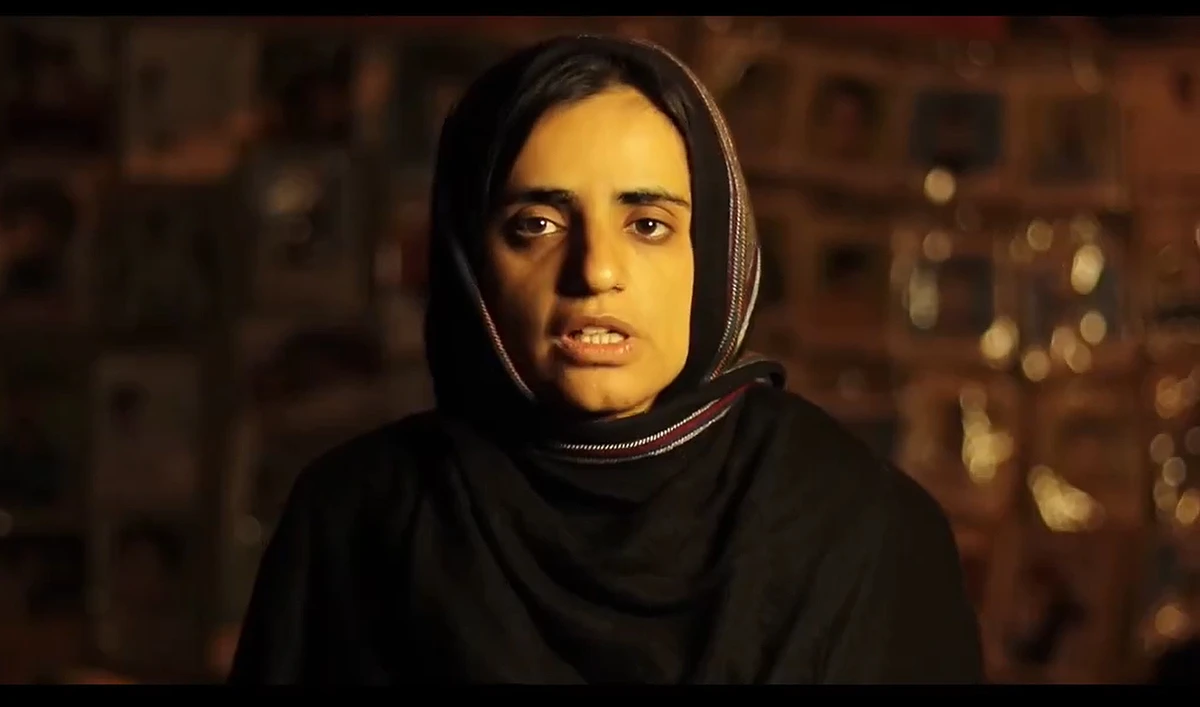
The still image taken from a video posted on December 25, 2023, shows Mahrang Baloch, a Baloch activist. (Photo courtesy: @MahrangBaloch_X)
Short Url
Updated 27 December 2023
Follow

Baloch activist seeks UN probe into rights violations in Pakistan’s southwest, continues Islamabad protest

  • Mahrang Baloch rejects government committee to probe ‘enforced disappearances,’ calls such bodies ineffective
  • Baloch led a rally of demonstrators from her province to Islamabad after the killing of a Turbat resident in CTD custody

ISLAMABAD: A leading Baloch activist urged the government on Tuesday to allow a United Nations fact-finding team to probe rights violations in the southwestern Balochistan province while vowing to continue a protest in the federal capital until the demand was met.
More than 200 Baloch demonstrators, including women and children, have been rallying in Islamabad against what they call “enforced disappearances” and “genocide” of ethnic Baloch people in their province.
Many of them walked up to 1,600 kilometers to camp outside the National Press Club in the federal capital under the banner of Baloch Yakjehti – or Solidarity – Committee after a 24-year-old resident of Turbat district, Balach Baloch, was killed in the custody of the provincial Counter-Terrorism Department (CTD) that accused him of involvement in a number of militant attacks. However, Baloch’s family and civil society activists deny the CTD claim and call his death a case of extrajudicial murder.
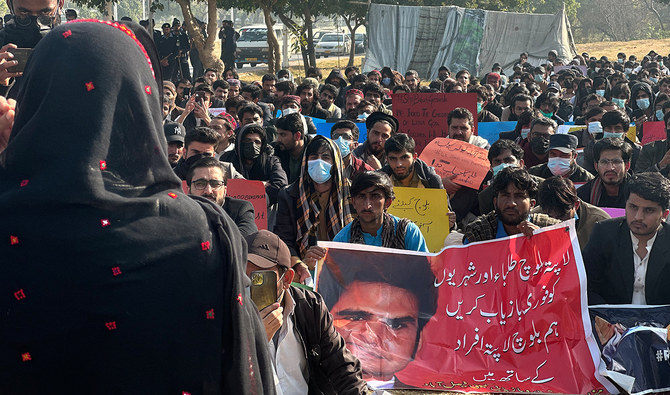


Baloch protestors stage a sit-in outside the National Press Club in Islamabad on December 23, 2023, against the arrests of its marchers earlier this week. (Photo courtesy: X/@BYCislamabad)

Speaking to a local news channel, Mahrang Baloch, who led the march to Islamabad, said they rejected a committee formed by the government to probe the issue and wanted a permanent end to rights violations in Balochistan.
“It is our demand to bring the UN fact-finding committee to Balochistan which should take notice of the human rights violations in the province,” she told Aaj News TV. “The UN Working Group on Enforced Disappearances has been writing letters to Pakistan for the last ten years and seeking NOC [no-objection certificate to visit Balochistan]. But Pakistan has not been allowing them.”
Baloch said the government had also formed committees in the past but they had never published their findings.
She said Baloch demonstrators were not visiting Islamabad to seek justice for a few individuals, adding the practice of enforced disappearances in her province was not new and needed to end.
The government and state agencies have frequently denied such claims in the past.
The Baloch activist also demanded the release of several demonstrators which were recently arrested by the police in Islamabad.

ADB, Pakistan sign over $300 million agreements to undertake climate resilience initiatives

Updated 30 December 2025
Follow

ADB, Pakistan sign over $300 million agreements to undertake climate resilience initiatives

  • Pakistan ranks among nations most vulnerable to climate change and has seen erratic changes in weather patterns
  • The projects in Sindh and Punjab will restore nature-based coastal defenses and enhance agricultural productivity

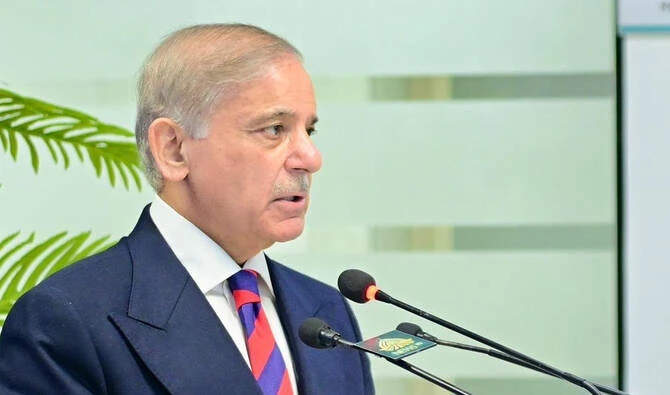
ISLAMABAD: The Pakistani government and the Asian Development Bank (ADB) have signed more than $300 million agreements to undertake two major climate resilience initiatives, Pakistan’s Press Information Department (PID) said on Tuesday.

The projects include the Sindh Coastal Resilience Sector Project (SCRP), valued at Rs50.5 billion ($180.5 million), and the Punjab Climate-Resilient and Low-Carbon Agriculture Mechanization Project (PCRLCAMP), totaling Rs34.7 billion ($124 million).

Pakistan ranks among nations most vulnerable to climate change and has seen erratic changes in its weather patterns. In 2022, monsoon floods killed over 1,700 people, displaced another 33 million and caused over $30 billion losses, while another 1,037 people were killed in floods this year.

The South Asian country is ramping up climate resilience efforts, with support from the ADB and World Bank, and investing in climate-resilient infrastructure, particularly in vulnerable areas.

“Both sides expressed their commitment to effectively utilize the financing for successful and timely completion of the two initiatives,” the PID said in a statement.

The Sindh Coastal Resilience Project (SCRP) will promote integrated water resources and flood risk management, restore nature-based coastal defenses, and strengthen institutional and community capacity for strategic action planning, directly benefiting over 3.8 million people in Thatta, Sujawal, and Badin districts, according to ADB.

The Punjab project will enhance agricultural productivity and climate resilience across 30 districts, improving small farmers’ access to climate-smart machinery, introducing circular agriculture practices to reduce residue burning, establishing testing and training facilities, and empowering 15,000 women through skills development and livelihood diversification.

Earlier this month, the ADB also approved $381 million in financing for Pakistan’s Punjab province to modernize agriculture and strengthen education and health services, including concessional loans and grants for farm mechanization, Science, Technology, Engineering and Mathematics (STEM) education, and nursing sector reforms.