IRBIL, Iraqi Kurdistan/JEDDAH: A senior member of Iran’s Islamic Revolutionary Guard Corps paramilitary died in Syria on Monday in possibly the most consequential targeted killing the region has seen since the “shadow commander” Qassem Soleimani was eliminated by an American drone strike in Baghdad in January 2020.
Iran’s state-run media described Sayyed Reza Mousavi as “one of the oldest advisers of the IRGC in Syria” and close with Soleimani, who headed the IRGC’s Quds Force, which plots Tehran’s extraterritorial operations throughout the Middle East, arming and funding numerous proxy militias that do Iran’s bidding against its enemies.
“I would call Mousavi the second Qassem Soleimani. He knew everybody, had good contacts with people on the ground, militias and heads of groups,” Dr. Mohammed Al-Sulami, founder and president of the International Institute for Iranian Studies (Rasanah) in Riyadh, told Arab News.
He said Mousavi had “more knowledge of the realities on the ground” in Syria than anyone else, including his boss and current Quds Force commander Esmail Qaani, who Al-Sulami said is more knowledgeable about other countries and regions such as Afghanistan and Central Asia than about Syria and the Middle East.
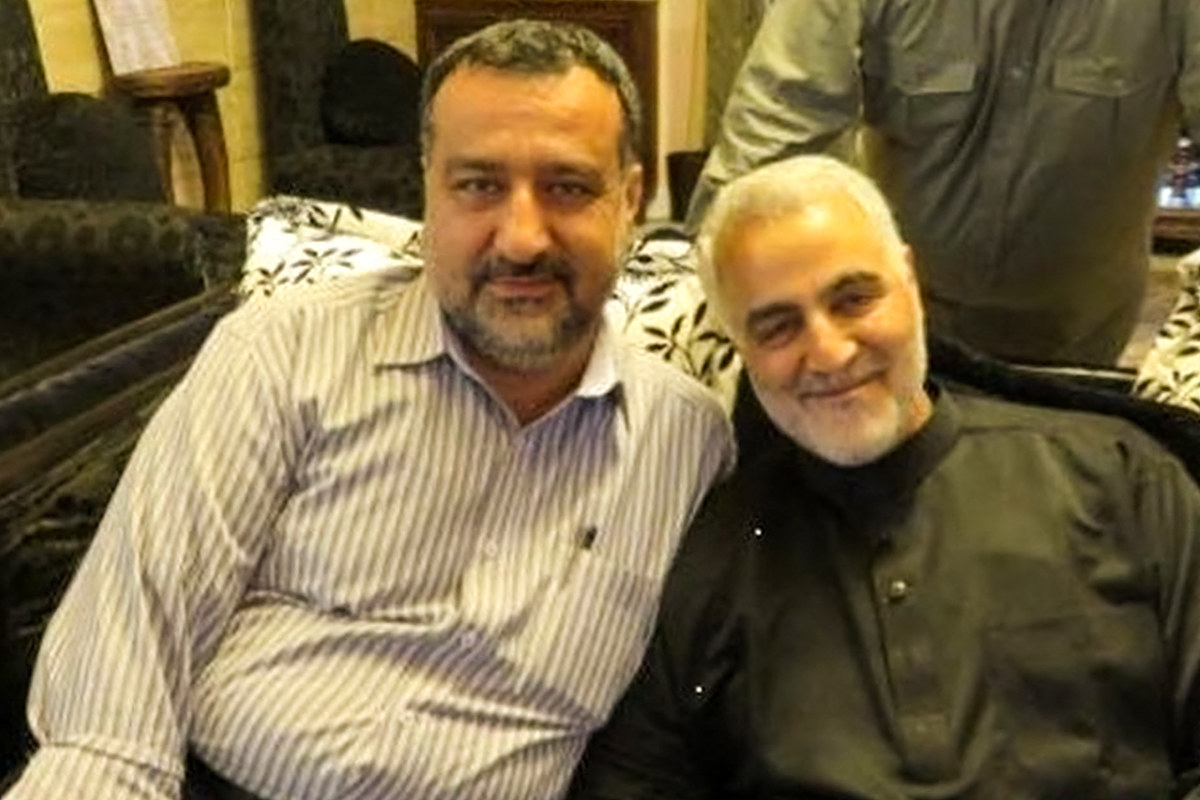
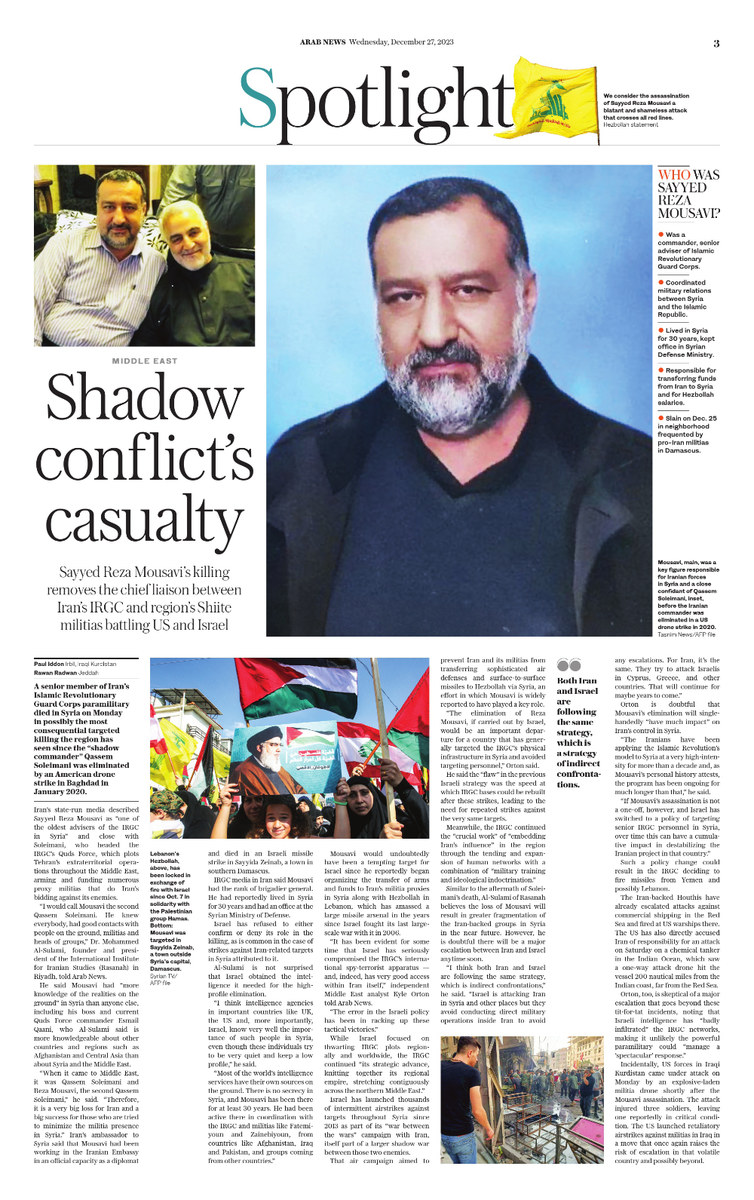
Sayyed Reza Mousavi, left, with Qassem Soleimani, who was assassinated in Baghdad in January 2020 by the US. (Tasnim News/AFP file)
“When it came to Middle East, it was Qassem Soleimani and Reza Mousavi, the second Qassem Soleimani,” he said. “Therefore, it is a very big loss for Iran and a big success for those who are trying to minimize the presence of militias in Syria.”
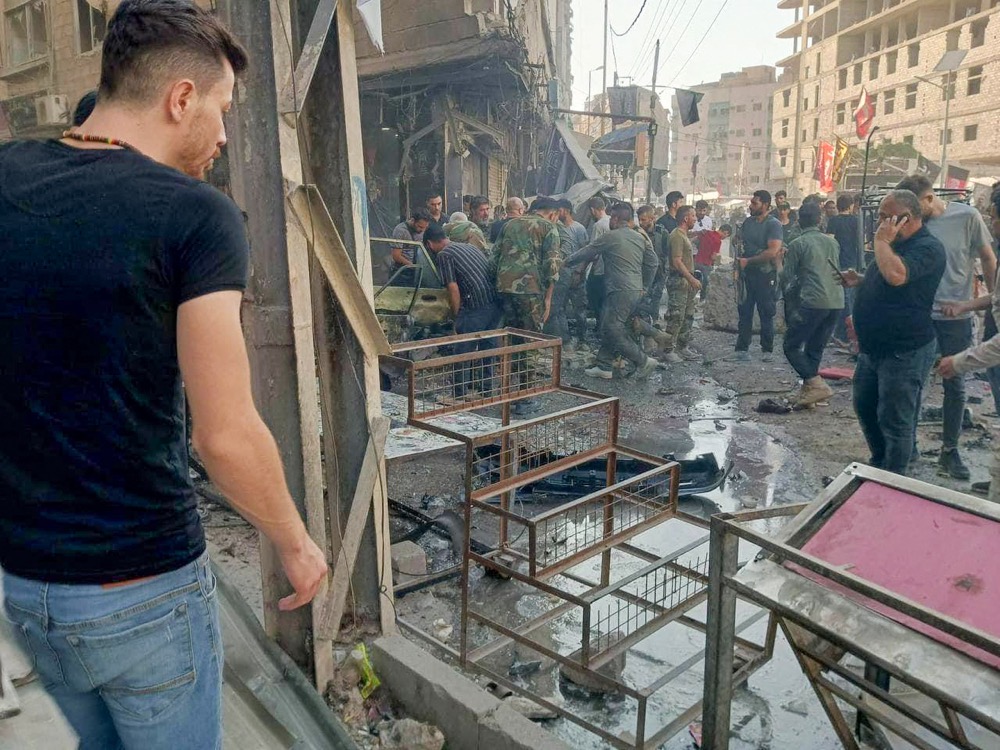
Iran’s ambassador to Syria said that Mousavi had been working in the Iranian embassy in an official capacity as a diplomat and died in an Israeli missile strike in Sayyida Zeinab, a town in southern Damascus.
IRGC media in Iran said Mousavi had the rank of brigadier general. He had reportedly lived in Syria for 30 years and had an office at the Syrian Ministry of Defense.
Israel has refused to either confirm or deny its role in the killing, as is common in the case of strikes against Iran-related targets in Syria attributed to it.
Al-Sulami is not surprised that a country or spy agency was able to get its hands on the intelligence it needed for the high-profile elimination.
“I think intelligence agencies in countries like the UK, the US and, more importantly, Israel know very well the significance of such people in Syria, even though these individuals try to be very quiet and keep a low profile,” he said.
“Most of the world’s intelligence services have their own sources on the ground. There is no secrecy in Syria, and Mousavi has been there for at least 30 years. He had been active there in coordination with the IRGC and militias like Fatemiyoun and Zainebiyoun, from countries like Afghanistan, Iraq and Pakistan, and groups coming from other countries.”
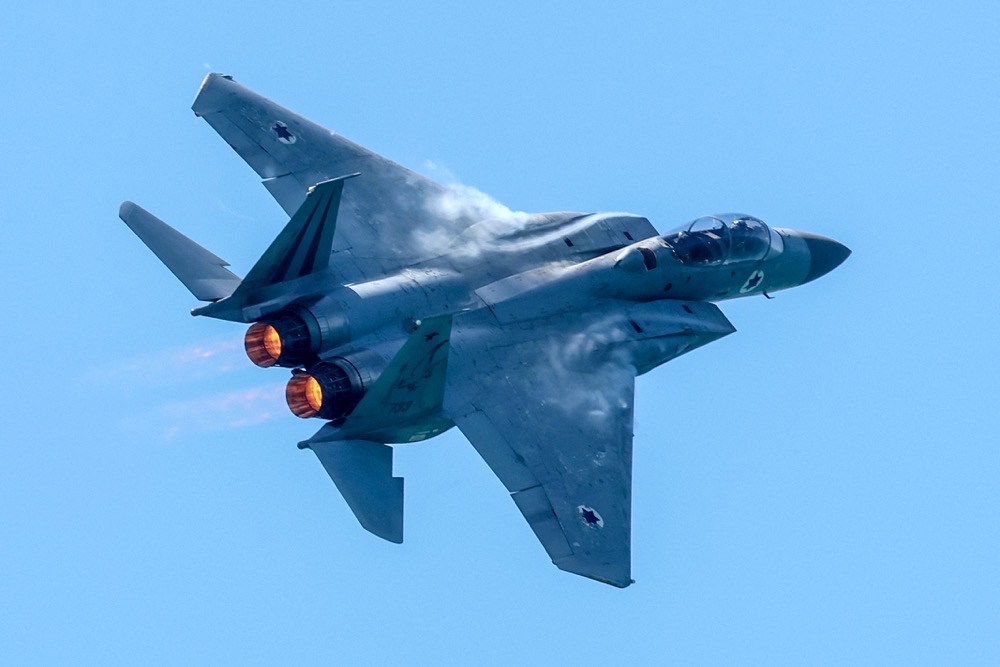
Israel has launched thousands of intermittent airstrikes against targets throughout Syria since 2013. (AFP/File)
Mousavi would undoubtedly have been a tempting target for Israel since he reportedly began organizing the transfer of arms and funds to Iran’s militia proxies in Syria along with Hezbollah in Lebanon, which has amassed a large missile arsenal in the years since Israel fought its last large-scale war with it in 2006.
“It has been evident for some time that Israel has seriously compromised the IRGC’s international spy-terrorist apparatus — and, indeed, has very good access within Iran itself,” independent Middle East analyst Kyle Orton told Arab News.
“The error in the Israeli policy has been in racking up these tactical victories.”
While Israel focused on thwarting IRGC plots regionally and worldwide, the IRGC continued “its strategic advance, knitting together its regional empire, stretching contiguously across the northern Middle East.”
Israel has launched thousands of intermittent airstrikes against targets throughout Syria since 2013 as part of its “war between the wars” campaign with Iran, itself part of a larger shadow war between those two enemies.
WHO WAS SAYYED REZA MOUSAVI?
• Was a commander, senior adviser of Islamic Revolutionary Guard Corps.
• Coordinated military relations between Syria and Iran.
• Lived in Syria for 30 years, kept office in Syrian Defense Ministry.
• Responsible for transferring funds from Iran to Syria and for Hezbollah salaries.
• Killed on Dec. 25 in neighborhood frequented by pro-Iranian militias in Damascus.
That air campaign aimed to prevent Iran and its militias from transferring sophisticated air defenses and surface-to-surface missiles to Hezbollah via Syria, an effort in which Mousavi is widely reported to have played a key role.
“The elimination of Reza Mousavi, if carried out by Israel, would be an important departure for a country that has generally targeted the IRGC’s physical infrastructure in Syria and avoided targeting personnel,” Orton said.
He said the “flaw” in the previous Israeli strategy was the speed at which IRGC bases could be rebuilt after these strikes, leading to the need for repeated strikes against the very same targets.
Israel has conducted airstrikes in Syria as part of its “war between the wars” campaign with Iran. (AFP/File)
Meanwhile, the IRGC continued the “crucial work” of “embedding Iran’s influence” in the region through the tending and expansion of human networks with a combination of “military training and ideological indoctrination.”
Similar to the aftermath of Soleimani’s death, Al-Sulami of Rasanah believes the loss of Mousavi will result in greater fragmentation of the Iran-backed groups in Syria in the near future. However, he is doubtful there will be a major escalation between Iran and Israel anytime soon.
“I think both Iran and Israel are following the same strategy, which is indirect confrontations,” he said.
“Israel is attacking Iran in Syria and other places but they avoid conducting direct military operations inside Iran to avoid any escalations. For Iran, it’s the same. They try to attack Israelis in Cyprus, Greece, and other countries. That will continue for maybe years to come.”
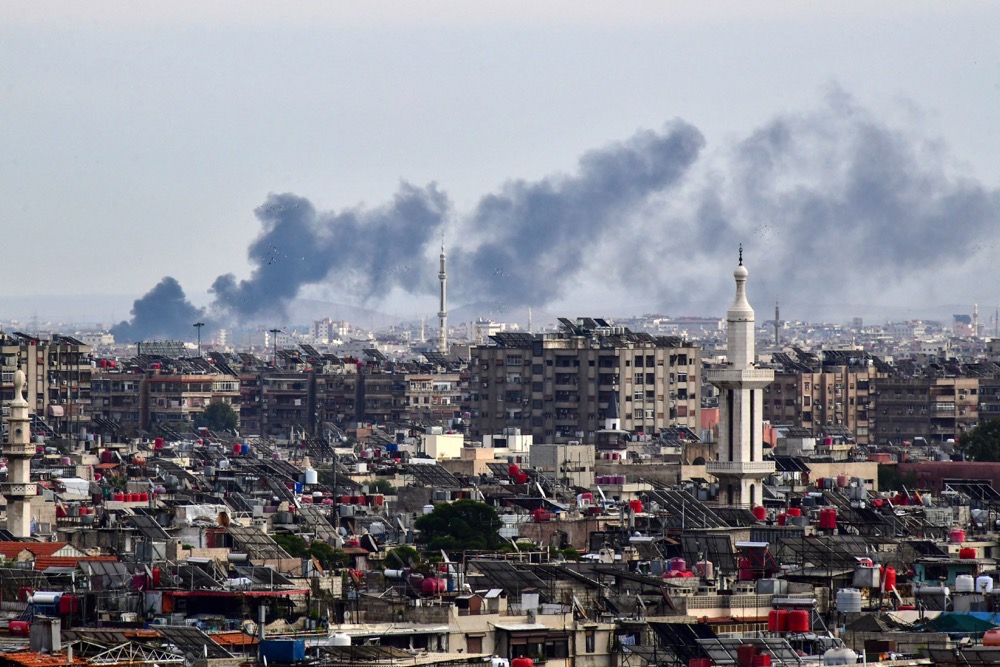
Mousavi died in an Israeli missile strike in Sayyida Zeinab, a town in southern Damascus. (AFP/File)
Orton is doubtful that Mousavi’s elimination will singlehandedly “have much impact” on Iran’s control in Syria.
“The Iranians have been applying the Islamic Revolution’s model to Syria at a very high-intensity for more than a decade and, as Mousavi’s personal history attests, the program has been ongoing for much longer than that,” he said.
“If Mousavi’s killing is not a one-off, however, and Israel has switched to a policy of targeting senior IRGC personnel in Syria, over time this can have a cumulative impact in destabilizing the Iranian project in that country.”
Such a policy change could result in the IRGC deciding to fire missiles from Yemen and possibly Lebanon.
The Iran-backed Houthis have already escalated attacks against commercial shipping in the Red Sea and fired at US warships there. The US has also directly accused Iran of responsibility for an attack on Saturday on a chemical tanker in the Indian Ocean, which saw a one-way attack drone hit the vessel 200 nautical miles from the Indian coast, far from the Red Sea.
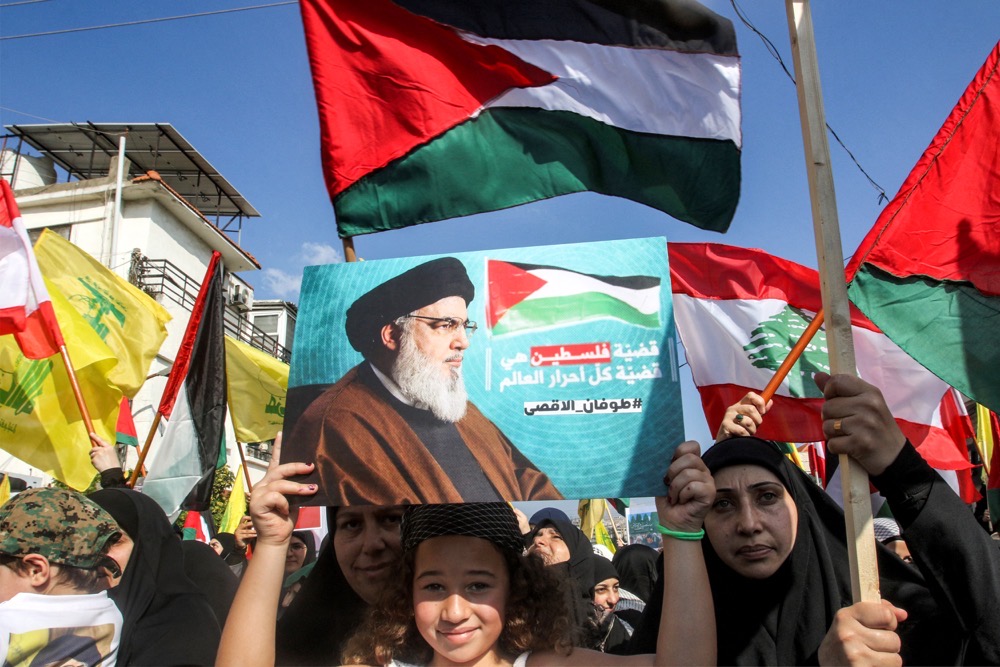
That air campaign aims to prevent the transfer of sophisticated air defenses and surface-to-surface missiles to Hezbollah via Syria. (AFP/File)
Orton, too, is skeptical of a major escalation that goes beyond these tit-for-tat incidents, noting that Israeli intelligence has “badly infiltrated” the IRGC networks, making it unlikely the powerful paramilitary could “manage a ‘spectacular’ response.”
He recalled how Iran had “very publicly committed itself” to avenging the 2020 killing of Soleimani in such a fashion. Iran initially responded to his death by firing ballistic missiles at an Iraqi airbase hosting American troops, leaving several American soldiers with traumatic brain injuries.
Incidentally, US forces in Iraqi Kurdistan came under attack on Monday by an explosive-laden militia drone shortly after Mousavi’s killing. The attack injured three soldiers, leaving one reportedly in critical condition.
The US launched retaliatory airstrikes against militias in Iraq in a move that inevitably increased the risk of escalation in that volatile country — and possibly beyond.