

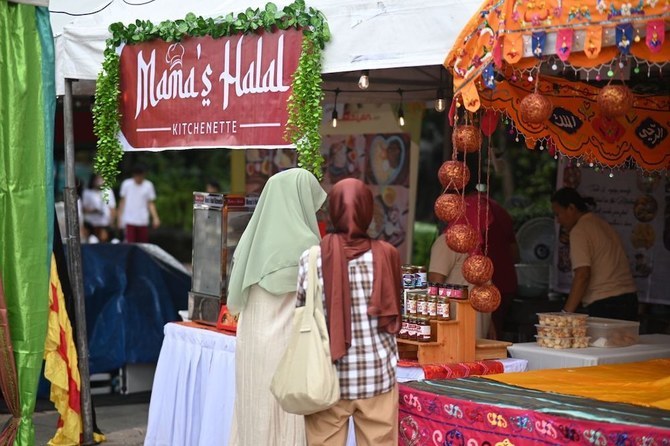

Manila: The Philippine Department of Trade and Industry is preparing a nationwide road map for the halal industry as it gears up to launch an international exhibition next year to showcase its best halal products.
The predominantly Catholic Philippines has set big targets to expand its domestic halal industry in the hopes of tapping into the global halal market, which is estimated to be worth more than $7 trillion.
“We are putting all the government planning strategy in one document ... the road map of the Philippine halal industry. That includes all the government agencies that are part of the Halal Board and other stakeholders,” Aleem Guiapal, project manager of the DTI Halal Industry Development Program, told Arab News earlier this week.
“We have established the direction. We are cleared at our goal for the next five years: Raise 230 billion pesos ($4 billion) in investments and generate around 120,000 jobs.”
The efforts, although streamlined by DTI, involve most of the other departments as the industry includes not only the food sector, but also tourism, banking, finance, pharmaceuticals, cosmetics and fashion.
“DTI Secretary Alfredo Pascual wants a holistic systems approach,” Guiapal said.
“For a while, we’ve been very focused on certification, accreditation, now we wanted to move forward ... to address how do we develop the industry, how do we tap the SMEs (small and medium enterprises), how can we be more inclusive so that the understanding is that halal industry is not just for the Muslims but for everyone in this country.”
According to DTI data, the Philippines has 1,835 of its own halal-certified products and while some of them are already exported, the country still needs to develop its halal branding to enter the global market.
“We want our products to also be known in the world,” Guiapal said.
“In 2024, we are going to hold an expo ... and we will showcase the best of the best of the country’s halal products. It will be in November 2024, and we will be bringing in partners from across the globe.”
Guiapal believes that the development of the industry will also help uplift the Philippine Muslim minority.
There are some 10 million Muslims among the almost 120 million population of the Southeast Asian nation. They live mostly on the island of Mindanao and the Sulu archipelago in the country’s south, which are some of the poorest regions in the Philippines.
“The leadership of the country is geared towards maximizing the opportunity that it can offer to them,” Guiapal said, adding that the efforts will contribute to their welfare and also the country’s inclusivity and development.
“The 10 or more million Muslim Filipinos are a huge resource for the country in terms of human resources, so we can capitalize on that ... the definition of national development cannot be in full length until we include all the sectors ... especially the minority, and that includes the Muslim Filipinos.”


