TikTok moderators struggle to assess content in Arabic and Hebrew

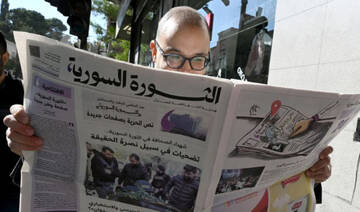
TikTok removes internal platform tool leaving moderators struggling to assess content in languages other than English. (AFP/File)
Short Url
Updated 20 December 2023
Follow

TikTok moderators struggle to assess content in Arabic and Hebrew

  • Removal of internal platform tool leaves moderators facing difficulties assessing content in languages other than English

DUBAI: Moderators on social media platform TikTok are struggling to assess content related to Israel and Palestine after a tool that helped flag content in foreign languages was deleted.

TikTok’s internal tool allowed moderators to escalate a case and hit a “not my language” or “foreign language” button to flag content that they could not understand, reported The Guardian.

Moderators assumed that using the button would send the video to other colleagues who understood the language.

However, the button was removed six to nine months ago without any explanation, and moderators who raised the issue were asked to use Google Translate, when possible.

This means that moderators are relying on what they see only to understand if the video is in accordance with TikTok’s policy guidelines.

Moreover, since moderators often have targets on how quickly they moderate content, using a translation service is time-consuming, a deterrent for many.  

TikTok had said that it “immediately launched a command center” and “mobilized significant resources and personnel” in response to the Israel-Hamas war. 

The company claimed it added more moderators who speak Arabic and Hebrew to review content related to the conflict. It also said it works with organizations accredited by the International Fact-Checking Network that support over 50 languages, including Arabic and Hebrew, to combat misinformation. 

Moderators were reportedly given an internal update on guidelines for the Israel-Hamas conflict in October in which they were told that certain Hamas and Hezbollah-related content was allowed, provided it did not incite violence or praise Hamas.

This includes “content that shows Hamas or Hezbollah political leaders as they are discussing the broader Israel-Palestine conflict and historical context for ongoing events, that does not also (1) praise, incite or threaten violence and (2) that does (not) praise Hamas” 

The policy does not “apply to (Hamas military wing) Al-Qassam militant leaders.”

A TikTok moderator told The Guardian: “How am I meant to know who the bad guys and the good guys are if I don’t speak the language?

“I wouldn’t be surprised if the button disappearing could lead to moderators incorrectly interpreting video based on their own unconscious biases or anti-Islam rhetoric, for example.” 

A TikTok spokesperson told the British newspaper that the allegations about its policies are wrong or based on misunderstandings.

“We have over 6,000 moderators in Europe who apply our community guidelines equally to all content on TikTok and we do not allow under-13s on our platform,” the spokesperson said.


Paris exhibition marks 200 years of Le Figaro and the enduring power of the press

Updated 17 January 2026
Follow

Paris exhibition marks 200 years of Le Figaro and the enduring power of the press

  • The exhibition celebrated the bicentennial of Le Figaro, offering visitors a rare opportunity to step inside the newspaper’s vast historical archive

PARIS: One of France’s most influential newspapers marked a major milestone this month with a landmark exhibition beneath the soaring glass nave of the Grand Palais, tracing two centuries of journalism, literature and political debate.
Titled 1826–2026: 200 years of freedom, the exhibition celebrated the bicentennial of Le Figaro, offering visitors a rare opportunity to step inside the newspaper’s vast historical archive. Held over three days in mid-January, the free exhibition drew large crowds eager to explore how the title has both chronicled and shaped modern French history.
More than 300 original items were displayed, including historic front pages, photographs, illustrations and handwritten manuscripts. Together, they charted Le Figaro’s evolution from a 19th-century satirical publication into a leading national daily, reflecting eras of revolution, war, cultural change and technological disruption.
The exhibition unfolded across a series of thematic spaces, guiding visitors through defining moments in the paper’s past — from its literary golden age to its role in political debate and its transition into the digital era. Particular attention was paid to the newspaper’s long association with prominent writers and intellectuals, underscoring the close relationship between journalism and cultural life in France.
Beyond the displays, the program extended into live journalism. Public editorial meetings, panel discussions and film screenings invited audiences to engage directly with editors, writers and media figures, turning the exhibition into a forum for debate about the future of the press and freedom of expression.
Hosted at the Grand Palais, the setting itself reinforced the exhibition’s ambition: to place journalism firmly within the country’s cultural heritage. While the exhibition has now concluded, the bicentennial celebrations continue through special publications and broadcasts, reaffirming Le Figaro’s place in France’s public life — and the enduring relevance of a free and questioning press in an age of rapid change.