

Saudi Arabia celebrates World Arabic Language Day with poetry, music

1 / 7
The three-day event saw local and foreign attendees enjoy poetry readings, complemented by traditional coffee, dates, and sculptures adorned with calligraphy. (X: @MoC_Engage)
2 / 7
The three-day event saw local and foreign attendees enjoy poetry readings, complemented by traditional coffee, dates, and sculptures adorned with calligraphy. (X: @MoC_Engage)
3 / 7
The three-day event saw local and foreign attendees enjoy poetry readings, complemented by traditional coffee, dates, and sculptures adorned with calligraphy. (X: @MoC_Engage)
4 / 7
The three-day event saw local and foreign attendees enjoy poetry readings, complemented by traditional coffee, dates, and sculptures adorned with calligraphy. (X: @MoC_Engage)
5 / 7
The three-day event saw local and foreign attendees enjoy poetry readings, complemented by traditional coffee, dates, and sculptures adorned with calligraphy. (X: @MoC_Engage)
6 / 7
The three-day event saw local and foreign attendees enjoy poetry readings, complemented by traditional coffee, dates, and sculptures adorned with calligraphy. (X: @MoC_Engage)
7 / 7
The three-day event saw local and foreign attendees enjoy poetry readings, complemented by traditional coffee, dates, and sculptures adorned with calligraphy. (X: @MoC_Engage)
Short Url
Updated 20 December 2023
Follow

Saudi Arabia celebrates World Arabic Language Day with poetry, music

  • Riyadh’s Diplomatic Quarter hosts leading artists, calligraphers, musicians
  • Poet Jassem Al-Sahih said humans not only derive a form of sustenance from their language but also construct the fabric of their lives from it

MAKKAH: Saudi Arabia concluded its World Arabic Language Day celebrations Wednesday with poetry, calligraphy and music at Al-Kindi Square in Riyadh’s Diplomatic Quarter.

The event was organized by the Ministry of Culture, in collaboration with the King Salman Global Academy for the Arabic Language, and titled “Language of Poetry and Arts.”

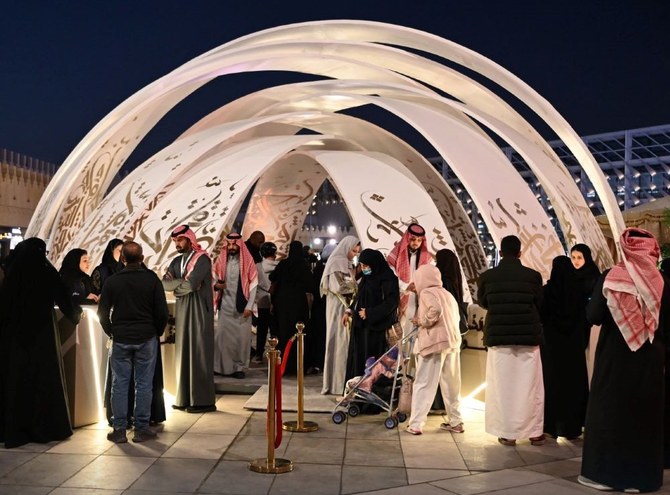
The three-day event, celebrating the annual Dec. 18 UN World Arabic Language Day, saw local and foreign attendees enjoy poetry readings, complemented by traditional coffee, dates, and sculptures adorned with calligraphy.

In an interview with Arab News, poet Jassem Al-Sahih, invoking novelist Amin Maalouf’s metaphor, said language was like an umbilical cord connecting children to their mothers.

Al-Sahih said humans not only derive a form of sustenance from their language but also construct the fabric of their lives from it.

Poet Khaled Qamash commended the Ministry of Culture for ensuring the day was a rich cultural experience with its blend of poetry, music and songs.

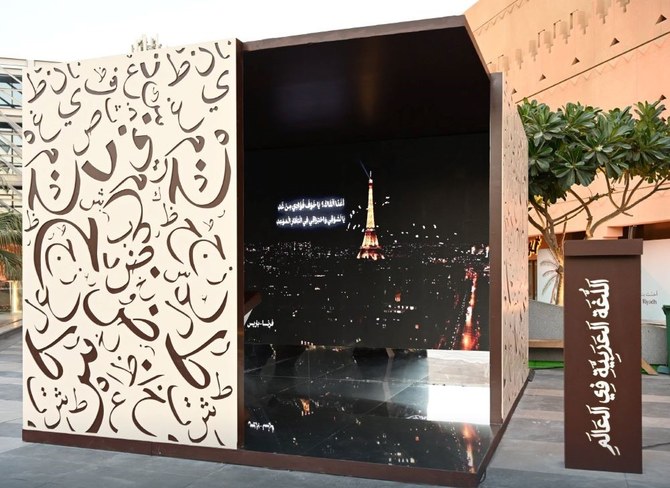
There were three zones at the event — “Letters and Poems,” “Afanin and Founoun,” and an interactive space called the “Courtyard.”

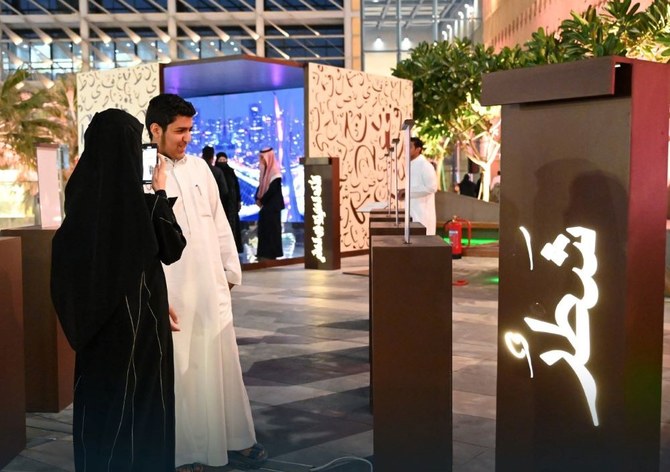
In the “Letters and Poems” zone, visitors were able to immerse themselves in poetry and musical compositions, while the “Afanin and Founoun” zone allowed people to find the meaning of uncommon words at the touch of a button.

The “Courtyard” featured attractions including “Discover the Cube,” “Discover the Letters” and “Create Art” sections to help children memorize words and write letters.


Art Cairo part of a ‘long-term cultural project,’ founder says

Updated 25 January 2026
Follow

Art Cairo part of a ‘long-term cultural project,’ founder says

CAIRO: As Art Cairo 2026 draws to a close, its founder Mohammed Younis is keen to set the fair apart from its regional counterparts — and also asserts that the annual event is part of a “long-term cultural project.”

The fair, which took place at the Grand Egyptian Museum and wrapped up on Jan. 26, boasted a distinctly Arab flavor, in terms of galleries, artists and the themes of the artworks on show.

Younis says that is all part of a conscious curatorial effort.

“Art Cairo stands apart from other art fairs in the region as the only platform dedicated exclusively and intentionally to Arab art … While many regional fairs present a broad, globalized perspective, Art Cairo emerges from a different vision — one rooted in presenting Arab art from within,” Younis told Arab News.

Across the fair, depictions of golden age icons such as 1950s superstar Mohamed Mohamed Fawzy by painter Adel El-Siwi jostled for attention alongside ancient iconography and pop culture references from the Arab world.

Abu Dhabi’s Salwa Zeidan Gallery, for example, exhibited work by up-and-coming Egyptian artist Passant Kirdy.

“My work focuses on Egyptian heritage in general, including pharaonic and Islamic art. These influences are always present in what I create. This symbol you’re looking at is a pharaonic scarab …  I’m very attached to this symbol,” she told Arab News.

The Arab focus of the curation is part of an effort to bill Art Cairo as a “long-term cultural project,” Younis noted.

“Ultimately, Art Cairo is not simply an art fair; it is a long-term cultural project. It exists to support Arab artists, contribute to building a sustainable art market, and articulate an authentic Arab narrative within the regional and international art landscape.”