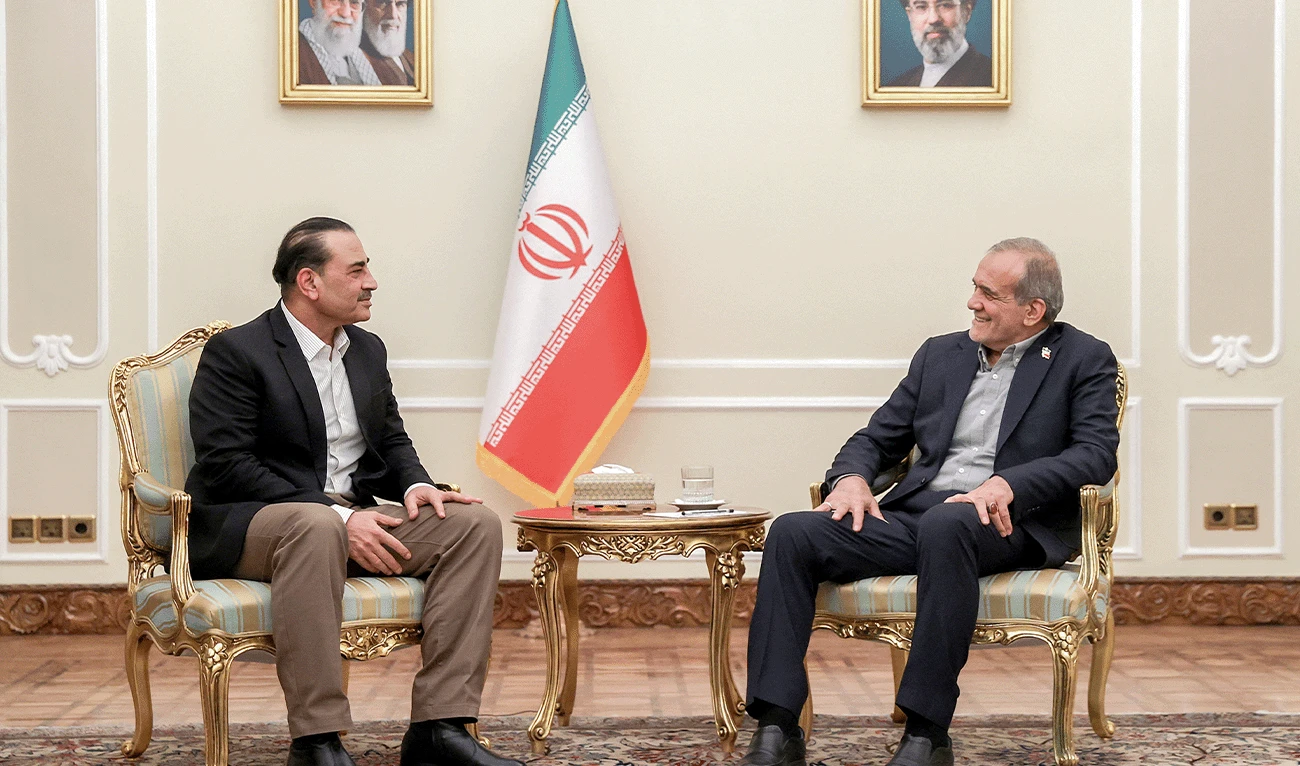
ISLAMABAD: A senior American official acknowledged on Tuesday Pakistan was facing militant threat from armed groups in Afghanistan following attacks on security forces in Khyber Pakhtunkhwa province earlier this month, though he denied US forces had left behind any weapons in the war-torn state before withdrawing in 2021.
US National Security Council Coordinator for Strategic Communication John Kirby issued the statement in response to a question about the recent spike in militant violence in Pakistan, with specific focus on one of the deadliest attacks against the army in which 23 soldiers were killed in Dera Ismail Khan on Dec. 12.
According to media reports, the militants who targeted the military post were armed with advanced American weapons, including assault rifles and night vision devices.
“Pakistan remains a key partner in the region,” Kirby said during a news conference in Washington. “They continue to face a viable terrorism threat across that border.”
“But let me remind you,” he continued. “We didn’t just leave a bunch of weapons in Afghanistan. This is a fallacy. This is a farce.”
He reiterated that US forces trained and equipped Afghan National Security Forces during 20 years of American presence in Afghanistan with congressional approval and consultations.
Kirby noted that when the Taliban made advances, Afghan soldiers decided not to fight but simply to lay down their arms.
“The arms that you’re talking about … belong to the Afghan National Security Forces,” he added.
Earlier this year in September, Caretaker Prime Minister Anwaar-ul-Haq Kakar also blamed the US for leaving military equipment behind in Afghanistan, saying this had created a new security challenge for Islamabad since it now had to deal with militants with sophisticated weapons.
Pakistan also summoned the top Afghan diplomat to the foreign office to lodge protest against the attack in Dera Ismail Khan.
US says groups in Afghanistan posing militant threat to Pakistan after spike in violent attacks
https://arab.news/m2ng5
US says groups in Afghanistan posing militant threat to Pakistan after spike in violent attacks
- A top American official, John Kirby, describes Pakistan as Washington’s ‘key partner’ in the region
- He says weapons used by militants targeting Pakistani security forces belonged to Afghan army
Pakistan cabinet reviews private Hajj policy as mandatory pilgrim training enforced
- Cabinet sends draft Private Hajj Policy 2027–2030 to committee for further review
- Religion minister warns pilgrims who skip mandatory training will be barred from Hajj
ISLAMABAD: Pakistan’s federal cabinet on Wednesday reviewed proposals for stricter oversight of private Hajj operators, as authorities separately warned that pilgrims who failed to complete mandatory training would be barred from performing Hajj next year.
The cabinet, chaired by Prime Minister Shehbaz Sharif, was briefed on a draft Private Hajj Policy for 2027–2030, which includes third-party registration and scrutiny of private Hajj operator companies, according to a statement from the Prime Minister’s Office.
“The Federal Cabinet directed that the draft Private Hajj Policy 2027–2030, presented by the Ministry of Religious Affairs and Interfaith Harmony regarding third-party registration and scrutiny of private Hajj operators’ companies, be referred to the Hajj Policy Committee for further deliberation in light of the views of Cabinet members,” the prime minister’s office said in a statement.
The development comes as Religious Affairs Minister Sardar Muhammad Yousaf said on Wednesday pilgrims who failed to attend both phases of mandatory Hajj training would not be allowed to perform the pilgrimage.
“Pilgrims who do not complete mandatory Hajj training will be barred from performing Hajj,” the ministry quoted Yousaf as saying during a training workshop in Islamabad.
Around 120,000 pilgrims are currently undergoing training at 200 locations nationwide, with the second phase scheduled to begin after Ramadan. The training aims to familiarize pilgrims with Saudi laws, Hajj rituals and safety protocols to prevent accidents in crowded areas.
Saudi Arabia has allocated 179,210 pilgrims to Pakistan for Hajj 2026, including about 118,000 seats under the government scheme, while the remainder will be handled by private tour operators.
Under Pakistan’s government Hajj package, the estimated cost ranges from Rs1.15 million to Rs1.25 million ($4,049.93 to $4,236), subject to final agreements with service providers.