CAIRO: Gaza’s Al Shifa hospital is providing only basic trauma stabilization, has no blood for transfusions and hardly any staff to care for a constant flow of patients, the World Health Organization said on Sunday.
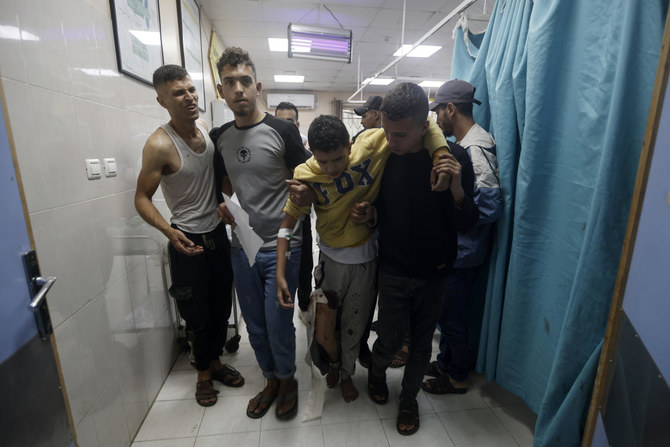
After a UN visit to deliver medicines and surgical supplies, the team described the emergency department in the enclave’s main health facility as resembling a “bloodbath.”
The WHO said there were hundreds of wounded patients, with new ones arriving by the minute and trauma injuries being stitched on the floor, with almost no pain management available.
Only four hospitals of 24 working in north Gaza before the war with Israel began have even partial service, and three of those are barely functioning, the WHO said.
The WHO said it was urgently gathering information at the Kamal Adwan hospital, where Gazan authorities said Israeli forces this week used a bulldozer to smash through the perimeter of a site Israel has said was used by Hamas fighters.
The group which governs Gaza has denied using the Kamal Adwan or other hospitals for militant activities.
Israel has also said Al Shifa, which it had occupied earlier in the war, had been used by Hamas.
Tens of thousands of Palestinians are believed to remain in north Gaza, after Israelis forces pushed most of the population to the south during the first days of the bombing campaign and ground war that began after the Oct. 7 Hamas attacks on Israel.
Gazan health authorities under the Hamas government say that more than 50,000 Palestinians have been injured during the Israeli operation, and 19,000 killed.
The WHO said “tens of thousands” of displaced people were using the Al Shifa hospital for shelter, describing severe shortages of safe water and food.
Gaza is home to 2.3 million people, most of whom have been displaced from their homes by the offensive.
Kamal Adwan
At the Kamal Adwan hospital, the Gazan health ministry said Israeli troops made hundreds of internally displaced persons leave, and evacuated wounded patients and medical staff to the hospital grounds.
Citing the ministry’s reports, WHO chief Tedros Adhanom Ghebreyesus said he was “extremely worried” about the situation.
The Israeli military said the hospital had been used as a Hamas “command and control center” and that soldiers had detained around 80 militant fighters before leaving the site on Saturday. Gazan authorities said some 70 medical staff were detained by Israel, including the head of the hospital.
Video obtained by Reuters showed two bodies in shrouds, an injured boy along with a wrecked car, smashed and burnt walls and piles of abandoned belongings at the hospital. Reuters could not determine the cause of the fatalities or the injuries.
“They raided the building, and they took all the employees for investigation, also the injured people were being investigated,” said Ahmed Al Kahlot, a doctor at the hospital.
The military released video on Saturday it said showed soldiers shooting at the hospital, finding weapons hidden in medical apparatus, and displaying several guns and grenades.
Reuters could not independently verify the accounts.
Reuters was also unable to verify reports, including from the Palestinian health minister Mai AlKaila, citing witnesses who claimed civilians were buried under earth moved by Israeli army bulldozers in the vicinity of the hospital.
Gazan health official Munir Al-Bursh demanded an international investigation into what he called a “deliberate crime” by Israel at the Kamal Adwan hospital.
Israel did not immediately respond to a request for comment about the allegations.


![]()

Gaza’s Al Shifa hospital a ‘bloodbath’ says WHO
Short Url
https://arab.news/zecmn
Gaza’s Al Shifa hospital a ‘bloodbath’ says WHO
- After a UN visit to deliver supplies, team described the emergency department in the enclave’s main health facility as resembling a “bloodbath”


Latest updates


© 2026 SAUDI RESEARCH & PUBLISHING COMPANY, All Rights Reserved And subject to Terms of Use Agreement.