

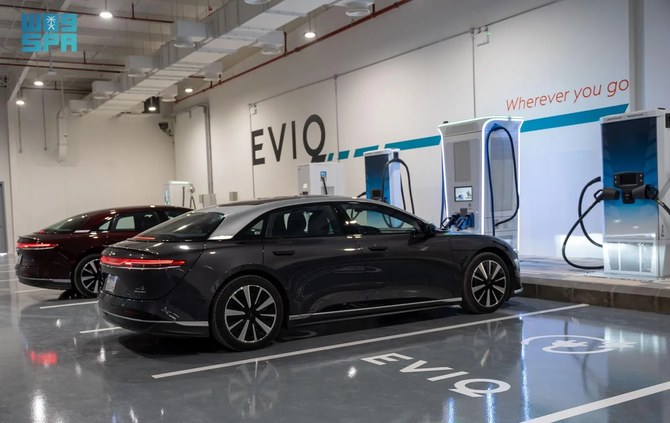

RIYADH: Saudi Arabia’s electric vehicle charging segment is on track to witness a boom thanks to the inauguration of a new research and development center in Riyadh.
Launched by Electric Vehicle Infrastructure Co., the center, which is the first of its kind in the region, will be used for testing and studying a range of charging devices and software, the Saudi Press Agency reported.
This move will help ensure the use of the most advanced equipment and software in the field, which confirms EVIQ’s commitment to developing the EV sector in the Kingdom.
“The launch of the research and development center is an indication of our commitment to quality and sustainable development of the EV infrastructure in the Kingdom,” said EVIQ CEO Mohammed Bakr Gazzaz in a statement.
“The technically leading center will help us always be up to date with the latest solutions for fast charging technologies,” Gazzaz added.
He explained that the center is an essential pillar within the framework of the company’s strategy, which aims to support achieving the Kingdom’s Vision 2030 goals by focusing on disseminating high-quality chargers and ensuring their compatibility with various types of EVs.
In an interview with Arab News last month, Gazzaz pointed out that the segment had been grappling with funds as investors were not keen to put money into the infrastructure owing to the high capital cost and the limited number of EVs on the road.
However, EVIQ hoped to break the stalemate by installing over 5,000 fast chargers across 1,000 locations in the Kingdom.
“For those (electrification) ambitions to be fully recognized, one of the key aspects in helping achieve that vision and ambition is the availability of a robust public charging infrastructure network,” Gazzaz said then.
EVIQ is a joint venture firm, with the Public Investment Fund owning 75 percent of the stake and the Saudi Electricity Co. holding the rest.
Last month, Bloomberg reported that the sovereign wealth fund is in talks to invest at least $250 million in Chinese EV maker Human Horizons Group Inc. as part of the Kingdom’s efforts to build a domestic auto industry.


