GAZA: Israel declared its determination Wednesday to press on with its Gaza war “with or without international support,” after it came under mounting pressure even from key backer the United States.
Now in its third month, the war was launched after the unprecedented October 7 attacks on Israel by Palestinian militant group Hamas that officials say killed 1,200 people, mostly civilians.
It has left Gaza in ruins, killing more than 18,600 people, mostly women and children, according to the Hamas-run health ministry, and causing “unparallelled” damage to roads, schools and hospitals.
The day after the UN General Assembly overwhelmingly backed a non-binding resolution for a ceasefire, more strikes hit Gaza and battles raged, especially in Gaza City, the biggest urban center, and Khan Yunis and Rafah in the south, AFP correspondents said.
Cold wintery rains lashed the territory, where the UN estimates 1.9 million of Gaza’s 2.4 million population have been displaced, living in makeshift tents as vital supplies of food, drinking water, medicines and fuel run low.
Camped with thousands in the grounds of the Al-Aqsa Martyrs hospital in central Gaza, Ameen Edwan said his family was unable to sleep.
“Rainwater seeped in. We couldn’t sleep. We tried to find nylon covers but couldn’t find any, so we resorted to stones and sand” to keep the rain out, he said.
The United Nations warned the spread of diseases — including meningitis, jaundice, impetigo, chickenpox and upper respiratory tract infections — had intensified.
The World Health Organization said 107 trucks carrying humanitarian aid had entered the besieged territory from Egypt, well below the daily average of 500 before October 7.
Air raid sirens wailed in Sderot and other southern Israeli communities near Gaza as Palestinian militants fired rockets, most of which were intercepted.
Israel’s military said sirens sounded in Ashdod city north of Gaza and in the Lakhish area. Social media footage showed a large fragment of an intercepted rocket had hit a supermarket.
The army said an air strike had hit a militant cell in Gaza City’s Shejaiya district “that was en route to launch rockets toward Israel.”
In Khan Yunis, a family mourned father of seven Fayez Al-Taramsi, killed in a strike.
“How are we going to live after him?” one of his daughters said, crying and clutching his bloodied shirt. “He brought us to life.”
In the October 7 attack — the deadliest in Israel’s 75-year history — Hamas also seized around 240 hostages.
Determined to destroy Hamas and bring the hostages home, Israel began a devastating aerial and ground offensive.
It has lost 115 soldiers, including 10 in northern Gaza on Tuesday, its deadliest day since the ground assault began on October 27.
The UN General Assembly passed a resolution Tuesday demanding a ceasefire, backed by 153 of 193 nations — surpassing the 140 or so that have routinely condemned Russia for invading Ukraine.
While Washington voted against, the resolution was supported by allies Australia, Canada and New Zealand, who, in a rare joint statement, said they were “alarmed at the diminishing safe space for civilians in Gaza.”
US President Joe Biden told a campaign event Israel had “most of the world supporting it” immediately after October 7, but “they’re starting to lose that support by the indiscriminate bombing that takes place.”
Biden, who toned down his comments later, on Wednesday met with families of American hostages from those the militants seized.
Despite the criticism from its main ally, Israel vowed to pursue its war.
“Israel will continue the war against Hamas with or without international support,” said Foreign Minister Eli Cohen.
“A ceasefire at the current stage is a gift to the terrorist organization Hamas, and will allow it to return and threaten the residents of Israel,” Cohen told a visiting diplomat, quoted by his ministry.
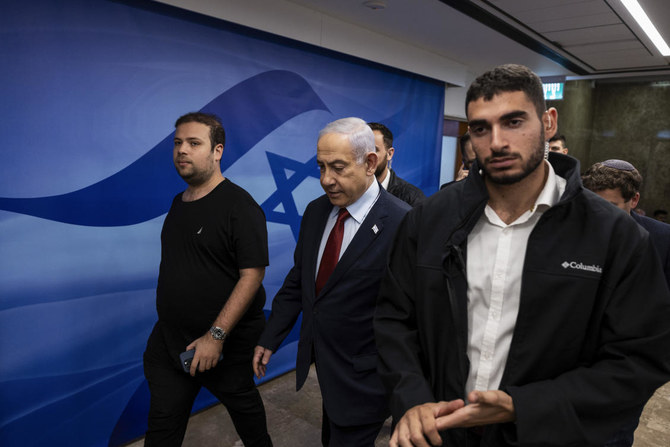
Israeli Prime Minister Benjamin Netanyahu later said Israel would persevere.
“We will continue until the end. There is no question at all. I say this in light of great pain, but also in light of international pressure. Nothing will stop us. We are going until the end, until victory, nothing less than that,” he said in a video statement.
Biden’s national security adviser, Jake Sullivan, will travel to Israel on Thursday to meet Netanyahu, who has said there is “disagreement” with Washington over how a post-conflict Gaza would be governed.
Hamas chief Ismail Haniyeh on Wednesday said that any plan for post-war Gaza that does not involve the Palestinian militant group “or the resistance factions is a delusion.”
Tuesday’s UN vote came as Philippe Lazzarini, head of its Palestinian refugee agency, said Gazans were “running out of time and options.”
The United States and Britain announced a new round of sanctions against Hamas over the October 7 attack, targeting “key officials who perpetuate Hamas’s violent agenda.”
Gaza’s hospital system is in ruins, and Hamas authorities said vaccines for children had run out, warning of “catastrophic health repercussions.”
The World Bank in a new analysis warned that “the loss of life, speed and extent of damages... are unparallelled.”
The Hamas-controlled health ministry said Israeli forces opened fire on wards of Kamal Adwan hospital in north Gaza, raising fears for the safety of 12 children in paediatric care.
The army has yet to comment, but Israel has repeatedly accused Hamas of using hospitals, schools, mosques and vast tunnel systems beneath them as military bases — claims the group has denied.
Fears of the conflict broadening continued, with daily exchanges of fire along Israel’s border with Lebanon, where Hezbollah is based, and other Iran-backed groups targeting US and allied forces in Iraq and Syria.
Israeli President Isaac Herzog warned Yemen’s Iran-backed Houthi rebels had “crossed a red line,” after repeatedly launching missiles and drones toward Israel and cargo ships in the Red Sea.


![]()

Israel to pursue Gaza war ‘with or without international support’
Short Url
https://arab.news/5tk2z
Israel to pursue Gaza war ‘with or without international support’
- Israeli attacks have left Gaza in ruins, killing more than 18,600 people, mostly women and children
- Benjamin Netanyahu: ‘Nothing will stop us. We are going until the end, until victory, nothing less than that’


Latest updates


© 2026 SAUDI RESEARCH & PUBLISHING COMPANY, All Rights Reserved And subject to Terms of Use Agreement.