Pakistan plans to set up new protectorate offices to facilitate citizens aspiring to work abroad 

Jawad Sohrab Malik, the Special Assistant to the Prime Minister on Overseas Pakistanis and Human Resource Development chairs a meeting in Islamabad, Pakistan on December 10, 2023. (Photo courtesy: Ministry of Overseas Pakistanis and Human Resource Development)
Short Url
Updated 10 December 2023
Follow

Pakistan plans to set up new protectorate offices to facilitate citizens aspiring to work abroad 

  • The newly proposed offices will be located in Sukkur, Abbottabad, Azad Kashmir, Gwadar, Islamabad and Gilgit-Baltistan 
  • The initiative aims to streamline services, making these offices easily accessible and eliminating need for extensive travel 

ISLAMABAD: The Pakistani government is planning to establish six new protectorate offices in different cities to provide greater accessibility and ease to Pakistani looking to work abroad, a senior official said on Sunday. 

The South Asian country currently has nine Protectorate of Emigrant offices located in Karachi, Lahore, Peshawar, Rawalpindi, Quetta, Multan, Malakand, DG Khan and Sialkot cities, according to the Ministry of Overseas Pakistanis. 

The plan to establish another six protectorate offices was unveiled at a meeting, presided over by Pakistan prime minister’s aide on overseas Pakistanis, Jawad Sohrab Malik, that was aimed at better serving the needs of prospective Pakistani migrant workers. 

“This initiative aims to streamline services, making them easily accessible to the common masses and eliminating the need for extensive travel. In line with these initiatives, discussions were held on the role of new Protectorate Offices in facilitating emigrants and promptly addressing their concerns,” Malik was quoted as saying in a statement shared by his ministry. 

“The overarching goal is to enhance the overall experience for Pakistani migrant workers and to create a system that is efficient, accessible, and free from corruption.” 

The newly proposed protectorate offices will be strategically located in Sukkur, Abbottabad, Azad Jammu and Kashmir, Gwadar, Islamabad, and Gilgit-Baltistan, according to the Ministry of Overseas Pakistanis. 

The development comes as Pakistan treads a tricky path to economic recovery after signing a $3 billion International Monetary Fund (IMF) bailout deal that averted a looming default in June this year. 

A large number of Pakistanis work abroad, mostly in Saudi Arabia and the United Arab Emirates (UAE), whose remittances play a crucial role for the South Asian country in maintaining its foreign exchange reserves. 

Malik emphasized the government’s commitment to ensuring universal access to protectorate offices and saying it had lifted previously imposed restrictions, based on location of issuance of identity cards or of domiciles, for protectorate services. 

“Consequently, individuals, regardless of domicile or the location of ID card issuance, can now avail the facilities and services offered by any Protectorate Office in Pakistan,” the statement read. “This strategic initiative is aimed at optimizing and simplifying the overall process, ensuring ease of access for all stakeholders without any hindrance.” 

Malik said this significant step reaffirmed the government’s dedication to the welfare and support of overseas Pakistanis, with an emphasis on providing comprehensive services and resolving issues faced by individuals seeking employment opportunities abroad. 


No casualties as blast derails Jaffar Express train in Pakistan’s south

Updated 26 January 2026
Follow

No casualties as blast derails Jaffar Express train in Pakistan’s south

  • Passengers were stranded and railway staffers were clearing the track after blast, official says
  • In March 2025, separatist militants hijacked the same train with hundreds of passengers aboard

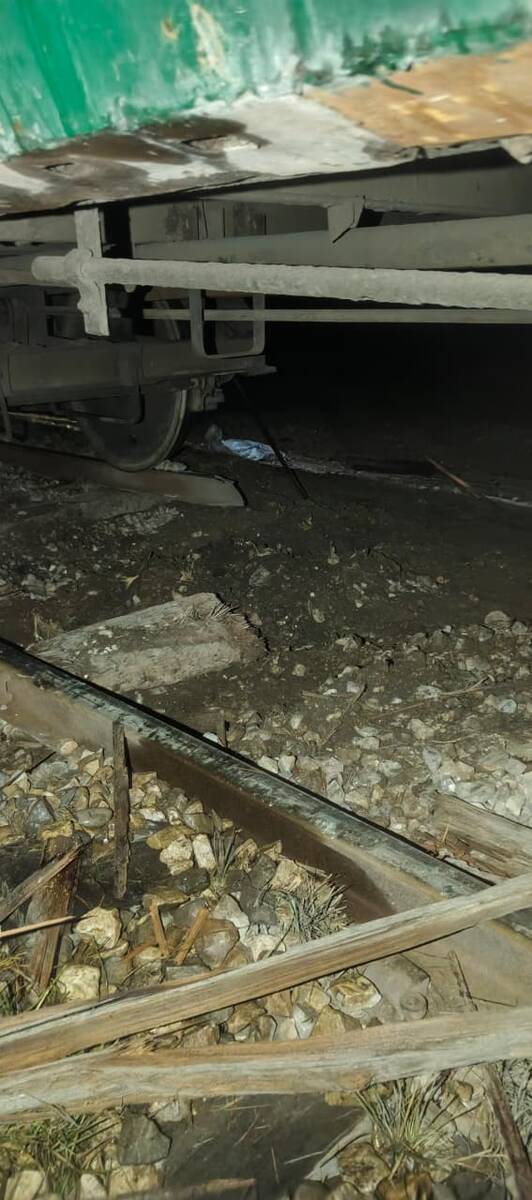
QUETTA: A blast hit Jaffar Express and derailed four carriages of the passenger train in Pakistan’s southern Sindh province on Monday, officials said, with no casualties reported.

The blast occurred at the Abad railway station when the Peshawar-bound train was on its way to Sindh’s Sukkur city from Quetta, according to Pakistan Railways’ Quetta Division controller Muhammad Kashif.

No group immediately claimed responsibility for the bomb attack, but passenger trains have often been targeted by Baloch separatist outfits in the restive Balochistan province that borders Sindh.

“Four bogies of the train were derailed due to the intensity of the explosion,” Kashif told Arab News. “No casualty was reported in the latest attack on passenger train.”

The Jaffar Express stands derailed near Abad Railway Station in Jacobabad following a blast on January 26, 2026. (AN Photo/Saadullah Akhtar)

Another railway employee, who was aboard the train and requested anonymity, said the train was heading toward Sukkur from Jacobabad when they heard the powerful explosion, which derailed power van among four bogies.

“A small piece of the railway track has been destroyed,” he said, adding that passengers were now standing outside the train and railway staffers were busy clearing the track.

In March last year, fighters belonging to the Balochistan Liberation Army (BLA) separatist group had stormed Jaffar Express with hundreds of passengers on board and took them hostage. The military had rescued them after an hours-long operation that left 33 militants, 23 soldiers, three railway staff and five passengers dead.

The passenger train, which runs between Balochistan’s provincial capital of Quetta and Peshawar in the country’s northwest, had been targeted in at least four bomb attacks last year since the March hijacking, according to an Arab News tally.

The Jaffar Express stands derailed near Abad Railway Station in Jacobabad following a blast on January 26, 2026. (AN Photo/Saadullah Akhtar)

Pakistan Railways says it has beefed up security arrangements for passenger trains in the province and increased the number of paramilitary troops on Jaffar Express since the hijacking in March, but militants have continued to target them in the restive region.

Balochistan, Pakistan’s southwestern province that borders Iran and Afghanistan, is the site of a decades-long insurgency waged by Baloch separatist groups who often attack security forces and foreigners, and kidnap government officials.

The separatists accuse the central government of stealing the region’s resources to fund development elsewhere in the country. The Pakistani government denies the allegations and says it is working for the uplift of local communities in Balochistan.