DHAKA: Most obituaries that on Nov. 29 bid farewell to Henry Kissinger have omitted reference to his role in the war of independence of Bangladesh, where the prominent US secretary of state will remain seen as an enabler of massacres of civilians.
In 1971, Kissinger advised then President Richard Nixon to side with the Pakistani military dictator Gen. Yahya Khan in his war with Bangladesh, then East Pakistan.
According to the Bangladesh government, the war that eventually led to the nation’s independence came at a cost of 3 million lives, most of them civilians, including intellectuals, whom historians say were deliberately targeted.
The nine-month war also displaced 10 million people, a seventh of Bangladesh’s population at the time, forcing them to flee to neighboring India.
“Bangladesh will remember him as an accomplice and, to some extent, an instigator of the genocide that was committed against Bangladesh in 1971. He was an enemy of Bangladesh,” Touhid Hossain, former foreign secretary of Bangladesh, told Arab News.
Kissinger and the US administration turned a “blind eye to the genocide going on in Bangladesh. It was largely influenced by Kissinger,” Hossain added.
At the time, the state of Pakistan existed as a two-winged artificial entity — West Pakistan, which is today’s Pakistan, and East Pakistan, which is now Bangladesh — split in between by India.
After the 1970 elections yielded a democratic victory for ethnic Bengalis in East Pakistan and their leader Sheikh Mujibur Rahman was expected to become the prime minister of the whole country, the army generals ruling West Pakistan launched a military crackdown that turned into a mass slaughter of his supporters and of Bengali civilians.
The American support for Pakistan came because of Islamabad’s role as a mediator in the normalization of relations between the US and China.
“They could have done it without supporting the genocide,” Hossain said.
“It’s said that since Pakistan was trying to mediate the US-China relations during that period against the Soviet Union, that’s why from a geopolitical consideration, he turned a blind eye to the other things and went all for Pakistan.”
Kissinger and Nixon repeatedly ignored reports from Archer Blood, the US consul in Dhaka, as Pakistani forces, using US-made weapons, massacred thousands of people in the city.
“Richard Nixon and Henry Kissinger, both of them were complicit,” Dr. Imtiaz Ahmed, professor of international relations at Dhaka University, told Arab News.
“Blood sent the information about the ongoing genocide here. But he (Kissinger) didn’t pay much attention to that … Their point was not to disturb Yahya Khan as Khan was involved in his negotiating and bringing China into the global arena.”
Bangladesh has yet to hear an apology from the US over the role it played in enabling the killing of its civilians. Ahmed hoped that it would finally at least recognize the historical facts.
“The US didn’t recognize the genocide till today, as Kissinger was alive. Now, that he is no longer there, I think it opens up the possibility of the US recognizing the 1971 genocide as genocide,” he said.
“Kissinger played a complicit role in the genocide that took place in Bangladesh in 1971. There is no doubt about this.”


Bangladeshis remember Kissinger as ‘accomplice in genocide’
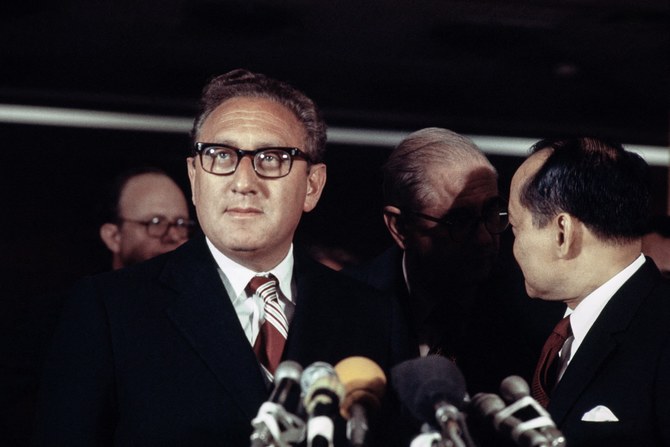
https://arab.news/b3caj
Bangladeshis remember Kissinger as ‘accomplice in genocide’

- Up to 3m people were killed in US-supported Pakistani crackdown in Bangladesh
- Kissinger ‘turned a blind eye’ to it, former Bangladeshi foreign secretary says


Venezuelan activist Javier Tarazona released from prison as US diplomat assumes post
- Human rights activist Javier Tarazona was arrested in July 2021
- He was released shortly after the arrival in Caracas of US charge d’affaires
CARACAS: Venezuelan human rights activist Javier Tarazona, an ally of opposition leader María Corina Machado, was released from prison after the government promised to free political prisoners in an amnesty bill, rights organizations and family members said Sunday.
Tarazona, the director of the Venezuelan nonprofit human rights group FundaRedes, was arrested in July 2021, after reporting to authorities that he had been harassed by national intelligence officials. Two other activists of the group were also detained at the time.
Venezuela’s Foro Penal, a rights group that monitors the situations of political prisoners in the country, said Sunday that 317 people jailed for political reasons had been released as of noon local time Sunday, and 700 others were still waiting to be freed.
“After 1675 days, four years and seven months, this wishful day has arrived. My brother Javier Tarazona is free,” José Rafael Tarazona Sánchez wrote on X. “Freedom for one is hope for all.”
Tarazona was released shortly after the arrival in Caracas of US Charge d’Affaires Laura Dogu, who will reopen the American diplomatic mission after seven years of severed ties. It comes after US President Donald Trump ordered a military action that removed the South American country’s former President Nicolás Maduro from office and brought him to trial in the US
Dogu, who was previously ambassador in Nicaragua and Honduras, arrived in Venezuela one day after the country’s interim president, Delcy Rodríguez, announced an amnesty bill to release political prisoners. That move was one of the key demands of the Venezuelan opposition.
Venezuela’s government had accused Tarazona of terrorism, betraying the nation and hate speech, all frequent accusations it makes against real or potential opposition members. Tarazona was vocal against illegal armed groups on the country’s border with Colombia and their alleged connection to high-ranked members of the Maduro administration.
Amnesty International reported that Tarazona’s health has deteriorated due to lack of medical attention during his time in prison.
“All of Venezuela admires you and respects your bravery and your commitment,” Machado said on X. “You, better than anyone, know that there will be justice in Venezuela. Freedom for all political prisoners.”
Venezuela’s government denies it jails members of the opposition and accuses them of conspiring to bring it down.


