
JEDDAH: Streaming giant Netflix is taking part in Jeddah’s Red Sea International Film Festival — set to run until Dec. 9 — with the “Because She Created” space, an installation at the event that shines a spotlight on female talent in the Arab world.
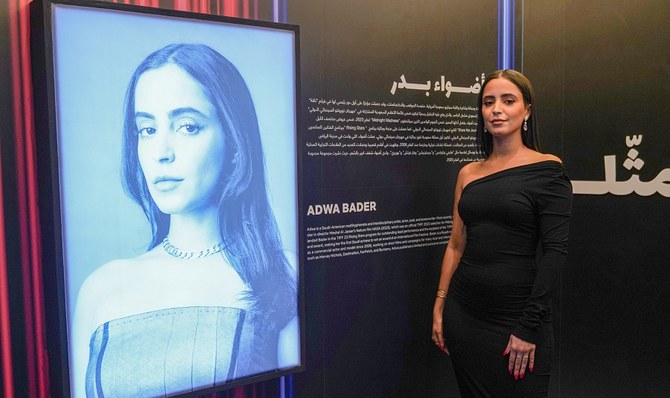
Organizers have focused on Adwa Bader, the Saudi-American interdisciplinary artist and star of Netflix’s upcoming local film “NAGA”; Saudi Arabia writer, performing artist, actor and director Fatima Al-Banawi, who is about to release her directorial debut “Basma”; and Haya Abdelsalam, who is the lead and creative producer behind Kuwaiti Netflix series “Devil’s Advocate.”

Fatima Al-Banawi was photographed in Netflix's Because She Created booth in Jeddah. (Supplied)
Bader spoke to Arab News about the initiative, saying it was important because “we as women have beautiful and powerful stories to tell, and the support of the industry is needed to not only help integrate us better but also recognize our work and the great stories that so many incredible Arab women are telling for the first time.”
Nuha El-Tayeb, content director for the Middle East, Africa and Turkiye at Netflix, echoed those sentiments, telling Arab News that it was critical to spotlight women, in particular, when it comes to the film industry in the region.
“It’s critical to authentic storytelling. Amplifying underrepresented voices, which includes Arab women, gives more people a chance to see their lives reflected on screen,” she said. “Arab women filmmakers are shifting perspectives and revolutionizing the industry in the region, creating Oscar-nominated films and representing the region at international film festivals and major platforms. It’s clear that they have important stories to tell.”

Streaming giant Netflix is taking part in Jeddah’s Red Sea International Film Festival — set to run until Dec. 9 — with the 'Because She Created' space. (Supplied)
El-Tayeb went on to highlight some of the projects that the initiative has supported over the years — including the “Because She Created” writing program, AFAC-Netflix Creative Equity Fund and “Women in Film,” a training program for emerging talent.
“‘Because She Created,’ while born in the Arab world, is a borderless endeavor. Through content on the service, financial grants, upskilling initiatives, and exposure at regional film festivals, we’re providing an avenue for female storytellers to help break the glass ceiling for women in entertainment,” El-Tayeb said.
She added that when it comes to pitches, Netflix is interested in “stories that are authentic and relatable. Stories with universal themes that have broader appeal and can resonate with our members at home.”
When it comes to the entertainment industry in Saudi Arabia, Bader noted the importance of representation on screen.
“It’s a young industry,” the actress added of the film scene in Saudi Arabia. “And we have been waiting to see representation in an authentic way in film and culture. We’ve been waiting to tell our stories and see them on screen, and it’s incredible to witness the transformation,” she said.
When it comes to encouraging Saudi Arabia’s youth to see film as a viable career, the actress believes education is key.
“Art is for everyone, and it can be a viable career if one is willing to take that risk. It’s not easy to be an artist, it’s an emotional job and it’s risky because not everyone can relate, but that’s exactly the reason why it’s even more important to integrate art in formal education to support future generations and support their career choices,” she said.