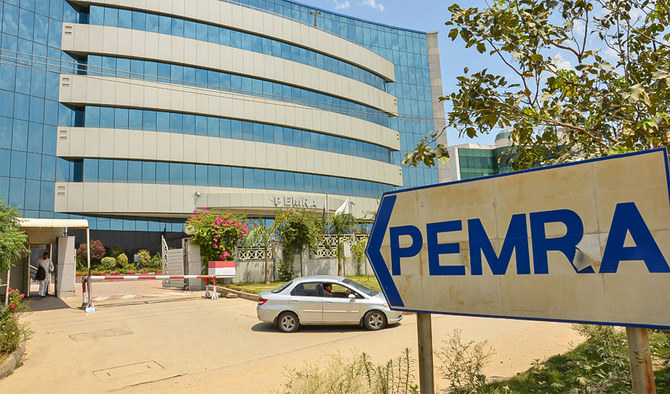
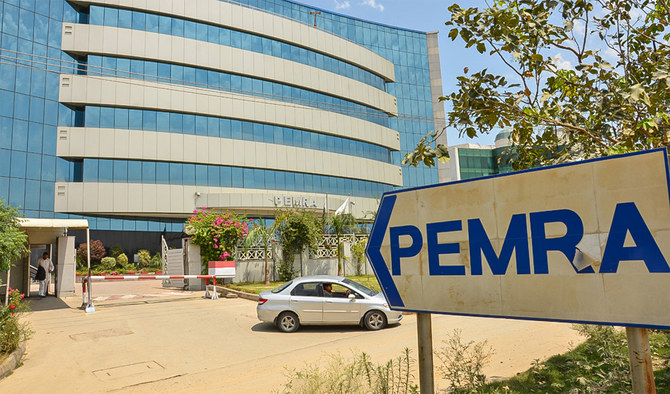
ISLAMABAD: The Pakistan Electronic Media Regulatory Authority (PEMRA) has asked broadcasters not to promote “hate mongers” involved in anti-state activities, citing violent incidents in May that stemmed from the arrest of former prime minister Imran Khan.
Khan, who was ousted in a parliamentary no-trust vote in April 2022, was briefly arrested in a graft case on May 9, which led to attacks on government and military installations in Pakistan by supporters of his Pakistan Tehreek-e-Insaf (PTI) party.
The attacks led to a crackdown on Khan supporters and members of his party. Several top aides of the ex-premier and members of his party have since distanced themselves from the PTI, while many still remain behind bars.
In its directive to TV stations on Monday, PEMRA said any speech that incites violence, promotes hatred, or poses threat to public order and security could be restricted, noting that it was “crucial to strike a balance between protecting freedom of speech and maintaining public order.”
“In this regard, attention of all the licensees is drawn to a tragic incident occurred on May 9, 2023 and its mastermind, wherein state and public properties were attacked, innocent lives were endangered and anti-state sentiments were prompted, attempting to weaken Federation of Pakistan and state institutions,” the regulator said.
“This is unequivocally a very horrific trend and indeed needs to be condemned and those involved in promoting such activities must be boycotted on media for damaging peace and tranquility in the country. In the wake of aforementioned scenario, all satellite TV channel licensees are directed to remain vigilant and not to promote any hate monger, perpetrators and their facilitators inadvertently or advertently.”
The PEMRA directive comes as Khan once again becomes center of public attention, with public hearings of a case against him relating to the leaking of state secrets. The ex-premier initially faced an in-camera prison trial in the case, however, a Pakistani high court last month ruled that such hearings were illegal and ordered an open trial with media access.
Khan, who has been in jail since August 5 after being convicted in a case involving the sale of state gifts, faces a slew of cases that he says are “politically motivated” and aimed at keeping him out of politics.
Further in its directive, PEMRA asked all licensees to ensure compliance of the provisions of its code of conduct for programs and advertisements aired on electronic media.
“Licensees must adhere to provisions of PEMRA laws and orders of the superior courts by refraining from providing their airtime to such individuals who propagate hate speech and provoke public sentiments against the Federation and State Institutions,” it added.