

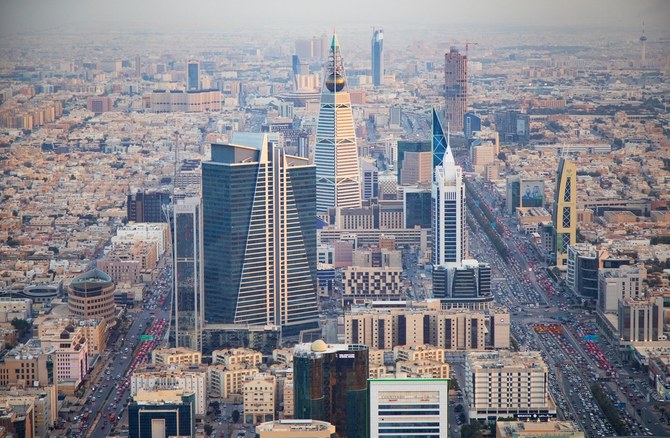

DUBAI: Riyadh is poised to transform into one of the world’s most sustainable cities by the end of the decade, thanks to substantial investments earmarked to prepare the Saudi capital for the upcoming Expo 2030.
Saudi Vice Minister of Tourism Princess Haifa bint Muhammad Al-Saud announced a $92 billion investment for the global showpiece event at the third Saudi Green Initiative Forum on the sidelines of the UN Climate Change Conference in Dubai.
Riyadh has secured the hosting rights for the 2030 World Expo, scheduled to take place between Oct. 1, 2030, and March 31, 2031.
The SGI Forum kicked off on Dec. 4 as COP28 continues to mobilize world leaders toward serious action against climate change.
Addressing the event, Princess Haifa set the tone by emphasizing the projected growth in international arrivals, expected to reach 1.8 billion by 2030.
She underscored the collective responsibility, stating: “Those are the types of commitments that we need to start proactively doing, and it starts from a role as individuals, all the way to the roles of the communities, to the roles of government and the roles of the private sector.”
Beyond Riyadh, Saudi Arabia is spearheading a significant push toward sustainable tourism, with the NEOM giga-project taking center stage.
Nadhmi Al-Nasr, CEO of NEOM, outlined the ambitious vision for this new urban project, which starts from scratch. He detailed the plan to designate 95 percent of the region as an untouched nature reserve, with only 5 percent allocated for the city, envisioned to accommodate 9 to 10 million people.
Al-Nasr said: “We are starting from zero. We have no legacy. We have nothing to undo. And that's a blessing, but that’s a big responsibility.”
He added: “We said look, first we want the nature reserve to govern how NEOM will be done. Immediately we decided to make 95 percent of this whole region untouched nature reserve.”
Furthermore, Al-Nasr emphasized the commitment to renewable energy, stating: “We said we need to build the city or this NEOM by having it all energized by renewable energy. Renewable energy is the base of NEOM.”
Mohammad Al-Tayyar, the program director of Saudi Arabia’s Oil Sustainability Program — an initiative aimed at developing new and environmentally and economically advantageous applications for hydrocarbons — shared insights into effective climate action.
He stated, “So if you focus on the four R’s — reduce, reuse, recycle, and remove — you can really achieve a lot of your mitigation and abatement activities.”
Speaking at the same forum, Governor of Public Investment Fund Yasir Al-Rumayyan highlighted Saudi Arabia’s economic successes and unveiled plans for a net-zero transition by the first quarter of the following year.
He discussed the transformation of the sovereign wealth fund to the seventh rank globally and its potential role in the India-Saudi-Europe corridor, with a focus on green hydrogen and renewable energy.
“We are doing our part, and I hope the rest of the world will do theirs,” said Al-Rumayyan.
Saudi Minister of Economy and Planning Faisal Al-Ibrahim emphasized the significance of Vision 2030 in diversifying the country’s economy and empowering the youth.
He acknowledged the experimental nature of their approach, stating: “We’re very experimental. We’re very humble about learning from others’ experiences, including our own experiences.”
The minister stressed the importance of stable and growing economies in achieving effective climate action and shared their commitment to building institutional capabilities, and said: “I think, from our point of view, the thing that we don’t regret doing is building institutional capabilities, educating people.”
He continued: “We have the cleanest oil in the world being produced in Saudi Arabia. And we still want to be a large, and the most reliable and cleanest conventional, hydrocarbon energy producer.”
President of the New Development Bank Dilma Rousseff remarked on the challenges faced by developing nations, stating: “There is a problem in the Global South countries. The burden of public debt. The public debt is rising too much and too fast.”
The leaders collectively emphasized Saudi Arabia’s commitment to sustainable practices, renewable energy, and nature conservation.
The announcements made at the third SGI Forum reflect the Kingdom’s determination to lead the charge in addressing the global climate crisis and fostering a more sustainable future for generations to come.


