

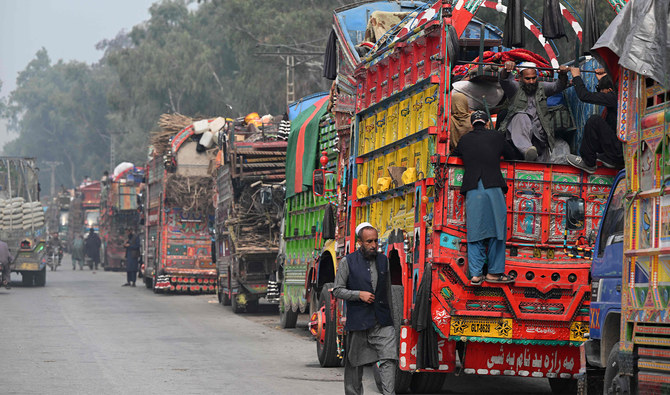

QUETTA: A Pakistani province is setting targets for police to arrest and deport hundreds of thousands of Afghans who are in the country illegally, officials said Thursday.
The measure is part of a nationwide crackdown following a sharp decline in the expulsion of Afghans living in Pakistan without legal permission. Near the Chaman border crossing between Pakistan and Afghanistan, local residents were protesting against new travel visa requirements aimed at cutting down on illegal immigration that have disrupted traffic in the area.
Some of those targeted for deportation had apparently gone to remote areas in Pakistan to avoid arrest, authorities said.
“Instructions have gone to police to arrest Afghans living in Pakistan illegally,” said Jan Achakzai, spokesperson for the government in southwestern Pakistan’s Balochistan province. He said authorities have been asked to deport 10,000 Afghans a day.
Achakzai made his comment days after authorities at the two key northwestern Torkham and southwestern Chaman border crossings acknowledged that there has been a sudden decrease in the number of Afghans who were sent back to Afghanistan after being arrested on the charges of living in Pakistan illegally.
An estimated 1.7 million Afghans were living in Pakistan in October when authorities announced the crackdown, saying that anyone without proper documents had to go back to their countries by Oct. 31 or be arrested.
Since then, more than 400,000 Afghans returned to their home country.
Pakistani officials say they are deporting only those foreigners, including Afghans, who are in the country illegally, and an estimated 1.4 million Afghans who are registered as refugees should not worry as they are not the target of the anti-migrant drive. Police in Pakistan have been going door to door to check migrants’ documentation.
Pakistan has been hosting Afghans since the 1980s, when millions of Afghans fled south and east to the neighboring Islamic nation during the Soviet occupation of their country. The numbers spiked after the Taliban takeover of Afghanistan in 2021.
As part of its crackdown, Pakistan stopped recognizing special permits under which hundreds of thousands of residents in the Balochistan province border town of Chaman could cross between the two countries. The new visa requirement angered residents who have been rallying near the border, disrupting normal traffic toward the border crossing.
The protesters want Pakistan to allow them to continue using the special permits for business purposes and to meet with relatives who live in the Afghan border city of Spin Boldak.
In Afghanistan, the Taliban-led administration says it is providing shelter and food to returnees. According to Tolo News, an private Afghan outlet, Afghan refugees have complained of mistreatment by Pakistani soldiers after returning home.
The alleged mistreatment of migrants by Pakistani authorities drew widespread condemnation from human organizations.
On Tuesday, the New York-based Human Rights Watch said Pakistani authorities have committed widespread abuses against Afghans living in the country to compel their return home.
“Pakistani officials have created a coercive environment for Afghans to force them to return to life-threatening conditions in Afghanistan,” said Elaine Pearson, Asia director at Human Rights Watch. “The authorities should immediately end the abuses and give Afghans facing expulsion the opportunity to seek protection in Pakistan.”
Pakistani authorities have denied such allegations, saying anyone found guilty of mistreating Afghan immigrants lacking permanent legal status would be punished. Achakzai said migrants who are in the country illegally are held at deporting centers in a dignified manner before transporting them to border crossings so they can go back home.


