NEW YORK: An Indian government official directed an unsuccessful plot to assassinate a Sikh separatist, who is also a US citizen, on US soil, the Justice Department said on Wednesday, in announcing charges against a man accused of orchestrating the attempted murder.
Federal prosecutors in Manhattan said Nikhil Gupta, 52, worked with the Indian government employee, whose responsibilities included security and intelligence, on the plot to assassinate the New York City resident who advocated for a Sikh sovereign state in northern India.
Prosecutors did not name the Indian official or the target, although they did describe the latter as a US citizen of Indian origin. US officials have named him as Gurpatwant Singh Pannun, a dual citizen of the United States and Canada. Gupta was arrested by Czech authorities in June and is awaiting extradition. He could not be reached for comment.
“The defendant conspired from India to assassinate, right here in New York City, a US citizen of Indian origin who has publicly advocated for the establishment of a sovereign state for Sikhs,” Damian Williams, the top federal prosecutor in Manhattan, said in a statement.
The Indian official is described in the related indictment as a “Senior Field Officer” with responsibilities in “Security Management” and “Intelligence” employed by the Indian government who “directed the plot from India.”
The charges come after a senior Biden administration official last week said US authorities had thwarted a plot to kill a Sikh separatist in the United States and issued a warning to India over concerns the government in New Delhi was involved.
Biden instructed CIA director Bill Burns to contact his Indian counterpart, then travel to India to deliver a message that “we will not tolerate such activities and that we expect those responsible to be held fully accountable,” a senior US official said Wednesday.
Biden also raised the issue with Indian Prime Minister Narendra Modi during the G20 summit, where he “emphasized the seriousness of this issue and the potential repercussions for our bilateral relationship were similar threats to persist,” the official said. National Security Adviser Jake Sullivan and Secretary of State Blinken also discussed the issue with India’s foreign minister.
Director of National Intelligence Avril Haines also traveled to India to aid the government in an internal investigation, the official said.
DELICATE DIPLOMATIC ISSUE
The issue is highly delicate for both India and the Biden administration as they try to build closer ties in the face of an ascendant China perceived as a threat for both democracies.
India’s Washington embassy and its foreign ministry did not immediately respond to requests for comment, but earlier on Wednesday India’s foreign ministry said New Delhi would formally investigate the concerns aired by the United States.
“India takes such inputs seriously since they impinge on our national security interests as well,” the ministry said, vowing to “take necessary follow-up action” on the findings of the panel set up on Nov. 18.
Adrienne Watson, spokesperson for the White House National Security Council, said that after the defendant “credibly indicated” he was directed by an Indian government official, “we took this information very seriously and engaged in direct conversations with the Indian government at the highest levels to express our concern.”
“The government of India was clear with us that they were taking this seriously and would investigate,” she said, adding: “We will continue to expect accountability from the government of India based on the results of their investigations.”
The US started voicing its concerns and related details to Modi’s government as early as April, an Indian official who is aware of the matter, but not authorized to speak to the media, told Reuters.
The official said the issue was also discussed on Nov. 10, when Blinken and Defense Secretary Lloyd Austin met their counterparts in the Indian capital for the so-called 2+2 dialogue.
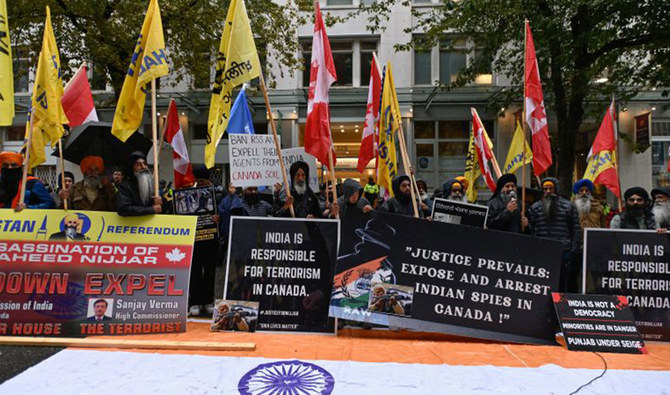
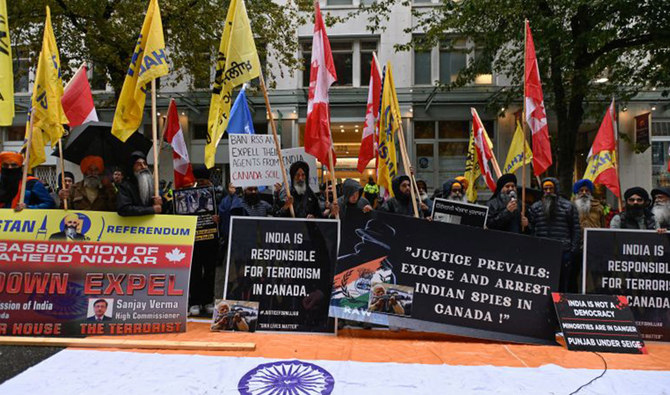
News of the incident comes two months after Canada said there were “credible” allegations linking Indian agents to the June murder of a Sikh separatist leader, Hardeep Singh Nijjar, in a Vancouver suburb, something India has rejected.
'WE HAVE SO MANY TARGETS'
According to US prosecutors, the Indian official recruited Gupta in May 2023 to orchestrate the assassination. Gupta had previously told the official he had been involved with trafficking drugs and weapons, prosecutors said.
Gupta then reached out to someone he believed was a criminal associate for help hiring a hitman, but that associate was actually a Drug Enforcement Administration undercover agent, prosecutors said.
The day after Nijjar was killed, Gupta wrote to the undercover DEA agent saying Nijjar “was also the target” and “we have so many targets,” prosecutors said.
Gupta faces two counts of murder-for-hire and murder-for-hire conspiracy. He faces a maximum sentence of 20 years if convicted.
The Indian government has complained about the presence of Sikh separatist groups outside India, including in Canada and the United States. The groups have kept alive the movement for Khalistan, or the demand for an independent Sikh state to be carved out of India.
The movement is considered a security threat by India, although the cause hardly has any support inside the country presently having been crushed in the 1990s.
Sikh militants were blamed for the 1985 bombing of an Air India Boeing 747 flying from Canada to India in which all 329 people on board were killed.