

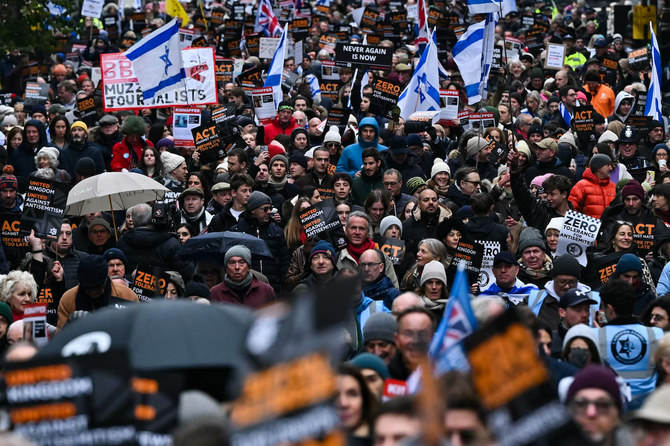

LONDON: A number of Jewish employees of the BBC joined a march in London on Sunday in protest against antisemitism, in contravention of the broadcaster’s policy.
Staff members attended the event, organized by the Campaign Against Antisemitism, despite being reminded of BBC rules on impartiality that state editorial staff “should not participate in public demonstrations or gatherings about controversial issues.” Employees who want to participate in pro-Palestine marches are believed to have been given similar reminders.
The Jewish employees, who reportedly work in current affairs and journalism departments, told Times Radio that being Jewish “took precedence over what the BBC thinks.”
One person, who spoke to The Times on condition of anonymity, said: “I learned last week that the BBC was barring members of staff from attending the planned march against antisemitism — and let’s face it, we’re really talking about Jewish members of staff here, because they’re the only ones who would really be wanting to go — so the BBC knew exactly who it was stopping.”
Although the BBC describes the rules as guidance, non-compliance can result in disciplinary action, the employee added.
“We understood the BBC’s rationale that staff risk creating a perception of bias by attending marches which are political or controversial but this was not a march about Brexit or the NHS, but a march against antisemitism and there is nothing controversial or political about that,” the worker said.
“Antisemitism has soared in Britain since the Hamas attacks and the start of the war on Oct. 7, and as Jews we are all-too-well aware. Whether or not we have experienced it directly, our families and communities are affected by it daily and it is on our minds, whether we are at home or at work.
“Personally, I was unwilling to comply as I felt my attendance, as a Jewish person, took precedence over what the BBC thinks and I went to the march. I know several other Jewish staff did too and I am sure there were more who I don’t know about. The march was dignified and civilized and did nothing other than demonstrate an utter rejection of antisemitism by not just Jews but other communities and faiths who also attended to show their support.”
The employee added that the BBC had shown “insensitivity towards us which is going to be hard to repair.”
Staff compared the current situation with the BBC’s stance on the Pride parades in 2020, when Director General Tim Davie granted all staff the go ahead to participate.
A spokesperson for the broadcaster said: “The BBC is clear that antisemitism is abhorrent. We have established guidance around marches, which explains that different considerations apply depending on what you do for the BBC.
“Corporately, we have not issued any staff communication on any specific march this weekend but this does not mean discussions which consider the guidance have not taken place between colleagues.”


