TEHRAN: Iran said Saturday it helped broker the surprise release of Thai nationals who had been held by Palestinian militants in war-ravaged Gaza since their shock attack on Israel last month.
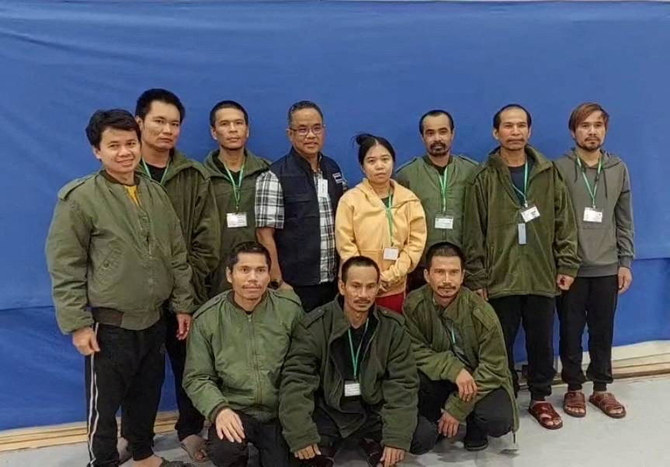
On Friday, Hamas unexpectedly released 10 Thais and a Filipino, along with the 13 Israeli women and children that were part of a temporary truce deal with Israel.
Israel in turn freed 39 Palestinian women and children from its prisons.
“The issue of Thai prisoners was jointly pursued by the Islamic Republic of Iran and Qatar,” Iran’s foreign ministry spokesman Nasser Kanani told the official IRNA news agency.
The releases took place as a temporary truce paused fighting in Gaza for the first time since October 7 when Hamas gunmen attacked southern Israel, killing at least 1,200 people, most of them civilians, and taking 240 more hostage, according to Israeli figures.
Israel has responded with a withering bombing campaign on Gaza, that has killed more than 15,000 people, most of them women and children, according to the Hamas-run government.
“A list of names of these prisoners was given to Hamas officials to review and assist with the issue from a humanitarian perspective,” Kanani added.
The Thai foreign ministry confirmed the releases on Saturday, saying the 10 individuals — nine men and one woman — had been taken to Israel via Egypt.
It added that roughly 20 Thais are among the estimated 215 people still held hostage in Gaza.
During the four-day truce, Hamas is expected to free a total of 50 Israeli hostages, some of them dual nationals, in exchange for 150 Palestinian prisoners, under an agreement brokered by Qatar, Egypt and the United States.
On Thursday, Kanani welcomed the temporary truce as “the first step in the path of completely stopping war crimes committed... by the Zionist regime against Palestinian people.”
Iran, which supports Hamas financially and militarily, has hailed the October 7 attacks as a “success” but denied any direct involvement.
Tehran has made support for the Palestinian cause a centerpiece of its foreign policy since the 1979 Islamic revolution.

Iran says it helped broker release of Thais held in Gaza
Short Url
https://arab.news/9qd63
Iran says it helped broker release of Thais held in Gaza
- On Friday, Hamas unexpectedly released 10 Thais and a Filipino
- “The issue of Thai prisoners was jointly pursued by the Islamic Republic of Iran and Qatar,” Iran’s foreign ministry spokesman Nasser Kanani told the official IRNA news agency
Aid trucks resume crossing Egypt-Gaza border after closure
- More than 100 aid trucks crossed the Egyptian side of Gaza’s Rafah border crossing on Tuesday, two sources told AFP
RAFAH: More than 100 aid trucks crossed the Egyptian side of Gaza’s Rafah border crossing on Tuesday, two sources told AFP.
Israel closed all crossings into the Gaza Strip on Saturday, after it launched a joint attack on Iran with the United States.
It agreed to reopen the Kerem Shalom crossing, where trucks from Egypt are inspected, for the “gradual entry of humanitarian aid.”
“More than 100 United Nations aid trucks, including UNICEF’s, entered the Rafah border crossing” on Tuesday, a source at the border told AFP on Wednesday on condition of anonymity.
An official with the Egyptian Red Crescent, which coordinates aid deliveries, said the trucks “went through Rafah to the Kerem Shalom crossing,” where Israeli authorities did not send any back to Egypt — their procedure when aid shipments are rejected.
Both sources said no Palestinians were allowed through the crossing on Tuesday.
The Rafah crossing, the only gateway for Gazans to the outside world that does not pass through Israel, had reopened for a trickle of people on February 2, nearly two years after Israeli forces seized it.
A statement from the Red Crescent on Tuesday said the convoy included hundreds of tons of food, relief supplies and “fuel products to operate hospitals and vital facilities.”
The UN had warned its partners were “forced to ration fuel, prioritize life-saving operations” in the devastated Palestinian territory.
The Red Crescent official said another aid convoy was sent on Wednesday and was waiting to be allowed in.
The October peace deal between Israel and Palestinian militant group Hamas stipulates that 600 aid trucks should be allowed in per day.
Israel closed all crossings into the Gaza Strip on Saturday, after it launched a joint attack on Iran with the United States.
It agreed to reopen the Kerem Shalom crossing, where trucks from Egypt are inspected, for the “gradual entry of humanitarian aid.”
“More than 100 United Nations aid trucks, including UNICEF’s, entered the Rafah border crossing” on Tuesday, a source at the border told AFP on Wednesday on condition of anonymity.
An official with the Egyptian Red Crescent, which coordinates aid deliveries, said the trucks “went through Rafah to the Kerem Shalom crossing,” where Israeli authorities did not send any back to Egypt — their procedure when aid shipments are rejected.
Both sources said no Palestinians were allowed through the crossing on Tuesday.
The Rafah crossing, the only gateway for Gazans to the outside world that does not pass through Israel, had reopened for a trickle of people on February 2, nearly two years after Israeli forces seized it.
A statement from the Red Crescent on Tuesday said the convoy included hundreds of tons of food, relief supplies and “fuel products to operate hospitals and vital facilities.”
The UN had warned its partners were “forced to ration fuel, prioritize life-saving operations” in the devastated Palestinian territory.
The Red Crescent official said another aid convoy was sent on Wednesday and was waiting to be allowed in.
The October peace deal between Israel and Palestinian militant group Hamas stipulates that 600 aid trucks should be allowed in per day.
© 2026 SAUDI RESEARCH & PUBLISHING COMPANY, All Rights Reserved And subject to Terms of Use Agreement.


