

UAE’s Masdar and Emirates Steel Arkan partner to decarbonize hard-to-abate steel sector

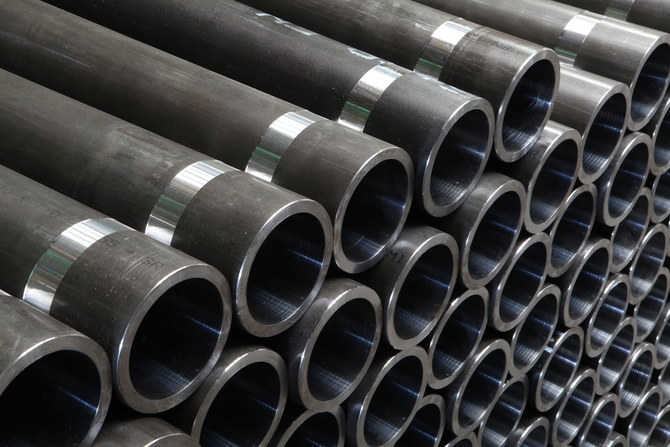
The UAE seeks to be among the leaders in decarbonizing the global steel value chain. Shutterstock
Short Url
Updated 23 November 2023
Follow

UAE’s Masdar and Emirates Steel Arkan partner to decarbonize hard-to-abate steel sector

RIYADH: The UAE’s hard-to-abate steel sector is on course to witness accelerated decarbonization efforts thanks to a new first-of-its-kind green hydrogen project in the Middle East and North Africa region.  

Abu Dhabi Future Energy Co., also known as Masdar, has collaborated with Emirates Steel Arkan to develop the project.    

Situated within the production facilities at the Industrial City of Abu Dhabi, this initiative marks a significant partnership, as reported by the Emirates News Agency, also known as WAM.  

Moreover, the project, which is currently in the installation phase and is expected to be commissioned in early 2024, will demonstrate the use of green hydrogen instead of natural gas to extract iron from iron ore, which is a key step in steelmaking.  

The development aligns with the rising global demand for green steel, which presents several growth potentials for the UAE’s steel industry. The Gulf country seeks to be among the leaders in decarbonizing the global steel value chain.

It also aligns well with the UAE’s strategy of making the country one of the world’s largest hydrogen producers by 2031.

“Steel is an essential commodity driving economic growth and creating jobs and this project presents huge potential for reducing emissions while increasing trade,” CEO of Masdar Mohamed Jameel Al-Ramahi said.

He added: “Masdar has been pioneering renewable energy projects around the world for more than 17 years.”

Al-Ramahi highlighted that the UAE will again demonstrate its climate leadership by hosting COP28 from Nov. 30-Dec. 12 at Expo City Dubai.

The CEO explained that as the country’s clean energy powerhouse, Masdar seeks to continue using innovation and partnership to guarantee a cleaner and greener future.

On Emirates Steel Arkan’s side, Group CEO Saeed Ghumran Al-Remeithi highlighted that this project represents a major milestone in the firm’s commitment to realizing its sustainability objectives.

“We strongly believe in the power of collaboration to achieve our ambitious decarbonization roadmap and are delighted to partner with Masdar to realize this goal,” Al-Remeithi said.

The cutting-edge technologies being utilized and the strategic collaborations are propelling the industry’s shift toward a more sustainable future, in line with the UAE’s strategic commitment to achieving net zero by 2050.


Saudi Arabia’s foreign reserves rise to a 6-year high of $475bn

Updated 22 February 2026
Follow

Saudi Arabia’s foreign reserves rise to a 6-year high of $475bn

RIYADH: Saudi Arabia’s foreign reserves climbed 3 percent month on month in January to SR1.78 trillion, up SR58.7 billion ($15.6 billion) from December and marking a six-year high.

On an annual basis, the Saudi Central Bank’s net foreign assets rose by 10 percent, equivalent to SR155.8 billion, according to data from the Saudi Central Bank, Argaam reported.

The reserve assets, a crucial indicator of economic stability and external financial strength, comprise several key components.

According to the central bank, also known as SAMA, the Kingdom’s reserves include foreign securities, foreign currency, and bank deposits, as well as its reserve position at the International Monetary Fund, Special Drawing Rights, and monetary gold.

The rise in reserves underscores the strength and liquidity of the Kingdom’s financial position and aligns with Saudi Arabia’s goal of strengthening its financial safety net as it advances economic diversification under Vision 2030.

The value of foreign currency reserves, which represent approximately 95 percent of the total holdings, increased by about 10 percent during January 2026 compared to the same month in 2025, reaching SR1.68 trillion.

The value of the reserve at the IMF increased by 9 percent to reach SR13.1 billion.

Meanwhile, SDRs rose by 5 percent during the period to reach SR80.5 billion.

The Kingdom’s gold reserves remained stable at SR1.62 billion, the same level it has maintained since January 2008.

Saudi Arabia’s foreign reserve assets saw a monthly rise of 5 percent in November, climbing to SR1.74 trillion, according to the Kingdom’s central bank.

Overall, the continued advancement in reserve assets highlights the strength of Saudi Arabia’s fiscal and monetary buffers. These resources support the national currency, help maintain financial system stability, and enhance the country’s ability to navigate global economic volatility.

The sustained accumulation of foreign reserves is a critical pillar of the Kingdom’s economic stability. It directly reinforces investor confidence in the riyal’s peg to the US dollar, a foundational monetary policy, by providing SAMA with ample resources to defend the currency if needed.

Furthermore, this financial buffer enhances the nation’s sovereign credit profile, lowers national borrowing costs, and provides essential fiscal space to navigate global economic volatility while continuing to fund its ambitious Vision 2030 transformation agenda.