
DUBAI: The Dyson company is synonymous with vacuum cleaners, but the company has heavily invested in technology, sustainability and research that goes far beyond vacuum cleaners.
“Dyson has been at the forefront of technology and sustainability for years,” a company spokesperson told Arab News.
Dyson first dove into the automotive world, for example, in 1990 producing a seven-seat electric SUV in 2019. The car didn’t go to market as it was not “commercially viable,” but the focus was shifted to other technologies such as vision systems, robotics, machine learning, and AI and even the battery, which “will benefit Dyson in a profound way and take them in exciting new directions,” the spokesperson said.
Similarly, the company’s latest Vis Nav 360 robot vacuum, is being launched across markets, but Dyson’s robotics journey started in 1998. The first iteration of the robot vacuum was created in 2003; it took three years to develop, but the technology was complicated and expensive.
Various iterations followed before Dyson finally developed the Vis Nav 360. “The purpose isn’t to create a robot vacuum but rather a robotic vacuum because they’re vacuum cleaners first and robots second,” said a senior member of the robotics team at a press event held at the company’s Hullavington airfield campus in the UK.
“The products of the future are about more than cleaning,” meaning that the company is working on “core technologies like perception and manipulation within robotics,” he added.
With labs dedicated to robots picking up objects and performing other such tasks, the direction Dyson is headed in is clear — robots that can carry out domestic chores.
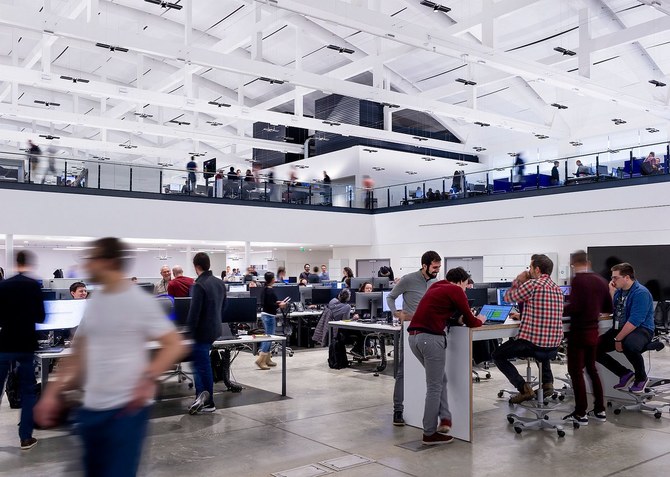
Last year, the company announced that half of the 2,000 people who joined Dyson were engineers, scientists, and coders.
It hired 250 robotics engineers across disciplines with plans to hire 700 more in robotics over the next five years with the ambition of bringing the technology to consumers in the next 10 years.
The company plans to “double its portfolio of products and enter entirely new fields by 2025” and is investing “£2.75 billion into new technologies and new products over the next five years,” the spokesperson said.
“The investments are backed by plans to hire additional engineers and scientists in fields such as software, machine learning and robotics, and Dyson will invest further into research in the fields of robotics, next-generation motor technology, intelligent products, machine learning, connectivity, and material science,” the spokesperson added.
In addition to its offices and campuses in the UK, Dyson has sponsored a lab at the Imperial College in London, which is home to the Dyson School of Design Engineering and is opening a new battery plant in Singapore, the location of the company’s global headquarters, and new research and development campuses in the Philippines and the United Kingdom.
“The three major investments reflect the scale of Dyson’s ambitions internationally, drawing on the very best engineering talent the world has to offer,” the spokesperson said.
Although the company does not have any such facilities in the Middle East, the region “is a priority market for Dyson and it has a huge growth potential,” which “is shown in the immense new product development launches planned for 2024 across the beauty, floorcare and wearable categories,” the spokesperson said.
Last year, Dyson opened pop-up stores across the Kingdom, representing the first brick-and-mortar presence of the brand in Saudi Arabia since its launch in the market.
Now, the spokesperson said, the company plans on opening stores in multiple cities around the Kingdom for which it will recruit locally.
The company recently opened its fourth store in the UAE in Dubai Hills Mall.
Still, the spokesperson said, “Dyson is more than a technology company.”
It established the Dyson Institute of Engineering and Technology in 2017; the James Dyson Award, an international design award for design engineers; and the Dyson circular farming initiative.
Going forward, the company has ambitious plans, particularly within robotics and beauty. “The commercialization of Dyson’s proprietary solid-state battery technology” is a key focus from a robotics perspective and in the beauty category, Dyson has announced an investment of £500 million and plans to launch 20 new beauty products in the next four years, the spokesperson said.