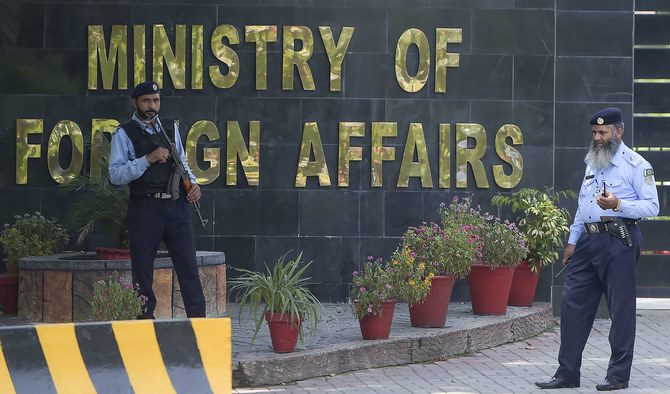
ISLAMABAD: Pakistan’s foreign office on Thursday denied reports of the country having sold any weapons to Ukraine or Russia in their ongoing conflict, saying Islamabad had adopted strict policy of neutrality while dealing with the war raging in Eastern Europe.
The comment came against the backdrop of a story published by BBC Urdu on Tuesday that asserted Pakistan was involved in an arms sales contract amounting to $364 million with two private US companies under which weapons had been purportedly dispatched to Ukraine.
“I reaffirm what we have said in the past, that Pakistan has not sold weapons to Ukraine or to Russia as we have adopted a policy of strict neutrality in this conflict,” foreign office spokesperson Mumtaz Zahra Baloch told reporters during her weekly media briefing.
“Secondly, we are not in a position to confirm what weaponry is being used by the two parties in conflict,” she continued, adding that Pakistan's exports of weaponry to countries was accompanied by end user certificates.
“We expect the parties which import Pakistani weaponry to respect those end user commitments,” she said.
For specific details regarding weapons sold to various countries, she advised journalists to reach out to the military’s media wing, ISPR, or defense officials for accurate information.
Baloch also discussed the forced expulsion of foreign migrants, saying Pakistan believed it was its sovereign right to enforce its immigration laws which allowed it to deport individuals illegally residing in the country while pointing out the practice was observed by many other states around the world.
Nearly 300,000 Afghans left Pakistan in recent weeks after authorities vowed to deport unregistered foreign nationals while citing security concerns. The expulsions, primarily affecting Afghan nationals, have been criticized by the Taliban administration in Afghanistan along with several international rights organizations.
“Pakistan had intelligence that many of the terrorist networks involved in recent violent activities in the country had links with illegal individuals staying here,” she added.
Responding to a question, the spokesperson said Pakistan had serious concerns regarding militant sanctuaries in Afghanistan.
“We expect Afghanistan to take substantive and urgent steps against terrorist
outfits and dismantle their networks and to bring all those responsible for terrorism in Pakistan to justice,” she added.
Discussing the Afghan transit trade, Baloch said Pakistan had implemented a negative list of products that were considered luxury items to prevent their sale inside the country.
“The decision was based on concrete evidence from the past, indicating that these items [meant for Afghanistan] were being redirected to Pakistan,” she explained, adding the government in Islamabad would continue to facilitate the transit trade since it was critical for its vision of regional connectivity.
Last month, Pakistan imposed a ban on exporting 212 items to Afghanistan under the transit trade agreement in a step that was described as an attempt to stop illegal entry of goods into the country from the neighboring state.


![]()

Pakistan denies weapon sales to Ukraine or Russia, says following ‘policy of strict neutrality’
Short Url
https://arab.news/gasmd
Pakistan denies weapon sales to Ukraine or Russia, says following ‘policy of strict neutrality’
- The statement comes after a media report that mentioned an arms sales contract of $364 million
- Pakistan urges Afghanistan to take urgent steps against militant group, dismantle their network
Latest updates




© 2026 SAUDI RESEARCH & PUBLISHING COMPANY, All Rights Reserved And subject to Terms of Use Agreement.