

AI technology-dominated media: looming threat or opportunity?

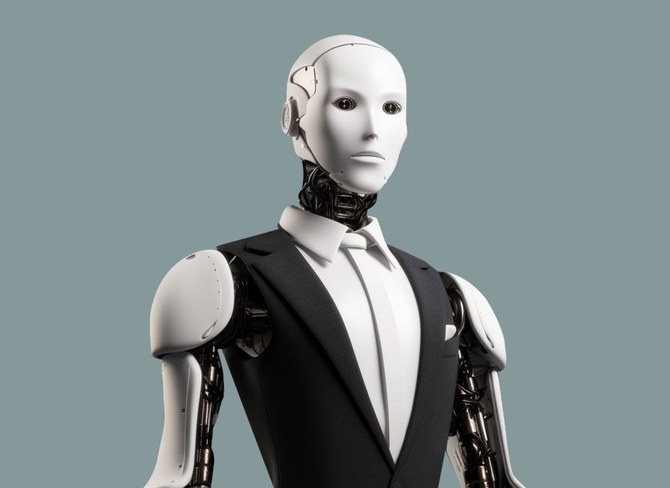
Al-Ain news platform, based in the UAE, has created its own virtual writer, “Aref Bin Teqani,” who contributes a weekly AI-generated article covering different fields. (Supplied)
Short Url
Updated 16 November 2023
Follow

AI technology-dominated media: looming threat or opportunity?

  • Human intelligence and judgment still needed, experts tell Global Media Congress in UAE
  • As much as AI can be beneficial, a regulator is needed to avoid the production of fake news

ABU DHABI: Innovation in journalism is back and the emergence of generative artificial intelligence technologies is here to enhance journalists’ creative thinking and add more value to their work, rather than replace them, experts told the Global Media Congress on Wednesday.

“AI tools are being generated to add value and improve the quality of journalism. Newsrooms today are integrating newly generated AI functions, such as headline generation, summary content readers, avatar presenters, chatbots and language tools,” Prof. Neil Maidan explained during a panel discussion.

Arab media outlets present at the congress shared their positive experience with Arab News.

Ahmed Al-Hammadi, executive director of support services at WAM, described the UAE agency’s experience, saying: “It (AI) brings efficiency and creativity. It’s not a threat to journalists but an enhancement to their reporting.”

Al-Hammadi added: “Today, we are using different generative AI technologies at our news portal, (such as) a news summary tool that summarizes a two-page report into a few lines for our readers, a morning and evening voice news report, generated by AI tools, so people can listen while driving, and our avatar, who speaks 19 languages, tells news portal visitors all the breaking news.”

Regarding the threats and fears of using AI-generated reporting, Al-Hammadi emphasized that human intelligence and judgment are still needed. “We are a national news agency, so we did exclude generative AI tools from news reports covering politics, excellencies and state decisions. This way we are making sure the news we publish is precise and not misinforming,” he said.

AI technologies will play a major role in the media and will be a major tool in enhancing creativity, UAE Minister of State for Artificial Intelligence Omar Sultan Al-Olama told the congress. He said: “Generative artificial intelligence systems will contribute soon to the development of more than 90 percent of internet content. The spread of AI will affect creativity and those who today adhere to the truth will have greater credibility than others in the future, so it is necessary to employ artificial intelligence positively.”

The Al-Ain news platform, based in the UAE, has created its own virtual writer, “Aref Bin Teqani,” who contributes a weekly AI-generated article covering different fields, with minimal errors.

“AI presents for us a very new way to gather news and use the news in a different and very fast way. In this moment, I think it is too early to talk about these concerns (AI’s threat to human jobs) because still the humans are controlling the AI,” said Al-Ain’s Seza Armenazi. She added that the newspaper does edit Aref’s pieces, but the changes are minimal and are usually due to old information that is not updated online.

“We are trying to get the maximum benefit from AI technology and I think we always should not be standing in front of the changes,” Armenazi said. “It is helping us to reach information in a very fast way and also helping the journalist to avoid some repeated work taking a lot of their time, helping us to focus on other subjects.”

Abdullah Al-Sharhan, head of the creative department at Sharjah Media City, told Arab News that, as much as AI can be beneficial, a regulator is needed to avoid the production of fake news.

He explained that Sharjah Media City had used AI to create a virtual presenter when a real presenter was late for his show. “We used AI to generate an image of him in the studio and we used AI to teach him the voice pattern of our friend. (The virtual presenter) covered the first 10 minutes of the session and no one noticed, even after the real presenter took his place.”

Al-Sharhan explained that this experience led them to create a deepfake and that is when a red flag appeared. He said: “There were errors, from the lip-syncing to the head movement. We fixed them and we reached what they call a deepfake. Do we think people have to use it? No, I think there should be an authorized operator for these things because it might be something dangerous if people deepfake news.”


Saudi Media Forum urges ethical coverage as crises redefine Arab journalism

Updated 04 February 2026
Follow

Saudi Media Forum urges ethical coverage as crises redefine Arab journalism

  • Raw news without context can mislead audiences and distort credibility, experts say

RIYADH: Arab media was born in crisis and shaped by conflict rather than stability, Malik Al-Rougi, general manager of Thaqafeyah Channel, said during the Saudi Media Forum in Riyadh on Wednesday.

Al-Rougi was speaking during a panel titled “Media and Crises: The Battle for Awareness and the Challenges of Responsible Coverage,” which examined how news organizations across the region navigated credibility and professional standards amid fast-moving regional developments.

“Today, when you build a media organization and invest in it for many years, a single crisis can destroy it,” he said.

Referring to recent events, Al-Rougi said that he had witnessed news channels whose credibility “collapsed overnight.”

“In journalistic and political terms, this is not a process of news production. It is a process of propaganda production,” he said. “The damage caused by such a post … is enormous for an institution in which millions, perhaps billions, have been invested.”

When a media outlet shifts from professionalism and credibility toward “propaganda,” he added, it moves away from its core role. 

Saudi media leaders, journalists, and experts gathered at the Saudi Media Forum in Riyadh to discuss credibility, ethics, and innovation. (AN photo by Huda Bashatah/Supplied)

“A crisis can work for you or against you,” Al-Rougi added. “When, in the heart of a crisis, you demonstrate high credibility and composure, you move light-years ahead. When you fail to adhere to ethical standards, you lose light-years as well.”

Abdullah Al-Assaf, professor of political media studies at Imam Muhammad bin Saud Islamic University, said that in many crises across the Arab world, agendas and directives had often prevailed over professionalism.

“Credibility was buried,” he added.

Hasan Al-Mustafa, writer and researcher at Al-Arabiya channel, said that raw information could be subject to multiple interpretations if not placed within a proper political, security, historical or geographical context.

He added that such an approach was urgently needed during periods of political and security volatility in the Middle East. 

When, in the heart of a crisis, you demonstrate high credibility and composure, you move light-years ahead. When you fail to adhere to ethical standards, you lose light-years as well.

Malik Al-Rougi Thaqafeyah, Channel general manager

“This objectivity, or this reliability, is a great responsibility,” Al-Mustafa said. “It is reflected not only in its impact on the audience, but also on the credibility of the content creator.”

Al-Mustafa warned against populism and haste in coverage, saying that they risked deepening crises rather than providing informed public perspectives.

He also said that competition with social media influencers had pushed some traditional outlets to imitate influencer-driven models instead of strengthening their own professional standards.

“Our media has been crisis-driven for decades,” he said, describing much of the region’s coverage as reactive rather than proactive.

During a separate panel titled “The Official Voice in the Digital Age: Strategies of Influence,” speakers discussed how rapid technological and social changes were reshaping the role of institutional spokespersons.

Abdulrahman Alhusain, official spokesperson of the Saudi Ministry of Commerce, said that the role was no longer limited to delivering statements or reacting to events.

“Today, the spokesperson must be the director of the scene — the director of the media narrative,” he said.

Audiences, he added, no longer accept isolated pieces of information unless they were presented within a clear narrative and structure.

“In the past, a spokesperson was expected to deliver formal presentations. Today, what is required is dialogue. The role may once required defense, but now it must involve discussion, the exchange of views, and open, candid conversation aimed at development — regardless of how harsh the criticism may be.”

He said that spokespersons must also be guided by data, digital indicators and artificial intelligence to understand public opinion before speaking.

“You must choose the right timing, the right method and the right vocabulary. You must anticipate a crisis before it happens. That is your role.”

Abdullah Aloraij, general manager of media at the Riyadh Region Municipality, said that the most important skill for a spokesperson today was the ability to analyze and monitor public discourse.

“The challenge is not in transferring words, but in transferring understanding and impact in the right way,” he said.