


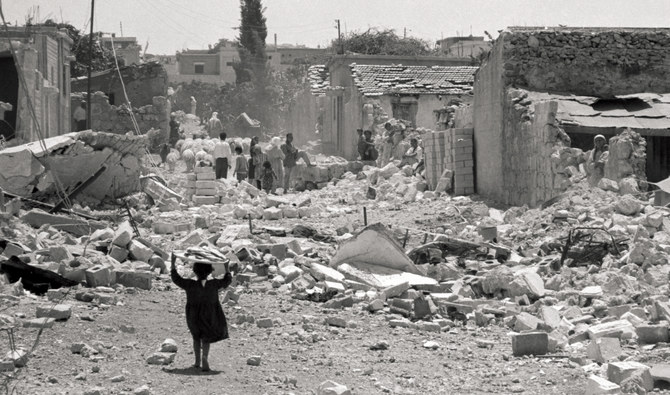

LONDON: As the missiles and bombs continue to rain down on Gaza, reducing entire neighborhoods to wastelands and pushing the death toll to ever more obscene heights, buried in the rubble of the bloody history of the world’s longest-running war may be found clues as to how the current conflict might end and the impact it might have on the political landscape of the Middle East.
That, at least, is the view of UK-based Israeli historian and political scientist Dr. Ahron Bregman.
The author of half a dozen books about Israel’s seemingly never-ending wars, he believes there is a chance that in this latest round of the Israeli-Palestinian saga something significant might be stirring — a “black swan” moment, a metaphor used by political theorists and financial analysts alike to describe a rare, unexpected and unpredictable event that has dramatic, unforeseen consequences.
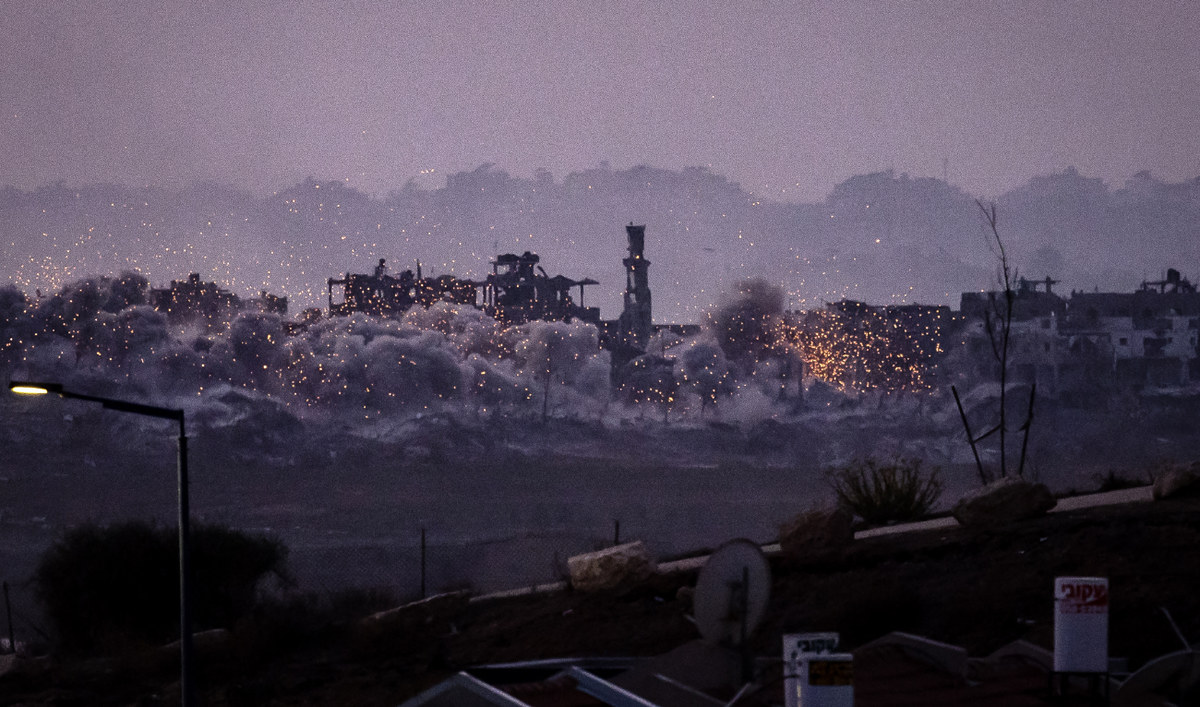
Smoke billows during the Israeli military bombardment of the northern Gaza Strip on November 14, 2023. (AFP)
Israel has been at war for 75 years, ever since David Ben-Gurion, the Polish-born head of the World Zionist Organization, declared the foundation of the state on May 14, 1948, the day the British mandate for Palestine came to an end.
For its own political reasons, Britain had championed the foundation of a national home for the Jewish people in Palestine since 1917, when its government issued the Balfour Declaration, pledging its support for “a national home for the Jewish people in Palestine.”
But the first voices warning of the inevitable consequences of “dumping down an alien population upon an Arab country,” as one member of the British House of Lords put it in 1920, were raised in Britain.
The harm this would do, said Lord Sydenham in a debate on the Palestine Mandate in the House of Lords on June 21, 1922, “may never be remedied … what we have done is, by concessions, not to the Jewish people but to a Zionist extreme section, to start a running sore in the East, and no one can tell how far that sore will extend.”
To date, it has extended for three-quarters of a century.
The list of conflicts that have flowed from what Lord Sydenham described as “a gross injustice … opposed to the sentiments and wishes of the great majority of the people of Palestine,” is a long one.
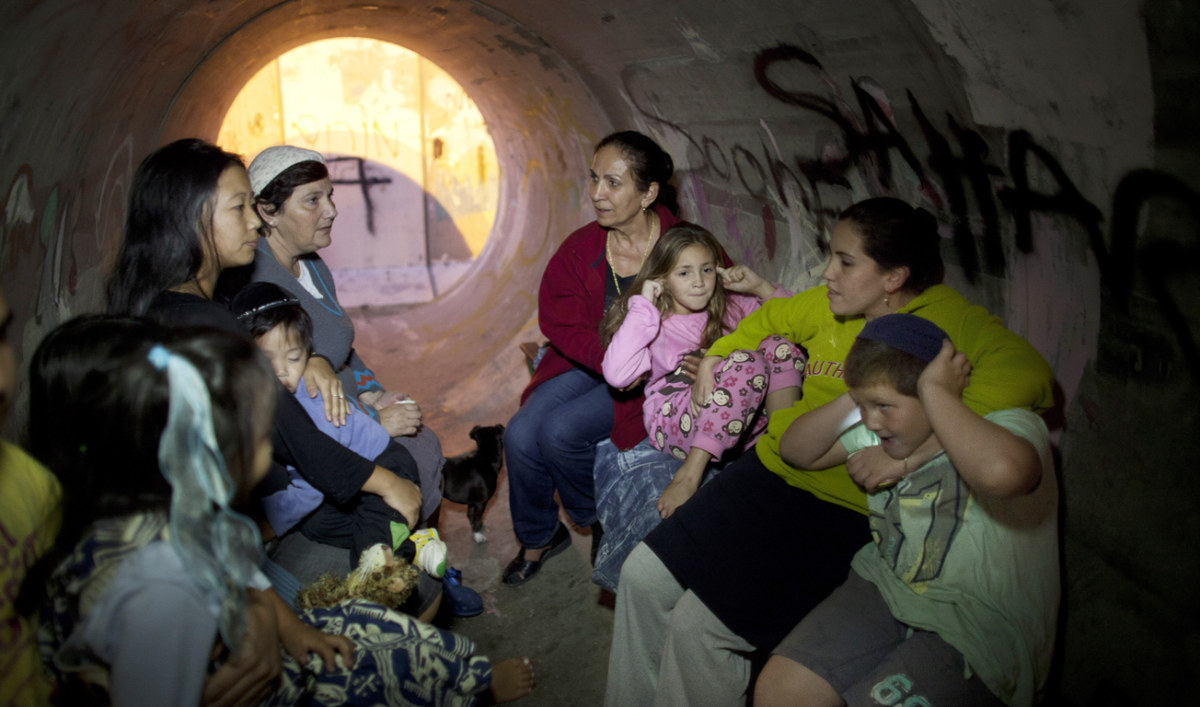
Israelis in Nitzan take shelter in a large concrete pipe after a rocket launch from the Gaza Strip on November 15, 2012. (Getty Images)
The opening act in the long-running tragedy still being played out today was the 1948 Arab-Israeli War, preceded by a civil war between the Arab and Jewish communities and triggered by the outrage in the Arab world at the UN Partition Plan for Palestine.
Adopted by the UN General Assembly on Nov. 29, 1947, this allocated 56 percent of the land to the Jews, even though at that stage there were still twice as many Arabs in Palestine.
Despite attempts by commentators, governments and even some of the players to frame the Palestinian conflagration as a battle between competing religious ideologies, the central theme of all the subsequent conflicts has remained consistent: land.
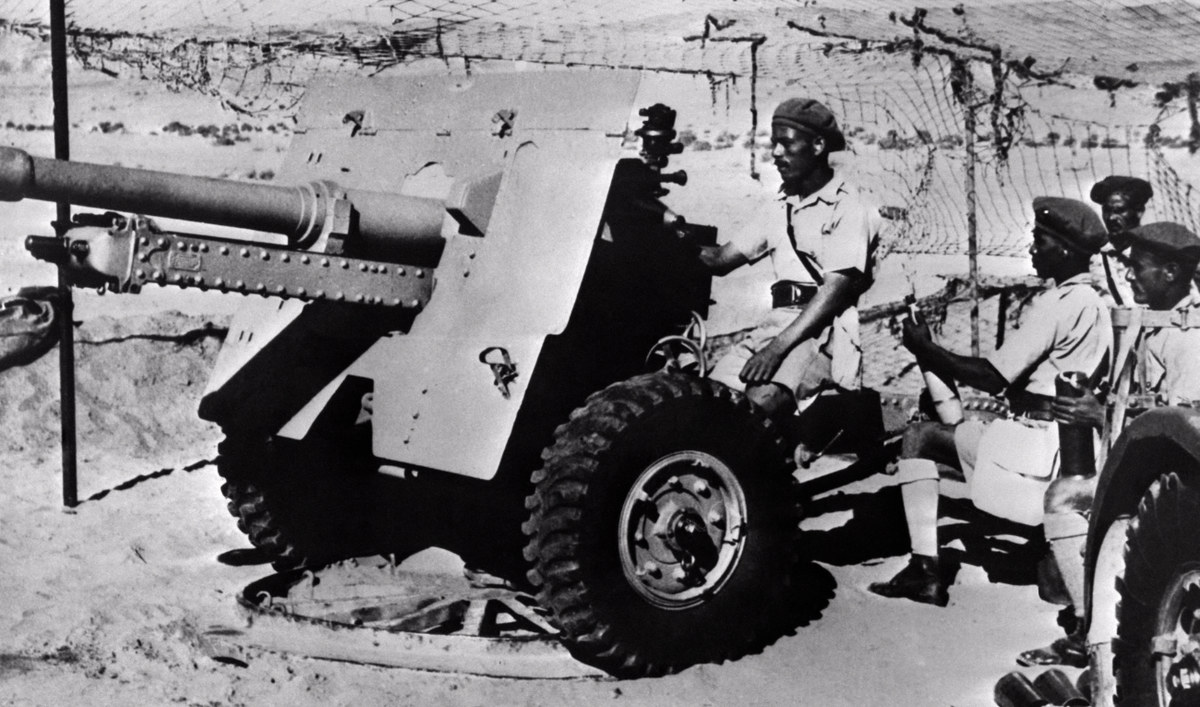
Egyptian tanks and artillery advancing on the front during the 1948 Arab–Israeli War. (AFP)
As Bregman wrote in his 2010 book “Israel’s Wars — A History Since 1947,” “when viewed from a historical perspective, these separate, short wars can be seen as one continuous conflict where territory — first the land of Palestine and then lands seized by Israel in subsequent wars — is the main, though not exclusive, trigger to repeating conflagrations.
“The balance sheet, after more than 60 years of Israeli-Arab conflict, indicates that on the battlefield there has been no clear victor — neither Arab nor Israeli.”
And yet, he believes, despite the untrammeled horror of the Hamas attack on Oct. 7, and Israel’s uncompromising and increasingly widely condemned military response, the current conflict may yet prove to have reset the dial, paving the way, finally, to a two-state solution.
At first glance, this seems counterintuitive. Although Israeli Prime Minister Benjamin Netanyahu has denied that Israel is planning to reoccupy Gaza, vacated by his predecessor Ariel Sharon almost 20 years ago, this is precisely what hawks in his government have called for.
“There are extreme people in the government who wish for a return to rebuilding the Jewish settlements in Gaza that Ariel Sharon evacuated in 2005,” said Bregman.
But this, he believes, will not be how this current conflict ends.
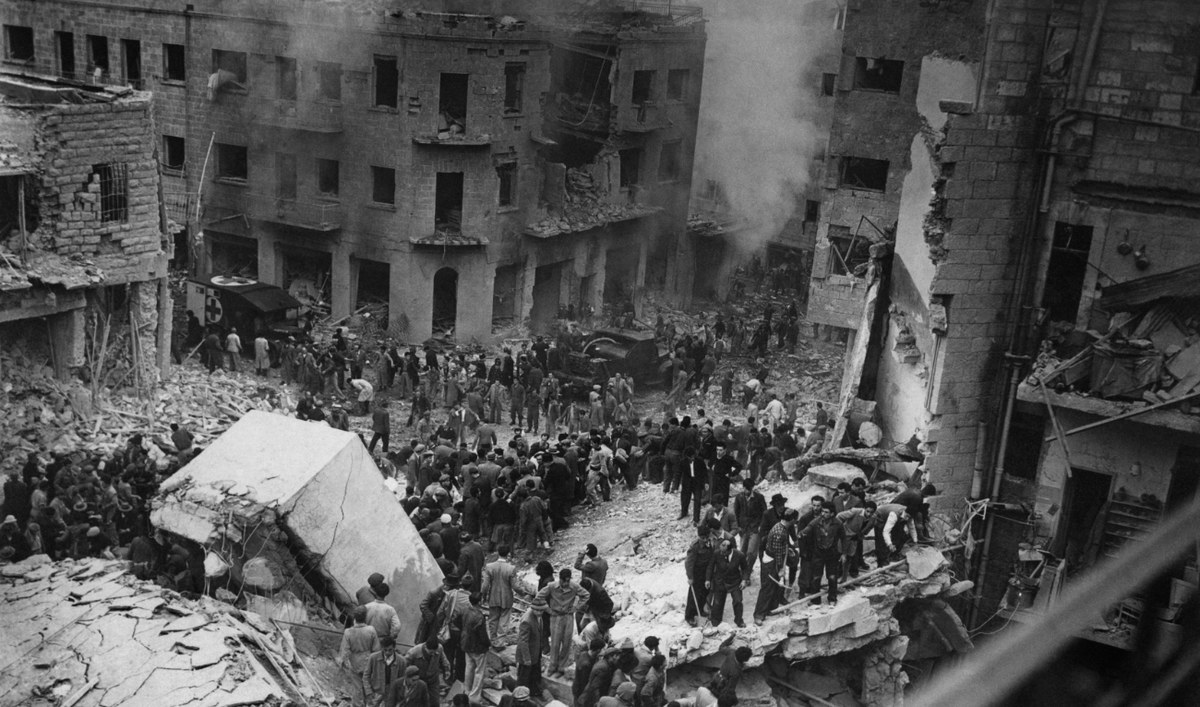
Rescuers search victims among the rubble of the destroyed buildings Ben Yehuda Street in Jerusalem, on March 1948 at the beginning of the first Jewish-Arab conflict. (AFP)
“Sharon understood that you can’t have 8,000 settlers living among 1.8 million, at the time, hostile people and you can’t now have settlers living among 2.2 million Palestinians, who will be even more hostile after the destruction we are now seeing.
“Besides, any return to the Gaza Strip by Israel would be opposed by the entire international community, mainly the United States, on which Israel is now very dependent.”
For many, the scenes of Palestinians fleeing their homes in Gaza have awoken painful memories of the Nakba, the forceful displacement of more than half the Palestinian population before and during the 1948 Arab-Israeli War.
The fury of the Israeli response to the events of Oct. 7 has also conjured up memories of the 1967 Six-Day War, by the end of which Israel had seized the Golan Heights, the Gaza Strip, the Sinai Peninsula and the West Bank, including East Jerusalem, vastly expanding its territory at the expense of hundreds of thousands of displaced Arabs.
But Bregman, a senior teaching fellow in the Department of War Studies at King’s College London who has written extensively about the Arab-Israeli conflict, looks to another episode in that long saga for a clue to how events might now play out.
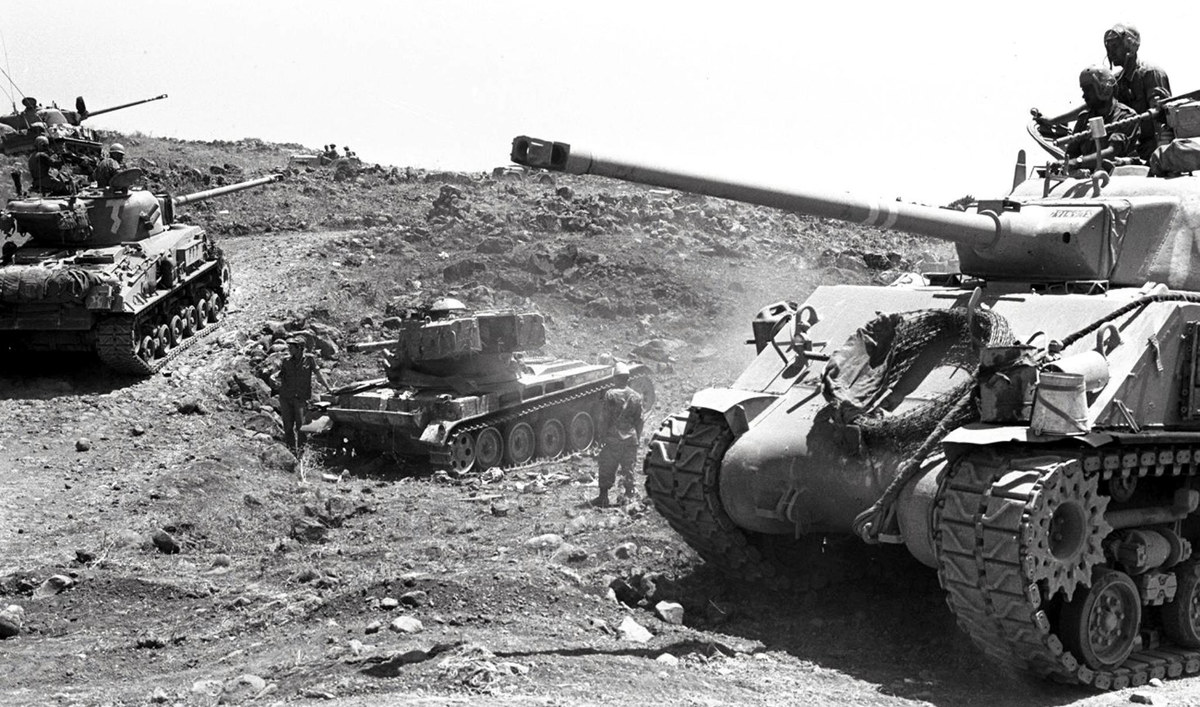
Israeli tanks advancing through difficult hilly terrain on June 10, 1967 in the Golan heights. (AFP)
Fifty years ago, in October 1973, a surprise attack was unleashed on Israel by a coalition of Arab states led by Egypt, motivated by a desire to recover the land seized by Israel in 1967.
The Ramadan War, or Yom Kippur War, ended in victory for an Israel heavily backed by American arms, but it set in motion a chain of events that changed the political and territorial landscape.
“Before the 1973 war, Egypt’s President Anwar Sadat offered the Israelis a peace proposal: Withdraw in the Sinai, not completely, but by 35 km, and we will embark on a peace process,” said Bregman.
The proposal was rejected by Golda Meir, the Israeli prime minister, and Sadat went to war.
“And then something very interesting happened. After the war, the withdrawal sought by Sadat was exactly what happened. In 1974, the Israelis withdrew in the Sinai, exactly 35 kilometers.”
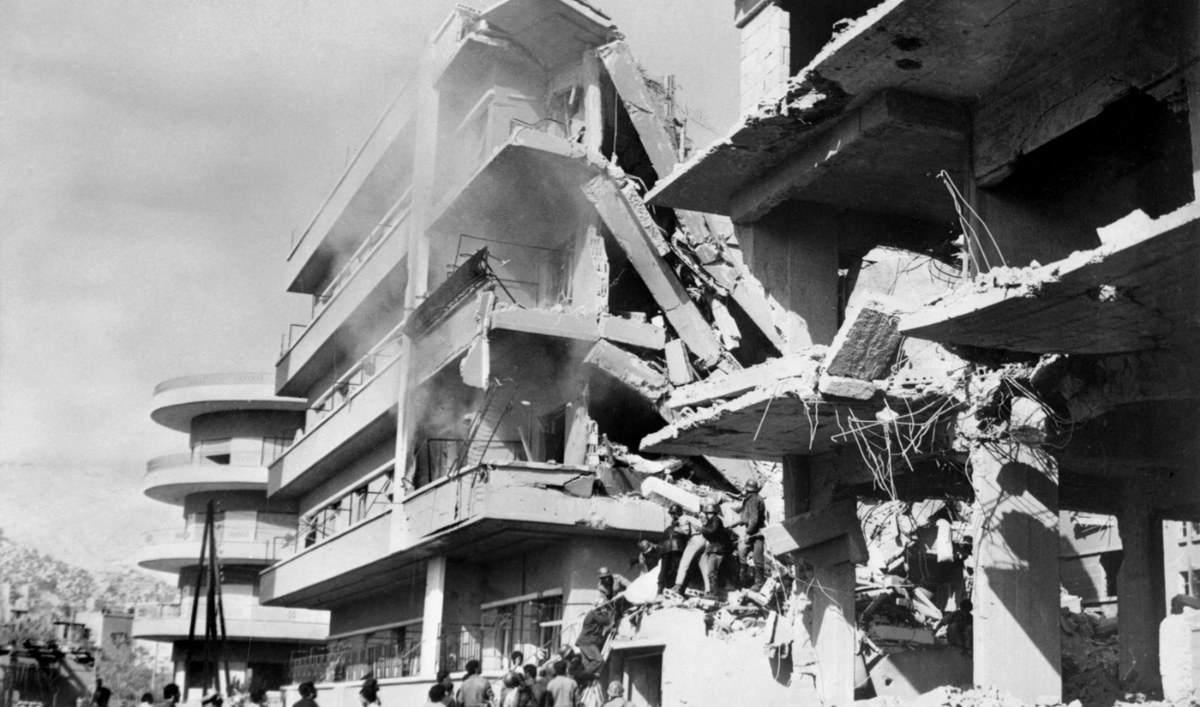
A building destroyed by an Israeli bombing in Damascus on October 10, 1973 during the 1973 Arab–Israeli War. (AFP)
This in turn led to the Camp David Accords in 1978 and the signing the following year of the historic peace treaty between Israel and Egypt, which became the first Arab state to officially recognize Israel and won back the entire Sinai Peninsula.
The treaty, which earned Sadat and Menachem Begin, then Israel’s prime minister, the Nobel Peace Prize, was widely condemned in the Arab world at the time as a betrayal of the Palestinians and led to Sadat’s assassination in 1981.
“But after the 1973 war, the Israelis were willing to do things they weren’t prepared to do before, because of the war,” said Bregman.
“This was a black swan — and maybe what we are seeing now will be a black swan as well, which could change everything.”
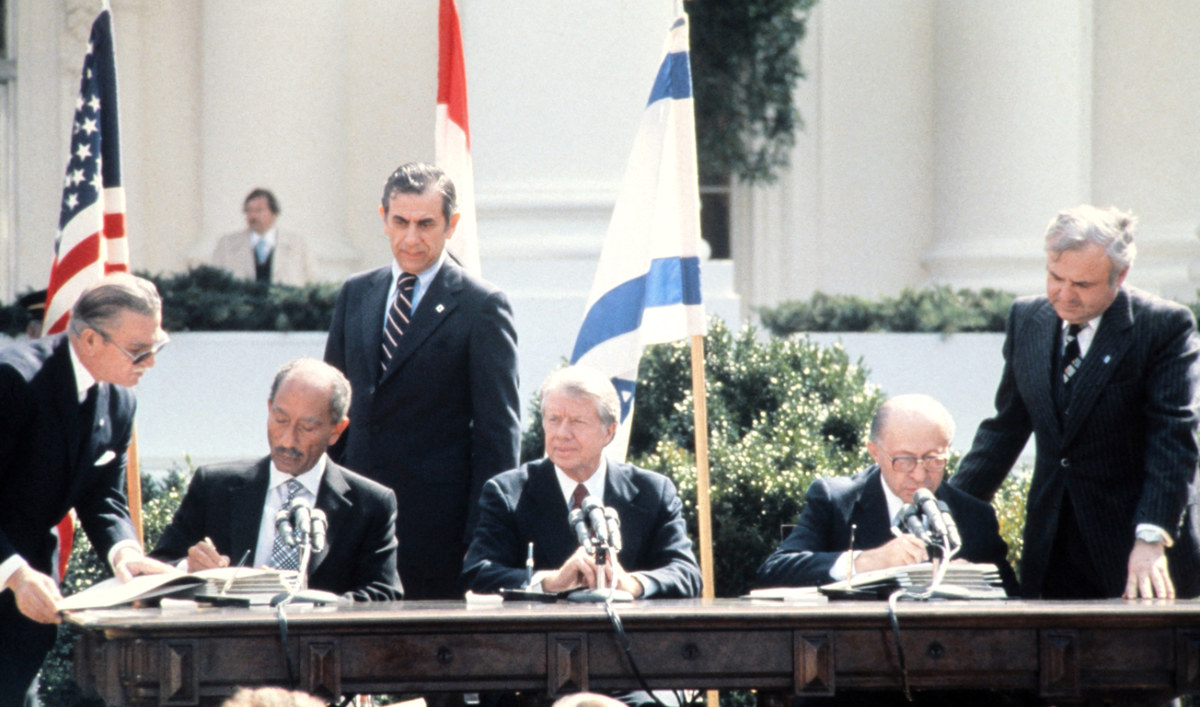
Egyptian President Anwar Al-Sadat (L) and Israeli Premier Menachem Begin (R), seated between US President Jimmy Carter, sign the historic peace treaty between Israel and Egypt on March 26, 1979. (AFP)
Bregman, who has lived in the UK since 1989, returns regularly to Israel to visit family and is intimately familiar with the country’s military, political and intelligence landscape.
He served in the Israel Defense Forces for six years, taking part as a major in the 1982 Lebanon War, later worked as a parliamentary aide in the Knesset and wrote “The Spy Who Fell to Earth,” the 2016 bestselling book about espionage between Egypt and Israel, later made into a Netflix documentary.
“Do not misunderstand me,” he said. “What happened on Oct. 7 was barbaric, on par with Daesh at the highest point on the scale of evil.
Opinion
This section contains relevant reference points, placed in (Opinion field)
“But if you look at it from a purely military point of view, it was a very successful operation for Hamas. They surprised the Israelis big time. Now, I imagine many Palestinians in the Gaza Strip are angry with them because of the destruction. But in the long term, this will be regarded as a major event in the mythology and history of the Palestinian people — a major event after years of humiliation and Israeli victories.”
The current phase of the conflict, he believes, will end soon, “in a few days, or weeks, because the Americans will stop the Israelis” — Biden will fear losing his election if they continue. But it is in what could happen next that the beating of the wings of the black swan can be heard.

Israeli troops take position in the southern city of Beersheba following an unprecedented attack by Hamas fighters on October 7, 2023. (AFP)
There are several possible outcomes, of which Netanyahu’s declared intention to destroy Hamas completely is one — and, in Bregman’s view, impossible: “Hamas is as much of an idea as it is a group of people.”
But, he says, “if you want to kill an idea, you must put forward a better one, and a better idea for the Palestinians would be — ‘Here, you are going to have your state.’”
Under current circumstances, that seems an extraordinary prospect. But that, said Bregman, is precisely the nature of a “black swan” scenario.
“It’s not nice to say, but the Israelis got a bloody nose and that brings me back to 1973. It was the bloody nose of 1973 that shook up the Israelis and made the Sinai 1 and Sinai 2 agreements happen.”
He speculates that, under US pressure, Israel could facilitate the return of the Palestinian National Authority to Gaza, where it lost control to Hamas in 2006. In this scenario, the aging Mahmoud Abbas, the Palestine president, would be replaced.
“Israel could, for example, do something brave and release from prison Marwan Barghouti,” Bregman said, referring to the Palestinian leader sentenced to life imprisonment in 2002, but who is seen as a potential unifying candidate.
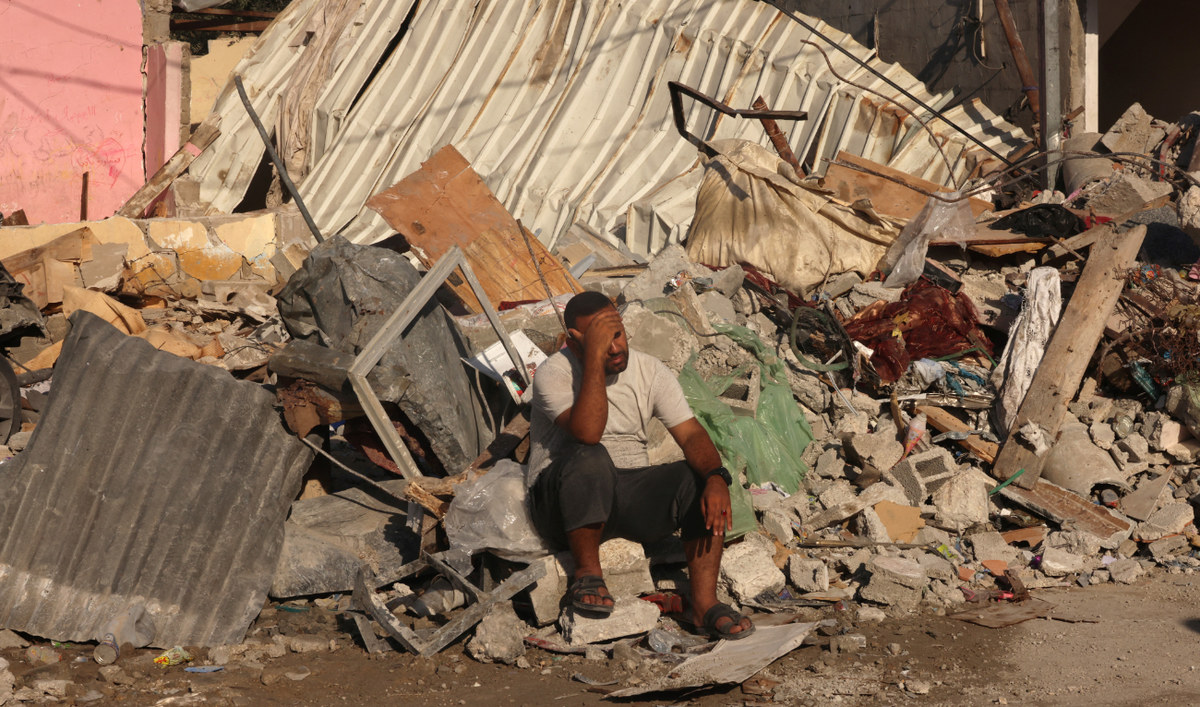
A Palestinian man sits on the debris of collapsed structures destroyed in the Israeli bombardment of Rafah in the southern Gaza Strip on November 10, 2023. (AFP)
Under Barghouti, or someone like him, said Bregman, “you could have the Palestinian Authority ruling the two areas again. Of course, the right in Israel would be very reluctant, because Netanyahu’s entire policy has been ‘divide and rule’ — it was he who wanted to keep Hamas in power and made them powerful.”
But one effect of the Oct. 7 attack, he believes, is going to be a seismic shock that could shake Israel’s political landscape to its foundations.
“After this phase is over, after the return to civilian life of the Israeli army reservists, there are going to be massive demonstrations in Israel, far bigger than anything we’ve seen before,” he said.
“There is so much suppressed anger in Israel right now. I can feel it. The Israelis keep it inside them for now because there’s a war going on, but it will be released.”
That anger has been generated by the failure of the military response to the Hamas attack, the perceived mishandling of the hostage crisis by the government, and the increasing long-term unease over the provocations of the settler movement and repeated incursions into the Al-Aqsa Mosque compound by Jewish religious extremists, supported by right-wing ministers including Itamar Ben-Givr, the national security minister.
It was these provocations that were cited by Hamas leader Mohammed Deif as the trigger for the current conflict. On Oct. 11 a Hamas source told Reuters that planning for the attack had begun in May 2021, provoked “by scenes and footage of Israel storming Al-Aqsa Mosque during Ramadan, beating worshippers, attacking them, dragging elderly and young men out of the mosque.”
The demonstrations in Israel, said Bregman, “will be massive, and it will be interesting to see whether Netanyahu will survive, but the current cabinet doesn’t represent the real Israel and the extremists who were allowed into government will probably have to go,” in turn paving the way for a more pragmatic Israeli government and, ultimately, the possibility of a single Palestinian authority responsible once again for both Gaza and the West Bank.
“Then, all of a sudden, you have the basis of a two-state solution, and in my view, this is the end game to which the Americans are now trying to push the Israelis.”

Israeli security forces use a water cannon to disperse demonstrators blocking the entrance of the Knesset, Israel’s parliament, in Jerusalem on July 24, 2023, amid a months-long wave of protests against the government’s planned judicial overhaul. (AFP/File)
Bregman concedes that such a historic outcome is not certain but, he believes, would be more palatable to many in Israel than the alternative options, which range from strengthening and deepening the “ring of steel” around Gaza to imposing a West Bank Area B situation, in which Hamas is allowed to continue running civil society but Israel controls security.
Certainly, said Palestinian-American historian Rashid Khalidi, author of “The Iron Cage" and The Hundred Years’ War on Palestine,” a continuation of the status quo cannot be contemplated.
“If Israel and the US end this war they are collectively waging as they have every previous one — 1982, 2006, 2008-09, 2014, etc. — allowing for no possible political solution involving Palestinian national rights and an end to occupation and settlement … it will be sowing the seeds of another inevitable war,” he said.
On Aug. 11, 1919, British Foreign Secretary Arthur Balfour, the enthusiastic supporter of Zionism whose declaration of 1917 paved the way for generations of misery, wrote a shocking memo that underscored the British Empire’s contempt for the Arabs of Palestine.
Zionism, he wrote, “be it right or wrong, good or bad, is rooted in age-long traditions, in present needs, in future hopes, of far profounder import than the desires and prejudices of the 700,000 Arabs who now inhabit that ancient land.”
Perhaps now, after almost a century of pain and suffering, the Hamas assault on Israel might prove to be the impetus for Israel and the world finally to recognize that the age-long traditions, present needs, and future hopes of the Arabs of Palestine are of equal importance to those of the Jewish people.


