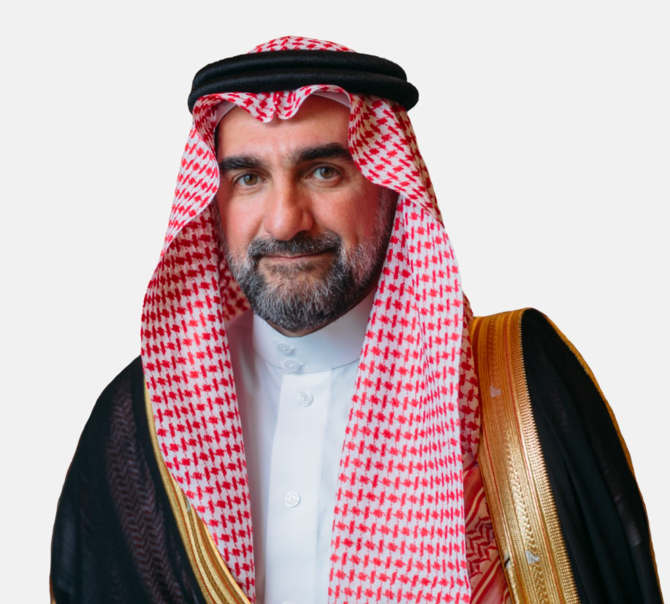
Saudi Aramco chairman warns against premature shift from traditional energy

Saudi Aramco Chairman Yasir Al-Rumayyan emphasized that the early phase-out of conventional sources has created cost-related challenges, as witnessed in the recent energy crisis. Supplied
Short Url
Updated 12 November 2023
Follow

Saudi Aramco chairman warns against premature shift from traditional energy

RIYADH: The premature abandonment of traditional energy sources threatens energy security, leading to expenditure challenges, according to a top official of Saudi Arabian Oil Co. 

Saudi Aramco Chairman Yasir Al-Rumayyan emphasized in an interview with Japan’s Nikkei on Thursday that the early phase-out of conventional sources has created cost-related challenges, as witnessed in the recent energy crisis.  

He said in the interview that bridging the gap between unrealistic goals through data will be necessary to drive the global economy toward carbon neutrality. 

Al-Rumayyan explained that global demand for energy and petrochemicals is expected to continue rising in the long term, indicating the need for diverse forms of energy, both traditional and new, in the near future. 

He pointed out that emerging economies, particularly China and India, continued to drive oil demand growth, considering that the fundamentals of the oil market remain generally sound throughout the rest of the year. 

Discussing the oil industry and market indicators, Aramco’s chairman noted that the inhibition of investment in oil and gas has hindered the global energy transition instead of assisting it, making economies more vulnerable to shocks, as seen in recent years.  

He stated: “We have seen the world become less stable when issues related to energy security or the ability to bear its costs arise.” 

Al-Rumayyan, who is also the governor of the Public Investment Fund, stressed that investing in traditional energy alongside ongoing efforts to enhance alternative resources and technologies is the most effective way to achieve an organized transition without compromising economic prosperity and energy security. 

He also mentioned the support for energy transition coming from unrealistic global goals of energy mix and timelines, often attributed to impractical scenarios and assumptions. 

Regarding Saudi Arabia’s Vision 2030 progress, the PIF governor reaffirmed that the transformational path launched in 2016 is evident in the comprehensive economic, political and social changes that have made Saudi Arabia a global business and tourism hub. 

He stated: “The motivation for embarking on this transformative path was the importance of maintaining the flexibility and dynamism of our national economy.” 

“Despite the challenges in recent years, we have tirelessly worked to support the Saudi private sector, diversify the economy, and invest in sectors where the Kingdom can compete globally,” he added. 

Al-Rumayyan highlighted Saudi Aramco’s ambition to actively shape the Kingdom’s economic future and enhance its domestic and global competitiveness.  

For example, Saudi Aramco’s In-Kingdom Total Value Add program was designed to enhance the local manufacturing sector and improve the reliability of the supply chain through strategic partnerships and investments.  

The program facilitated the establishment of 31 new local factories last year, with the company entering into over 90 agreements to build long-term relationships with local suppliers valued at an estimated $17.3 billion. 


Acwa signs key terms to develop 5GW of renewable energy capacity in Turkiye

Updated 5 sec ago
Follow

Acwa signs key terms to develop 5GW of renewable energy capacity in Turkiye

JEDDAH: Saudi utility giant Acwa has signed key investment agreements with Turkiye’s Ministry of Energy and Natural Resources to develop up to 5 gigawatts of renewable energy capacity, starting with 2GW of solar power across two plants in Sivas and Taseli.

Under the investment agreement, Acwa will develop, finance, and construct, as well as commission and operate both facilities, according to a press release.

The program builds on the company’s first investment in Turkiye, the 927-megawatt Kirikkale Independent Power Plant, valued at $930 million, which offsets approximately 1.8 million tonnes of carbon dioxide annually, the statement added.

A separate power purchase agreement has been concluded with Elektrik Uretim Anonim Sirketi for the sale of electricity generated by each facility.

Turkiye aims to boost solar and wind capacity to 120GW by 2035, supported by around $80 billion in investment, while recent projects have already helped prevent 12.5 million tonnes of CO2 emissions and reduced reliance on imported natural gas.

Turkiye’s energy sector has undergone a rapid transformation in recent years, with renewable power emerging as a central pillar of its strategy.

Raad Al-Saady, vice chairman and managing director of ACWA, said: “The signing of the IA (implementation agreement) and PPA key terms marks a pivotal moment in Acwa’s partnership with Turkiye, reflecting the country’s strong potential as a clean energy leader and manufacturing powerhouse.”

He added: “Building on our long-standing presence, including the 927MW Kirikkale Power Plant commissioned in 2017, this step elevates our partnership to a new level,” Al-Saady said.

In its statement, Acwa said the 5GW renewable energy program will deliver electricity at fixed prices, enhancing predictability for grid planning and supporting long-term industrial investment.

By replacing imported fossil fuels with domestically generated clean energy, the initiative is expected to reduce Turkiye’s exposure to global energy market volatility, strengthening energy security and lowering long-term power costs.

The company added that the economic impact will extend beyond the anticipated investment of up to $5 billion in foreign direct investment, with thousands of jobs expected during the construction phase and hundreds of high-skilled roles created during operations.

The energy firm concluded that its existing progress in Turkiye reflects a strong appreciation for Turkish engineering, construction, and manufacturing capacity, adding that localization has been a strategic priority, and it has already achieved 100 percent local employment at its developments in the country.