

What We Are Reading Today: Getting Something to Eat in Jackson

Photo/Supplied
Short Url
Updated 04 November 2023
Follow

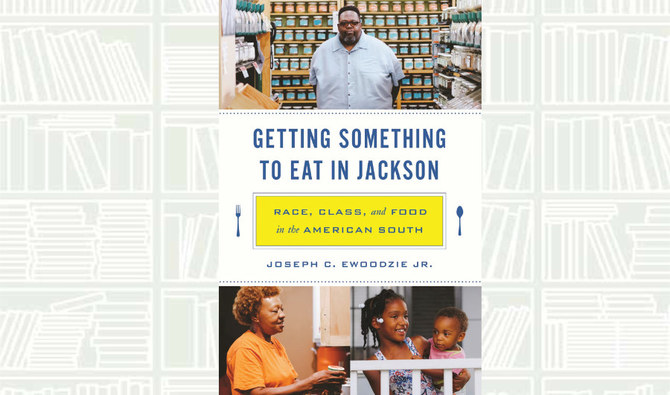
What We Are Reading Today: Getting Something to Eat in Jackson

Author: Joseph C. Ewoodzie Jr.

Getting Something to Eat in Jackson uses food — what people eat and how — to explore the interaction of race and class in the lives of African Americans in the contemporary urban South. Joseph Ewoodzie Jr. examines how “foodways” — food availability, choice, and consumption — vary greatly between classes of African Americans in Jackson, Mississippi, and how this reflects and shapes their very different experiences of a shared racial identity.
Ewoodzie spent more than a year following a group of socioeconomically diverse African Americans — from patrons of the city’s fine-dining restaurants to men experiencing homelessness who must organize their days around the schedules of soup kitchens.
Ewoodzie goes food shopping, cooks, and eats with a young mother living in poverty and a grandmother working two jobs. He works in a Black-owned BBQ restaurant, and he meets a man who decides to become a vegan for health reasons but who must drive across town to get tofu and quinoa.


What We Are Reading Today: Long Problems

Photo/Supplied
Updated 06 March 2026
Follow

What We Are Reading Today: Long Problems

  • In this pathbreaking book, Thomas Hale examines the politics of climate change and other “long problems”

Author: Thomas Hale

Climate change and its consequences unfold over many generations. Past emissions affect our climate today, just as our actions shape the climate of tomorrow, while the effects of global warming will last thousands of years.

Yet the priorities of the present dominate our climate policy and the politics surrounding it. Even the social science that attempts to frame the problem does not theorize time effectively. In this pathbreaking book, Thomas Hale examines the politics of climate change and other “long problems.”

He shows why we find it hard to act before a problem’s effects are felt, why our future interests carry little weight in current debates, and why our institutions struggle to balance durability and adaptability.