


MAIDUGURI, Nigeria: Extremists in northeastern Nigeria killed at least 37 villagers in two different attacks, residents said Wednesday, highlighting once again how deadly Islamic extremist rebels have remained in their 14-year insurgency in the hard-hit region.
The extremists targeted villagers in Yobe state’s Geidam district on Monday and Tuesday in the first attack in the state in more than a year, shooting dead 17 people at first while using a land mine to kill 20 others who had gone to attend their burial, witnesses said.
The Boko Haram extremist group launched an insurgency in northeastern Nigeria in 2009 in an effort to establish their radical interpretation of Islamic law, or Sharia, in the region. At least 35,000 people have been killed and more than 2 million displaced due to the extremist violence concentrated in Borno state, which neighbors Yobe.
Nigeria’s President Bola Tinubu, who took office in May, has not succeeded in ending the nation’s security crises both in the northeast and in northwest and central regions where dozens of armed groups have been killing villagers and kidnapping travelers for ransom.
The first attack occurred in the remote Gurokayeya village in Geidam when gunmen opened fire on some villagers late Monday, killing 17 of them, according to Shaibu Babagana, a resident in the area. At least 20 villagers who had gone to attend their burial were then killed on Tuesday when they drove into a land mine that exploded, Babagana added.
Idris Geidam, another resident, said those killed were more than 40. Authorities could not provide the official death toll, as is sometimes the case following such attacks.
“This is one of the most horrific attacks by Boko Haram in recent times. For a burial group to be attacked shortly after the loss of their loved ones is beyond horrific,” Geidam said.
The Yobe state government on Wednesday summoned an emergency security meeting over the attacks which it blamed on extremists that entered the state from the neighboring Borno.
“The security agencies have deployed security men to the area and we are studying a report on the infiltration in an effort to stave off future occurrences,” Abdulsalam Dahiru, a Yobe government security aide, told reporters.
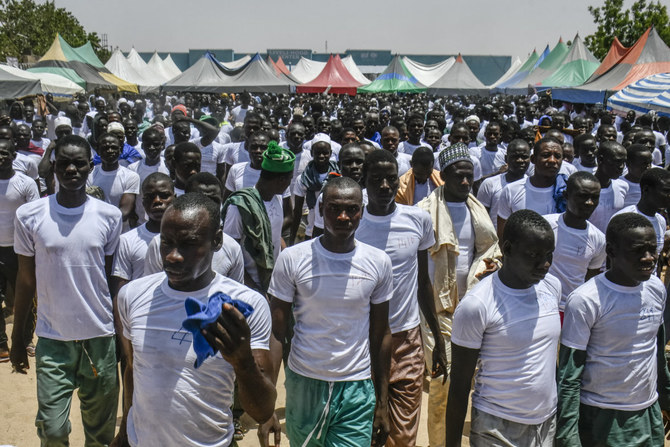
Some of the 2,100 former members of Boko Haram and of the Islamic State West Africa Province (ISWAP) are seen at the Hajja Camp in Maiduguri, Nigeria, on May 30, 2023 prior to their release at the end of a five month rehabilitation program. Despite the supposed surrender of many Bokon Faram members, the extemist group continues to pose danger to Nigerian communities. (Audu Marte / AFP)


