THARPARKAR, Pakistan: Haleema Parhe was born with a hand deformity and was not able to continue studying beyond the fifth grade due to a lack of schools in her remote village in the Pakistani desert district of Tharparkar.
But those challenges have not stopped the 30-year-old from achieving her dream of learning a skill and becoming an entrepreneur.
She learnt to sew before she was even ten years old, watching elderly women of her village, Soomra Colony, making clothes for themselves and their relatives and neighbors.
“At first, I found this work difficult because I did not have hands to operate the sewing machine and thread the needle, but my family encouraged me and now I do all the work myself,” Parhe told Arab News as she pushed the wheel of her sewing machine with arm and used the other to slide pieces of cloth under the needle.
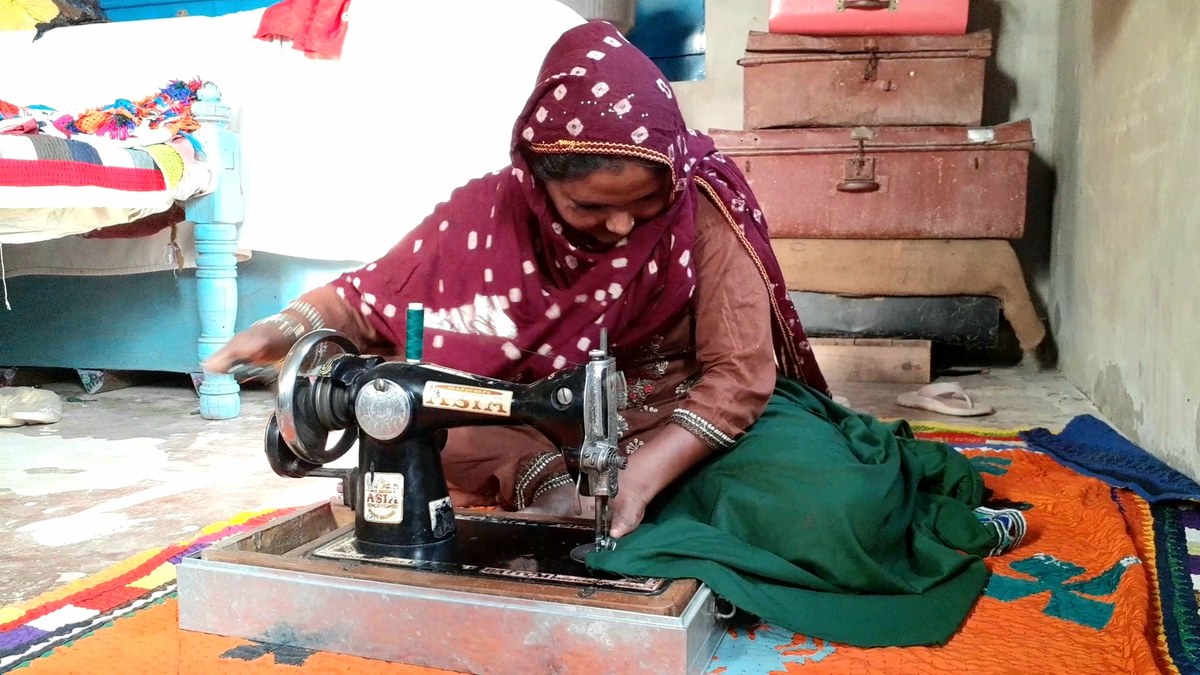
The photo taken on October 26, 2023, shows Haleema Parhe sewing clothes on a sewing machine in Tharparkar, Pakistan. (AN Photo)
In September, she was selected for an entrepreneurship course by the Youth Education Employment Empowerment Project (YEEEP), a joint initiative of the Sindh Education Foundation and United Nations Development Programme (UNDP) Pakistan. Parhe, who traveled to the district headquarters of Mithi and attended the training, said the course had “transformed” her life as she previously did not even know the basics of entrepreneurship and was reluctant to start her business.
The trainers taught her public speaking and induced a “sense of empowerment and self-belief” in her, Parhe said, while her fellow trainees lent their support in establishing contacts for her stitching business.
Just over a month after the training, she said she had earned Rs15,000 ($54) from stitching and cutwork embroidery, landing new clients from nearby villages through phone calls.
Devi Khatri, a mentoring officer at the training, said 28 women from Tharparkar district were trained as part of the program, with Parhe standing out, amazing her trainers with her motivation and skill.
“Before that [training], Haleema had a business but no access to people. In this training, she was taught things to advance her own business, how to reach more people, how to take orders via board and card,” Khatri told Arab News. “She applied it and now she is earning.”
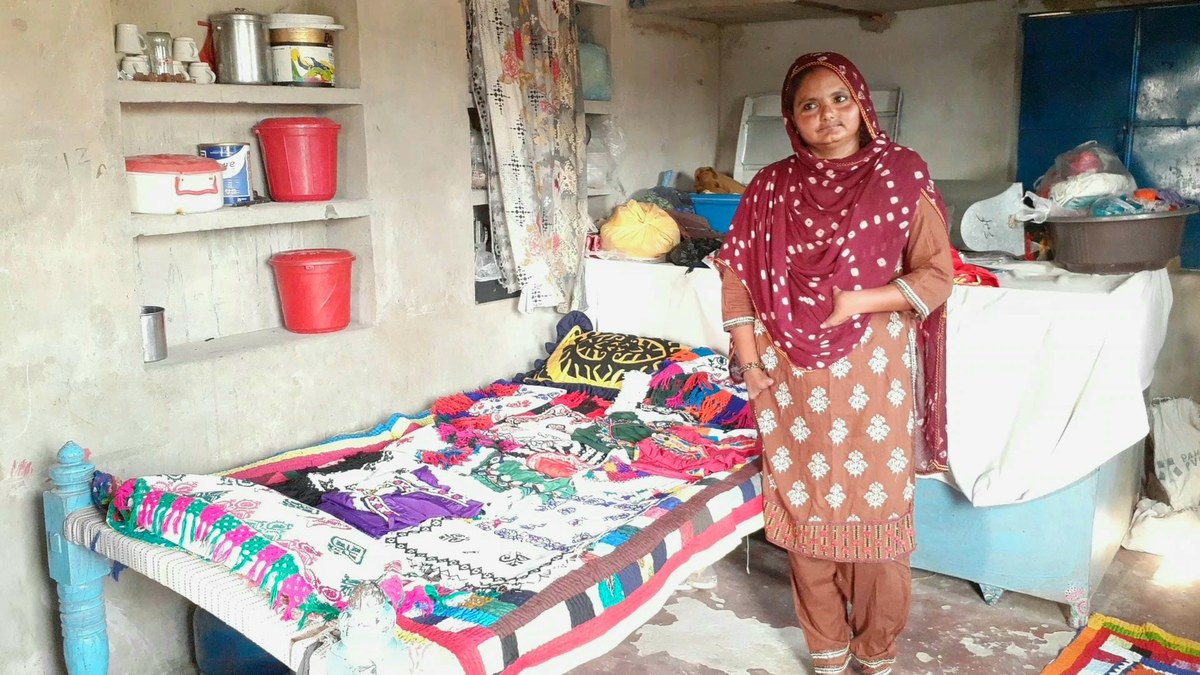
The photo taken on October 26, 2023, shows Haleema Parhe standing next to clothes she has designed in Tharparkar, Pakistan. (AN Photo)
Parhe, who hopes to open a shop, said her family had always been supportive of her and now her brother, Allah Jurio, was helping her get and deliver orders to nearby villages. Her sewing machine was purchased by her mother Raheema, who said she dreamt that her daughter could earn for herself and be financially independent.
“She made all these things with her passion, interest and dedication,” Raheema said. “I supported and prayed to Allah to bless this handicapped child.”
“After my death, her brother and others may not support her. At least she will be able to earn something from herself.”
Khatri, Parhe’s mentor, added:
“There is a saying that those who do not have lines on their palms also have luck. Haleema is also an example of this. Allah gave us two hands but we don’t have such skills. Haleema is a role model for Tharparkar and a great example.”