LANDI KOTAL: Shahzaman Shinwari, a 28-year-old scrap dealer, sits pensively at his shop, finding it difficult to focus on work. Many of his Afghan friends are preparing to leave Pakistan, and some have already left. In Landi Kotal, a small town in Pakistan’s northwestern Khyber tribal district where thousands of Afghan refugees reside, a sense of impending upheaval hangs in the air.
Shinwari inherited his scrap dealing business from his father, who fled to Pakistan more than 40 years ago to escape the Soviet-Afghan war. Even while holding documented refugee status, the young businessman lives with the constant fear of deportation by Pakistani authorities.
Earlier this month, officials in Islamabad announced the government’s intention to expel all “illegal immigrants,” mostly Afghans, citing security concerns amid a rising number of militant attacks in the country.
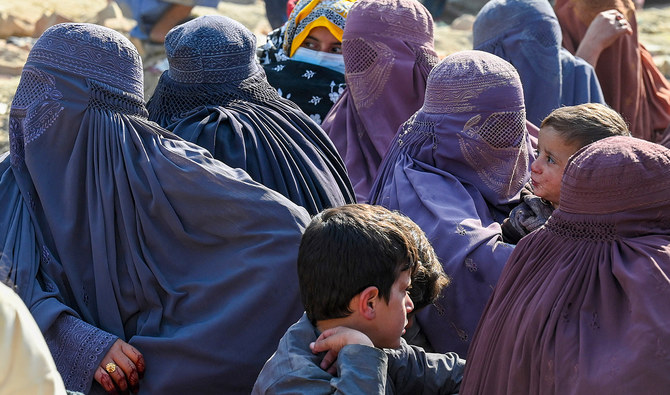
Despite assurances that immigrants with proper documentation can remain, many registered Afghan refugees have reported experiencing harassment by police encouraging them to leave.
“My heart has been aching since I have heard the news,” Shinwari told Arab News. “I don’t know what I would do if I’m forced to leave. I have no intention of going ... I had envisioned spending my whole life here, and I want to live and die here in Pakistan.”
Following the announcement to expel foreign nationals illegally living in the country, Pakistani authorities have set up deportation centers where individuals will be held until they are sent back.
On October 26, caretaker interior minister Sarfaraz Bugti stated that “no compromises will be made” regarding the removal of undocumented migrants after the November 1 deadline.
Bugti added that the “holding centers” would offer health care services and food for individuals until their deportation to their respective countries was complete.
He also cautioned Pakistani citizens against employing or harboring undocumented immigrants, warning such actions would amount to breaking the law and entail severe penalties.
According to the Afghan Commissionerate, between September 17 and October 26, a total of 59,848 undocumented individuals had crossed into Afghanistan via the Torkham border.
“I was born here [in Pakistan], got an education here, and built a business here, but now the situation is such that I fear for my future,” Shinwari, who recently completed his MPhil studies in political science and aspires to do PhD, said. “The new regime in Afghanistan does not support education, and this is a significant problem. It’s hard to find a job there, education is difficult, and life as a whole will be very challenging there.”
He added he had always envisioned his life in Pakistan, and the thought of leaving had created uncertainty for him and his family.
Since the Taliban returned to power about two years ago, Afghanistan has been mired in both a severe humanitarian and human rights crisis. Additionally, the country is grappling with critical security and economic challenges.
The UN Refugee Agency has expressed concern that the current conditions in Afghanistan could endanger most returning individuals. It has also urged Pakistan to establish a registration system for undocumented migrants and has offered to provide necessary financial and structural support.
For many like Shinwari, who are educated and have stable livelihoods in Pakistan, the situation raises questions about their lack of eligibility for Pakistani citizenship, despite being born in the country.
“Almost every country in the world provides nationality to people living there for a period of 5 years,” he said. “I want to ask the government to grant citizenship to people like me who are law-abiding, properly registered and born here.”
Under Pakistani law, Afghan nationals are not automatically eligible for citizenship by birth but may apply later if they fulfill official criteria.
Shinwari also stressed that many Afghans living in Pakistan owned businesses and had invested in the local economy, thereby making valuable contributions.
He called on the government to treat Afghans with dignity and compassion, given that their entire livelihoods hung in the balance.
“The 28-day deadline is impossible to meet for people like me,” he said. “They should have given us at least four to five years to properly wrap up our businesses or shift them to Afghanistan.”


![]()

Fear and uncertainty engulf Afghan refugees in Pakistan as deportation deadline looms
Short Url
https://arab.news/w3v36
Fear and uncertainty engulf Afghan refugees in Pakistan as deportation deadline looms
- Government has warned all ‘illegal immigrants’ to return to their countries by November 1 or face expulsion
- Despite assurances, even registered Afghan refugees complain of harassment by police asking them to leave
Latest updates


Recommended


© 2026 SAUDI RESEARCH & PUBLISHING COMPANY, All Rights Reserved And subject to Terms of Use Agreement.