PARIS: Global media outlets are facing near-unprecedented challenges in their coverage of the Israel-Hamas war as conflicting propaganda, social media pressure and charged public opinion require them to exercise extreme caution. Lack of foreign media access to Gaza, with both the Israeli and Egyptian access points closed, is adding to reporting difficulties the likes of which journalists say they have rarely seen before.
“This war is one of the most complex and polarizing stories we have ever had to cover,” Deborah Turness, chief executive of BBC News, said in an online post this week.
Palestinian reporters in Gaza provide global media outlets with images and information, but their work is hampered by the bombing of the territory, power cuts and petrol shortages.
Their union says 22 journalists have been killed in Gaza since Oct. 7, the day militants belonging to the Hamas movement attacked Israel.
“In previous conflicts we were always able to send special envoys, but this time our teams in Gaza are cut off from the rest of the world,” said Phil Chetwynd, Global News Director at AFP.
AFP, whose permanent bureau in Gaza employs around 10 journalists, has had to move them out of Gaza City to the south of the territory where they are living in precarious conditions, with some sleeping in tents.
A total of 2,050 journalists have come to Israel to cover the war, according to the government.
The biggest contingent, 358, is from US media. British media are second with 281, followed by French outlets with 221.
Media in Ukraine, which is itself fighting a war at home, have sent two journalists to Israel.
Reporters Without Borders or RSF, a nonprofit organization defending press freedom, has accused Israel of “suffocating journalism in Gaza.”
For the International Federation of Journalists, this has forced reporters to rely heavily on “official” sources, without being able to verify their claims.
“Confusing haste with speed, many media have published false information and images that have not been contextualized, verified or presented as reliable,” the IFJ said.
One notable example was the claim that Hamas militants had beheaded babies, which got widely picked up in media, including in a live report on CNN, without having been confirmed.
“I needed to be more careful with my words and I am sorry,” CNN anchor Sara Sidner later posted on X after reporting the claim live on air.
Another example is the high-profile case of the Ahli Arab hospital in Gaza.
On Oct. 17, several media, including AFP, reported on a statement by the Hamas Health Ministry that 200 to 300 people had been killed in a strike on the hospital, for which it blamed Israel.
Israel later denied the claim, saying a “misfired rocket” by the Palestinian Islamic Jihad had caused the damage.
Several media have since leaned toward Israel’s version, based on intelligence reports and video analysis.
But extensive checks of footage, and interviews with analysts and weapons experts, do not allow ruling out either scenario, or determining the number of victims.
The New York Times and French paper Le Monde have since acknowledged that initial reporting fell short of their usual standards.
“The early versions of the coverage — and the prominence it received in a headline, news alert and social media channels — relied too heavily on claims by Hamas, and did not make clear that those claims could not immediately be verified,” The New York Times said on Monday.
“We lacked caution,” Le Monde said a day later.
AFP’s Chetwynd said that “we should have been more careful in our wording, and given more context on what we did not know.”
“It is easy to say this with hindsight, but less obvious in a real-time news situation,” he added.
Adding to the pressure on news organizations is the growing role of social media, where any statement or image can go viral and spark angry accusations of bias in the media.
“We need to remind ourselves in every conflict that knowing with certainty takes time,” said Douglas Jehl, international editor at The Washington Post.
“It’s particularly difficult in this case, given the passions on both sides, the often opposite viewpoints that each side brings to the conflict and scrutiny that everyone brings to our coverage,” he told the Recode Media podcast.
Global media have also been giving priority to scrutiny of which terms to use — or avoid — in their coverage of the war.
“Terrorism” and “terrorist” are often top of the list.
The BBC, sometimes called out for avoiding either term when describing Hamas, has said it will use “terrorist” only in quotes, but not in its own reporting.
AFP has adopted a similar policy.


Reporters face huge challenges in coverage of Israel-Hamas war

https://arab.news/jfd4p
Reporters face huge challenges in coverage of Israel-Hamas war

- Extreme caution a must due to conflicting propaganda, social media pressure, charged public opinion
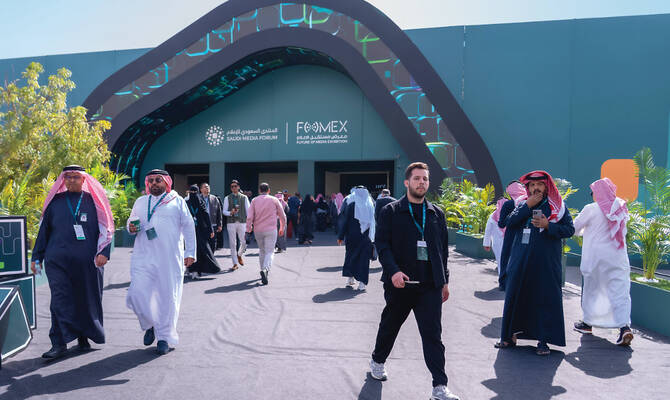
Saudi Media Forum urges ethical coverage as crises redefine Arab journalism
- Raw news without context can mislead audiences and distort credibility, experts say
RIYADH: Arab media was born in crisis and shaped by conflict rather than stability, Malik Al-Rougi, general manager of Thaqafeyah Channel, said during the Saudi Media Forum in Riyadh on Wednesday.
Al-Rougi was speaking during a panel titled “Media and Crises: The Battle for Awareness and the Challenges of Responsible Coverage,” which examined how news organizations across the region navigated credibility and professional standards amid fast-moving regional developments.
“Today, when you build a media organization and invest in it for many years, a single crisis can destroy it,” he said.
Referring to recent events, Al-Rougi said that he had witnessed news channels whose credibility “collapsed overnight.”
“In journalistic and political terms, this is not a process of news production. It is a process of propaganda production,” he said. “The damage caused by such a post … is enormous for an institution in which millions, perhaps billions, have been invested.”
When a media outlet shifts from professionalism and credibility toward “propaganda,” he added, it moves away from its core role.

“A crisis can work for you or against you,” Al-Rougi added. “When, in the heart of a crisis, you demonstrate high credibility and composure, you move light-years ahead. When you fail to adhere to ethical standards, you lose light-years as well.”
Abdullah Al-Assaf, professor of political media studies at Imam Muhammad bin Saud Islamic University, said that in many crises across the Arab world, agendas and directives had often prevailed over professionalism.
“Credibility was buried,” he added.
Hasan Al-Mustafa, writer and researcher at Al-Arabiya channel, said that raw information could be subject to multiple interpretations if not placed within a proper political, security, historical or geographical context.
He added that such an approach was urgently needed during periods of political and security volatility in the Middle East.

When, in the heart of a crisis, you demonstrate high credibility and composure, you move light-years ahead. When you fail to adhere to ethical standards, you lose light-years as well.
Malik Al-Rougi Thaqafeyah, Channel general manager
“This objectivity, or this reliability, is a great responsibility,” Al-Mustafa said. “It is reflected not only in its impact on the audience, but also on the credibility of the content creator.”
Al-Mustafa warned against populism and haste in coverage, saying that they risked deepening crises rather than providing informed public perspectives.
He also said that competition with social media influencers had pushed some traditional outlets to imitate influencer-driven models instead of strengthening their own professional standards.
“Our media has been crisis-driven for decades,” he said, describing much of the region’s coverage as reactive rather than proactive.
During a separate panel titled “The Official Voice in the Digital Age: Strategies of Influence,” speakers discussed how rapid technological and social changes were reshaping the role of institutional spokespersons.
Abdulrahman Alhusain, official spokesperson of the Saudi Ministry of Commerce, said that the role was no longer limited to delivering statements or reacting to events.
“Today, the spokesperson must be the director of the scene — the director of the media narrative,” he said.
Audiences, he added, no longer accept isolated pieces of information unless they were presented within a clear narrative and structure.
“In the past, a spokesperson was expected to deliver formal presentations. Today, what is required is dialogue. The role may once required defense, but now it must involve discussion, the exchange of views, and open, candid conversation aimed at development — regardless of how harsh the criticism may be.”
He said that spokespersons must also be guided by data, digital indicators and artificial intelligence to understand public opinion before speaking.
“You must choose the right timing, the right method and the right vocabulary. You must anticipate a crisis before it happens. That is your role.”
Abdullah Aloraij, general manager of media at the Riyadh Region Municipality, said that the most important skill for a spokesperson today was the ability to analyze and monitor public discourse.
“The challenge is not in transferring words, but in transferring understanding and impact in the right way,” he said.


