‘Much higher, much bigger’: In meeting with Pakistani PM, Putin highlights potential for economic cooperation

1 / 2
Pakistan's Caretaker Prime Minister Anwaar-ul-Haq Kakar (left) shakes hands with the President of Russia, Vladimir Putin, at the 3rd Belt and Road Forum in Beijing, China on October 17, 2023. (Photo courtesy: @PakPMO/X)
2 / 2
The still image taken from a video shows Pakistan's Caretaker Prime Minister Anwaar-ul-Haq Kakar (left) meeting the President of Russia, Vladimir Putin, at the 3rd Belt and Road Forum in Beijing, China on October 17, 2023. (Photo courtesy: Prime Minister's Office)
Short Url
Updated 18 October 2023
Follow

‘Much higher, much bigger’: In meeting with Pakistani PM, Putin highlights potential for economic cooperation

  • Kakar discusses regional security and connectivity, trade, counter-terrorism, with Putin at Belt and Road Forum
  • Says energy deficient Pakistan, nation of 240 million people, ‘huge’ potential market for Russian energy exports

ISLAMABAD: The potential for economic cooperation with Pakistan was “much higher, much bigger” than at present and both nations would discuss steps to enhance ties, Russian President Vladimir Putin said in a meeting with Pakistani Prime Minister Anwaar-ul-Haq Kakar in Beijing, where the two leaders are attending the Belt and Road Forum.

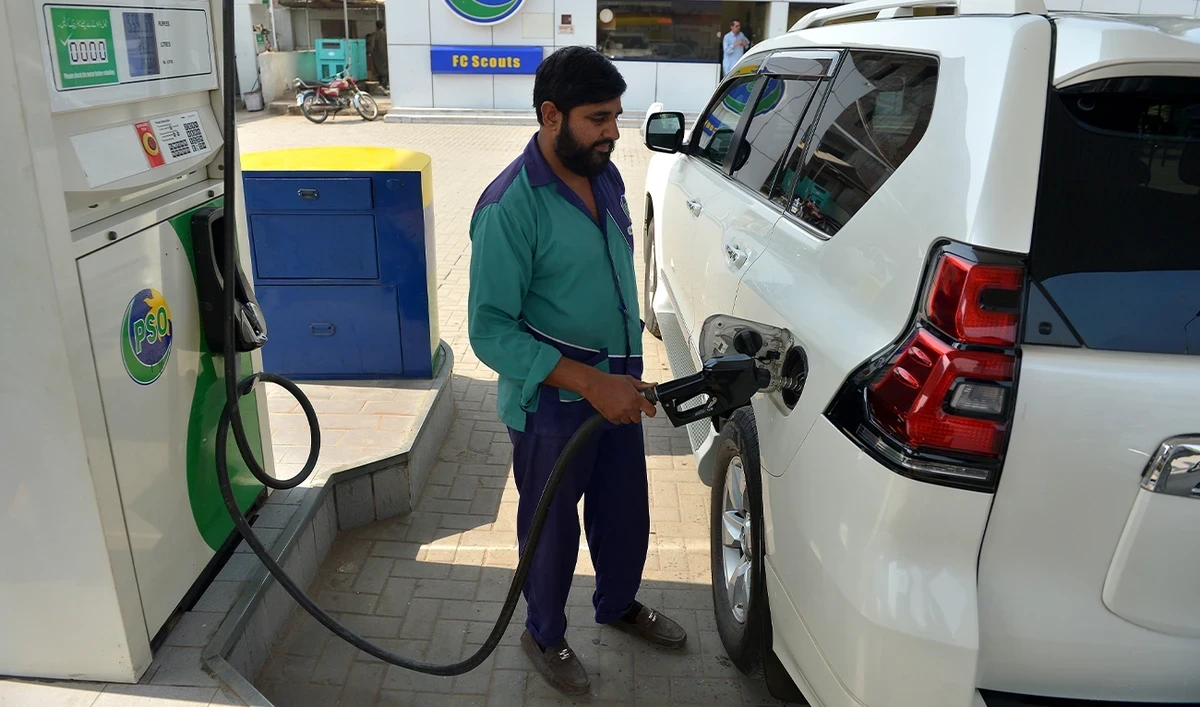
Pakistan and Russia have recently moved to improve ties, with Islamabad receiving first deliveries of Russian crude under a deal struck between the two countries earlier this year. Last month, Pakistan also received its first shipment of liquified petroleum gas from Moscow.

“The trade between our countries has increased and it has reached good levels,” Putin told Kakar on the sidelines of the forum, as the two leaders sat across from each other.

“Our potential of economic cooperation, our potential is much higher, much bigger and we are going to discuss that … I hope we will be able to listen to your colleagues as well and we will exchange our visions of how and what additional steps could be taken to enhance our cooperation in all areas.”

Kakar told Russian president Islamabad and Moscow had a convergence of interests, particularly on the issue of terrorism, which deserved a more “regional and common approach.”

“I think we are the first who would have [face] the implications [of terrrism] so we should be the foremost to take the initiative,” Kakar said, adding that both countries should increase coordination and cooperation in defense, intelligence, and counter-terrorism. 

Kakar told Putin Pakistan was a “huge market” for Russia as an energy-deficient country with a population of 240 million people.

Kakar arrived in Beijing on Monday to attend the Belt and Road Forum, which marks the 10th anniversary of the Belt and Road Initiative (BRI) championed by President Xi Jinping. Prior to his meeting with Putin, Kakar met the presidents of Sri Lanka and Kenya in sideline meetings, as well as other world leaders during a dinner hosted by the Chinese president at the Great Hall of the People.

The BRI is a plan for global infrastructure and energy networks that China launched a decade ago to connect Asia with Africa and Europe through land and maritime routes. But critics see the plan — billed as recreating the ancient Silk Road to boost global trade — as a tool for China to spread its geopolitical and economic influence.

Under the BRI, Beijing has pledged over $60 billion for energy, infrastructure and other projects in Pakistan.
Death toll in Pakistan shopping plaza fire rises to 67, officials say

Updated 22 January 2026
Follow

Death toll in Pakistan shopping plaza fire rises to 67, officials say

  • Rescue teams still searching for damaged Gul Plaza in Karachi where blaze erupted on Saturday, says police surgeon
  • Karachi has a long history of deadly fires, often linked to poor safety standards, weak regulatory enforcement

KARACHI: The death toll from a devastating fire at a shopping plaza in Pakistan’s southern port city of Karachi jumped to 67 on Thursday after police and a hospital official confirmed that the remains of dozens more people had been found.

Police surgeon Dr. Summaiya Syed said rescue teams were still searching the severely damaged Gul Plaza in the Karachi, where the blaze erupted on Saturday.

Most remains were discovered in fragments, making identification extremely difficult, but the deaths of 67 people have been confirmed, she said. Asad Raza, a senior police official in Karachi, also confirmed the death toll. Authorities previously had confirmed 34 deaths.

Family members of the missing have stayed near the destroyed plaza and hospital, even after providing their DNA for testing. Some have tried to enter the building forcibly, criticizing the rescue efforts as too slow.

“They are not conducting the search properly,” said Khair-un-Nisa, pointing toward the rescuers. She stood outside the building in tears, explaining that a relative who had left to go shopping has been missing since the blaze.

Another woman, Saadia Saeed, said her brother has been trapped inside the building since Saturday night, and she does not know what has happened to him.

“I am ready to go inside the plaza to look for him, but police are not allowing me,” she said.

There was no immediate comment from authorities about accusations they have been too slow.

Many relatives of the missing claim more lives could have been saved if the government had acted more swiftly. Authorities have deployed police around the plaza to prevent relatives from entering the unstable structure, while rescuers continue their careful search.

Investigators say the blaze erupted at a time when most shop owners were either closing for the day or had already left. Since then, the Sindh provincial government has said around 70 people were missing after the flames spread rapidly, fueled by goods such as cosmetics, clothing, and plastic items.

The cause of the fire remains under investigation, though police have indicated that a short circuit may have triggered the blaze.

Karachi has a long history of deadly fires, often linked to poor safety standards, weak regulatory enforcement, and illegal construction.

In November 2023, a shopping mall fire killed 10 people and injured 22. One of Pakistan’s deadliest industrial disasters occurred in 2012, when a garment factory fire killed at least 260 people.