

Saudi Arabia, Belgium to document first archaeology expedition during King Abdulaziz’s reign

The explorers covered a distance of over 5,000 kilometers across the western, southern, and central regions of the Kingdom. (Saudi Heritage Commission photo)
Short Url
Updated 14 October 2023
Follow

Saudi Arabia, Belgium to document first archaeology expedition during King Abdulaziz’s reign

  • Book and documentary film to be released on mission by explorers from 1951-1952
  • Abdullah Philby led the team which included Gonzague Rickmans, Jacques Rickmans and Philippe Lippens

MAKKAH: Saudi Arabia’s Heritage Authority is joining forces with the King Abdulaziz Foundation for Research and Archives and two Belgium universities — KU Leuven and UCLouvain — to publish a book and produce a documentary film commemorating an archaeological expedition conducted during the reign of King Abdulaziz.

The project dubbed “Documenting the Scientific Content of the Rickmans Mission,” seeks to translate French handwritten texts into Arabic, English and Dutch and digitize the documents for wider dissemination. The book will be published in all the aforementioned languages.

The documentary film titled “In the Footsteps of Rickmans,” will retrace the route of the expedition and feature a team of experts from both countries. The journey will start in Jeddah, pass through several key locations, and end in Riyadh. 

The 1951 to 1952 four-month expedition included Gonzague Rickmans, a Semitic languages professor; Philippe Lippens, a specialist in ancient art and inscriptions; Jacques Rickmans, who was renowned for his expertise in comparative linguistics, history of the Hamiri and ancient South Arabian and Sabaean languages; and Abdullah Philby, the explorer.
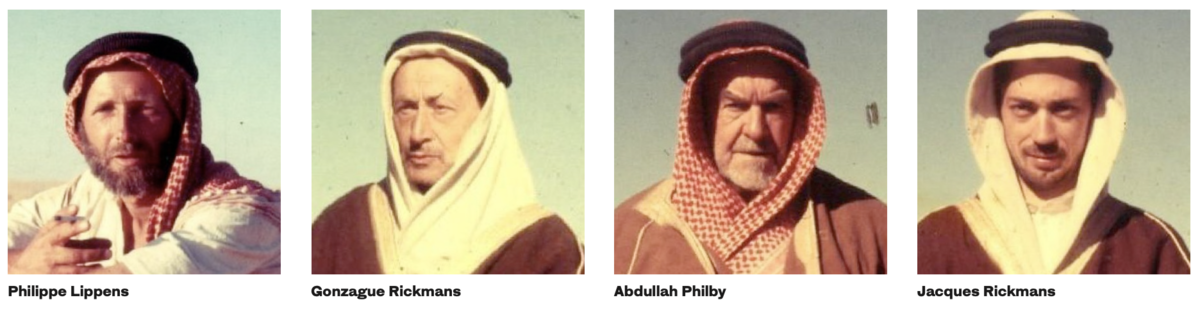
The explorers covered a distance of over 5,000 km across the western, southern, and central regions of the Kingdom. Each phase of the expedition was meticulously documented. The team successfully cataloged approximately 12,000 inscriptions, despite the challenges posed by the rugged terrain in several regions they traversed.

Dr. Suleiman Al-Thaqafi, professor of ancient Arabic script and cultural advisor at the King Faisal Center, highlighted the cultural significance of the exploration.

He underscored the stability and security that prevailed in Saudi Arabia during King Abdulaziz’s era. “The fact that Belgian researchers, led by Abdullah Philby, undertook such an extensive journey is a testament to the nation’s safety and prosperity at that time,” he said.

The mission’s importance extends beyond archaeology, as the explorers documented Saudi Arabian society, geography, clothing, traditions, and daily life. This has formed a rich trove of material for researchers.

Al-Thaqafi explained that Jacques Ryckmans is considered a pioneer in studies on the South Arabian script, and that he authored the first book on it.

“As for Gonzague Rickmans, he is among the leading experts in the field of ancient Arabic scripts. His research and studies stemming from this expedition are numerous. He supervised my studies when I was a student at the University of Leuven in Belgium.

“He is a distinguished personality and a prominent scholar. Therefore, this project is of great importance as it sheds light on the historical and archaeological depth of the Kingdom of Saudi Arabia and the role of its citizens in building its cultural heritage — a treasure that we should hold in high regard,” he said.

Alia Al-Fayadh, a lecturer in the history department at King Saud University, emphasized Saudi Arabia’s longstanding appeal to Western researchers because of its archaeological treasures and rich cultural diversity.

“The Belgian expedition not only inventoried ancient inscriptions and rock art but also recorded various aspects of Saudi society and its regions in the 1950s,” she said.


Makkah’s urban shift enhances the city’s quality of life

Updated 08 February 2026
Follow

Makkah’s urban shift enhances the city’s quality of life

  • By harmonizing its religious heritage with modern urban development, Makkah is proving that a city can honor its past while vigorously embracing the future

MAKKAH: Islam’s holiest city is currently witnessing a qualitative urban shift, one that seamlessly blends its profound spiritual sanctity with a modern, vibrant lifestyle. By integrating cultural, educational, and entertainment initiatives, Makkah is redefining the visitor experience and significantly enhancing the quality of life for its residents, directly supporting the goals of Saudi Vision 2030.

The city’s transformation was recently highlighted by the success of the Makkah winter season. The event attracted approximately 400,000 visitors — over 60% of whom were locals — demonstrating a strong domestic demand for high-quality public spaces.

The season revitalized community interaction, driving a 35% increase in visits to recreational sites and creating more than 1,200 temporary jobs for the local workforce.

Central to this urban renaissance is the Hira Cultural District. Since opening its doors in January 2023 near the historic Mount Hira, the district has become a definitive landmark that bridges Islamic history with contemporary identity.

Makkah’s Hira Cultural District has become a definitive landmark that bridges Islamic history with contemporary identity. (SPA photo)

Far from being a static monument, the district has cultivated a thriving creative economy. Its craftsmanship program, which features over 100 artisans, has generated up to SAR 3 million in sales and attracted 130,000 visitors to live workshops. These interactive spaces allow visitors to engage directly with the region’s heritage, moving beyond passive observation to active participation.

A living legacy 

The shift extends to Makkah’s broader ecosystem of museums and cultural sites, which are now positioned as key pillars of cultural tourism. Facilities like the Revelation Exhibition use cutting-edge technology and multilingual content to narrate the story of the Holy Quran’s revelation, offering an immersive experience that complements the spiritual journey of pilgrims.

These efforts align with the “Makkah: A Living Legacy” campaign, which seeks to document the city’s historical narrative and preserve its collective memory. Recent months have seen a surge in educational workshops for university students and tour guides, ensuring that the human element of Makkah’s history is conveyed with accuracy and depth.

City’s transformation recently highlighted by the success of the Makkah winter season. (SPA photo)
 

Economic and social impact 

The results of this integrated approach are tangible. Specialized museums and restored historic sites now attract up to 1.6 million annual visitors. Crucially, this cultural enrichment is encouraging pilgrims to linger longer, increasing the average duration of stay by 18%.

By harmonizing its religious heritage with modern urban development, Makkah is proving that a city can honor its past while vigorously embracing the future, offering a holistic experience that nourishes both the soul and the community.