

Oil Updates — crude falls further on US stock build, easing supply concerns

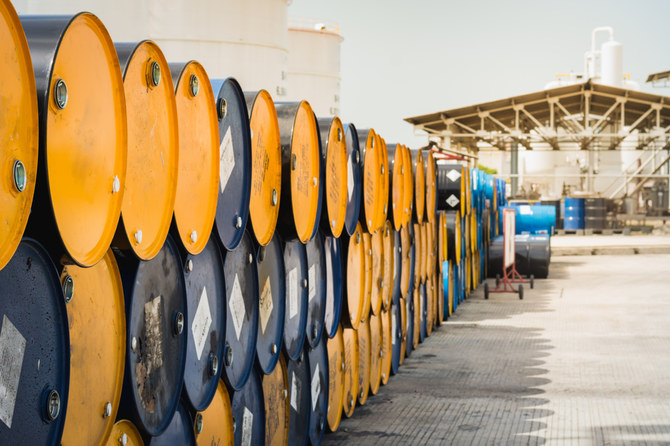
Brent futures declined by 38 cents, or 0.44 percent, to $85.44 a barrel at 9:00 a.m. Saudi time. Shutterstock.
Short Url
Updated 12 October 2023
Follow

Oil Updates — crude falls further on US stock build, easing supply concerns

SINGAPORE: Oil prices fell for a third day on Thursday, dragged down by a larger-than-expected crude and gasoline stockbuild in the US and easing supply concerns, according to Reuters.

Brent futures declined by 38 cents, or 0.44 percent, to $85.44 a barrel at 9:00 a.m. Saudi time, while US West Texas Intermediate crude slipped 52 cents, or 0.62 percent, to $82.97 a barrel.

Both benchmarks have given back most early-week gains after falling more than 2 percent in the previous session.

US crude oil stockpiles swelled by about 12.9 million barrels, according to market sources citing American Petroleum Institute figures on Wednesday. 

This was much higher than the 500,000-barrel gain expected by analysts in a Reuters poll.

“Unlikely to help sentiment this morning are API inventory numbers ... Lower refinery run rates due to maintenance likely contributed to this build,” said ING analysts in a client note.

Gasoline inventories also rose by 3.6 million barrels, the data showed, a stark contrast from the 800,000-barrel drop expected by analysts and continued to stoke worries of slowing fuel demand in the US

“Fuel prices may be closer to consumers’ pain threshold than inflation-adjusted prices might suggest. There are already signs that consumers have responded by cutting back on fuel consumption,” JP Morgan analysts said in a client note.

“In PADD 5, of which California is the biggest consumer, we estimate gasoline demand dropped 100,000 barrels per day between June and September, to a seven-month low of 1.46 million barrels per day,” they added.

Markets will be awaiting further inventory data cues from the US Energy Information Administration due later in the day at 3pm GMT.

Elsewhere, market concerns on the supply situation in the Middle East continued to ease, putting downside pressure on prices.

“Crude oil extended losses on signs the impact of the Israel-Hamas war on the oil market will be limited,” ANZ analysts said in a client note.

ING analysts also said: “The risk premium continues to erode with the conflict largely contained to Israel and Hamas.”

Expectations by the US EIA of global oil inventories falling further in the second half of 2023, however, limited price weakness.

The lower inventories, which are forecast to keep global oil supply below consumption, are likely to boost oil prices, the EIA said in a monthly report. 


G7 countries to release oil reserves in global push to tackle Iran war energy price surge 

Updated 8 sec ago
Follow

G7 countries to release oil reserves in global push to tackle Iran war energy price surge 

  • IEA expected to recommend the largest oil reserve release in the agency’s history

RIYADH: Germany, the US, Japan and Austria will release part of their oil reserves after the International Energy Agency recommended the release of 400 million barrels of oil ‌from stockpiles, the largest ‌such move in IEA ​history.

Germany’s Economy ⁠Minister ​Katherina Reiche ⁠confirmed on Wednesday the government plans to limit petrol price increases at filling stations to once a day and to introduce more stringent antitrust regulation of the sector.

She did not ⁠give an exact timing for ‌those measures, but added that ‌the US and ​Japan would be the ‌largest contributors to the release of the ‌oil reserves.

The announcements did not stop oil prices rising, with Brent crude up 3.26 percent to $90.66 a barrel at 4:29 p.m Saudi time, and West Texas Intermediate up 3.12 percent to $86.05. Both were some way below the $119 a barrel seen earlier in the week.

“The situation regarding oil supplies is tense, as the Strait of Hormuz is currently virtually impassable,” Reiche said.

“We will comply with this request and ‌contribute our share, because Germany stands behind the IEA’s most important principle: mutual ⁠solidarity,” Reiche ⁠said about the IEA’s request.

According to a statement by Reiche’s ministry, Germany will contribute 2.64 million tonnes of oil. This corresponds to 19.51 million barrels.

Reiche stressed there was no supply shortage in the country, which has a legally mandated reserve of oil and oil products intended to cover 90 days’ demand.

The IEA’s move comes as countries are grappling with ​soaring crude prices amid ​the US-Israeli war with Iran. 

Austrian Economy Minister Wolfgang Hattmannsdorfer said his country was releasing part of the emergency oil reserve and extending the national strategic gas reserve, adding: “One thing is clear: in a crisis, there must be no crisis winners at the expense of commuters and businesses.”

Acting ahead of the IEA move, G7 ​member Japan announced plans to release 15 days' worth of ‌private-sector oil reserves and one month's worth of state oil reserves.

“Rather than wait for formal IEA approval ‌of a coordinated international reserve release, Japan will act first to ease global energy market supply and demand, releasing reserves as early as the 16th of this month,” Prime Minister Sanae Takaichi said in a broadcast statement.