

Israel running YouTube ad to build war support

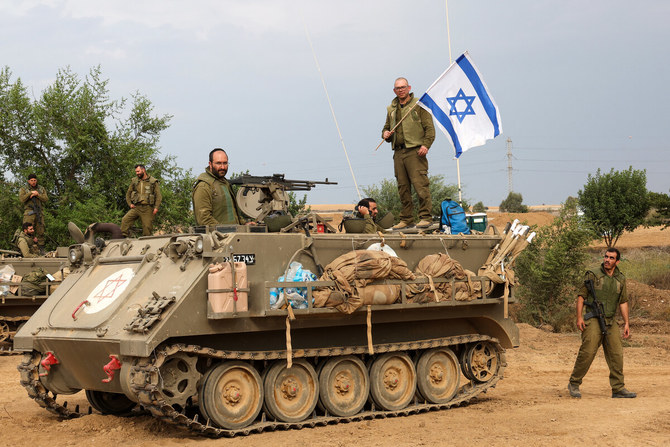
Users argued the clip violates the platform’s policies on hate speech and violence. (AFP/File)
Short Url
Updated 09 October 2023
Follow

Israel running YouTube ad to build war support

  • Clip denouncing Hamas’ ‘barbaric terrorists’ sparks debate over propaganda

LONDON: Israel is running a YouTube advertisement to build international support for its war with Hamas, Al Arabiya reported on Monday.

The ad, titled “Hamas Declared War Against Israel,” was published by the Israeli Ministry of Foreign Affairs using a simple voiceover with text in English, asking for support from the audience.

It warned that Tel Aviv will take all necessary measures to protect its citizens against “barbaric terrorists.”

The ad has sparked a debate on social media, with some users calling it “propaganda” and others defending Israel’s right to self-defense.

“Israel launched a bizarre propaganda campaign to rally public support for its war against Palestine following yesterday’s bloody offensive,” said one account.


Some have also criticized YouTube for approving the ad, arguing that the clip violates the platform’s policies on hate speech and violence.

One user said that the ad was “funded by the state of Israel and clearly intended to justify a major escalation of the war to a Western audience.”

Another asked: “How is it not getting banned?”


On Saturday, conflict erupted between Israel and Hamas after the Palestinian group launched a major strike from the Gaza Strip.

Israeli Prime Minister Benjamin Netanyahu responded by declaring his country at war with Hamas and calling up 300,000 army reservists in preparation for a blockade of Gaza.

Since the violence erupted, more than 1,000 people have died, including foreign nationals, with hundreds held hostage and many thousands reported to have been displaced.


Saudi Media Forum urges ethical coverage as crises redefine Arab journalism

Updated 5 sec ago
Follow

Saudi Media Forum urges ethical coverage as crises redefine Arab journalism

  • Raw news without context can mislead audiences and distort credibility, experts say

RIYADH: Arab media was born in crisis and shaped by conflict rather than stability, Malik Al-Rougi, general manager of Thaqafeyah Channel, said during the Saudi Media Forum in Riyadh on Wednesday.

Al-Rougi was speaking during a panel titled “Media and Crises: The Battle for Awareness and the Challenges of Responsible Coverage,” which examined how news organizations across the region navigated credibility and professional standards amid fast-moving regional developments.

“Today, when you build a media organization and invest in it for many years, a single crisis can destroy it,” he said.

Referring to recent events, Al-Rougi said that he had witnessed news channels whose credibility “collapsed overnight.”

“In journalistic and political terms, this is not a process of news production. It is a process of propaganda production,” he said. “The damage caused by such a post … is enormous for an institution in which millions, perhaps billions, have been invested.”

When a media outlet shifts from professionalism and credibility toward “propaganda,” he added, it moves away from its core role. 

Saudi media leaders, journalists, and experts gathered at the Saudi Media Forum in Riyadh to discuss credibility, ethics, and innovation. (AN photo by Huda Bashatah/Supplied)

“A crisis can work for you or against you,” Al-Rougi added. “When, in the heart of a crisis, you demonstrate high credibility and composure, you move light-years ahead. When you fail to adhere to ethical standards, you lose light-years as well.”

Abdullah Al-Assaf, professor of political media studies at Imam Muhammad bin Saud Islamic University, said that in many crises across the Arab world, agendas and directives had often prevailed over professionalism.

“Credibility was buried,” he added.

Hasan Al-Mustafa, writer and researcher at Al-Arabiya channel, said that raw information could be subject to multiple interpretations if not placed within a proper political, security, historical or geographical context.

He added that such an approach was urgently needed during periods of political and security volatility in the Middle East. 

When, in the heart of a crisis, you demonstrate high credibility and composure, you move light-years ahead. When you fail to adhere to ethical standards, you lose light-years as well.

Malik Al-Rougi Thaqafeyah, Channel general manager

“This objectivity, or this reliability, is a great responsibility,” Al-Mustafa said. “It is reflected not only in its impact on the audience, but also on the credibility of the content creator.”

Al-Mustafa warned against populism and haste in coverage, saying that they risked deepening crises rather than providing informed public perspectives.

He also said that competition with social media influencers had pushed some traditional outlets to imitate influencer-driven models instead of strengthening their own professional standards.

“Our media has been crisis-driven for decades,” he said, describing much of the region’s coverage as reactive rather than proactive.

During a separate panel titled “The Official Voice in the Digital Age: Strategies of Influence,” speakers discussed how rapid technological and social changes were reshaping the role of institutional spokespersons.

Abdulrahman Alhusain, official spokesperson of the Saudi Ministry of Commerce, said that the role was no longer limited to delivering statements or reacting to events.

“Today, the spokesperson must be the director of the scene — the director of the media narrative,” he said.

Audiences, he added, no longer accept isolated pieces of information unless they were presented within a clear narrative and structure.

“In the past, a spokesperson was expected to deliver formal presentations. Today, what is required is dialogue. The role may once required defense, but now it must involve discussion, the exchange of views, and open, candid conversation aimed at development — regardless of how harsh the criticism may be.”

He said that spokespersons must also be guided by data, digital indicators and artificial intelligence to understand public opinion before speaking.

“You must choose the right timing, the right method and the right vocabulary. You must anticipate a crisis before it happens. That is your role.”

Abdullah Aloraij, general manager of media at the Riyadh Region Municipality, said that the most important skill for a spokesperson today was the ability to analyze and monitor public discourse.

“The challenge is not in transferring words, but in transferring understanding and impact in the right way,” he said.