JERUSALEM: Three Hezbollah members were killed in Israeli strikes on Lebanon Monday, the Iran-backed group said, as tensions surged after Palestinian militants tried to infiltrate into Israel from Lebanon.
Israel’s army said its soldiers had “killed a number of armed suspects” who had crossed the frontier from Lebanon and that its helicopters were striking the area.
The escalation on Israel’s northern border with Lebanon comes two days after Hamas militants launched a massive attack on Israel’s southern flank from the blockaded Gaza Strip.
Hezbollah issued three separate statements confirming the death of its members, all of them “martyred as a result of the Zionist aggression on south Lebanon Monday afternoon,” the group said.
A Hezbollah source had earlier told AFP a member was killed “in an Israeli strike on a watchtower in south Lebanon” near Aita Al-Shaab village, with a spokesperson for the group confirming the death.
The Palestinian Islamic Jihad group’s armed wing, which claims to be fighting Israel alongside Hamas, said earlier it was behind a thwarted bid to infiltrate Israel from Lebanon.
“The Al-Quds Brigades claim responsibility for the afternoon operation on the south Lebanon border,” the group said in a statement.
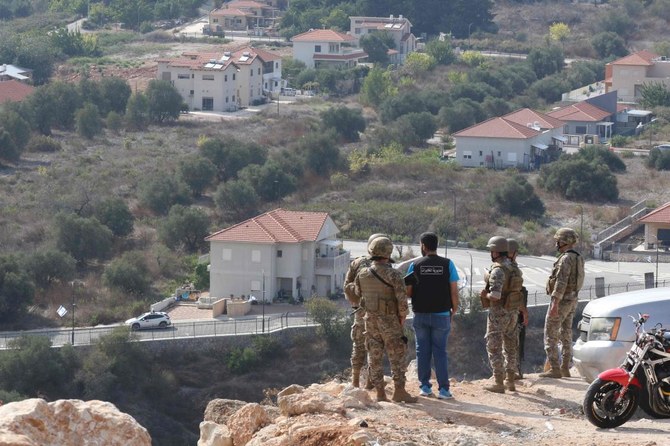
The mayor of the Lebanese border village of Dhayra said Israel was shelling the area.
“Fields on the outskirts of the village were subjected to intense Israeli artillery shelling, preceded by intermittent gunfire,” the mayor, Abdullah Al-Gharib, told AFP.
Hezbollah, whose arch-foe is Israel, had earlier denied any involvement in the border clashes.
An AFP photographer at the scene said he saw dozens of Lebanese and Syrian families fleeing as the outskirts of Aita Al-Shaab village came under heavy bombardment.
The Lebanese army in a statement said the periphery of “Dhayra, Aita Al-Shaab and other border areas were subjected to air and artillery bombardment by the Israeli enemy.”
It urged citizens “to take the utmost caution” and avoid border areas.
Andrea Tenenti, the spokesperson for the United Nations Interim Force in Lebanon (UNIFIL), which acts as a buffer between Lebanon and Israel, said UNIFIL commander Aroldo Lazaro was “in contact with the involved parties.”
He said Lazaro had urged them to exercise “maximum restraint” to prevent “further escalation and loss of life.”
Lebanon’s state-run National News Agency said Israel had expanded bombardment on the same border area with “enemy warplanes intensifying their flights and launching incendiary bombs.”
The clash comes a day after Hezbollah said it had fired artillery shells and guided missiles at Israel, “in solidarity” with attacks launched from Gaza by its ally Hamas.
Israel’s army said it hit back on Sunday with artillery into southern Lebanon.
In 2006 Hezbollah and Israel fought a 34-day war that left more than 1,200 dead in Lebanon, mostly civilians, and 160 in Israel, mostly soldiers. The two countries remain technically at war.
Israel has warned Hezbollah against involvement in the war with Gaza.
At least 800 people in Israel and 560 in Gaza have been killed since the conflict erupted on Saturday, according to tolls from officials on both sides.

Hezbollah strikes back after Israel kills ‘number of armed suspects’ who infiltrated from Lebanon
Short Url
https://arab.news/r3g8z
Hezbollah strikes back after Israel kills ‘number of armed suspects’ who infiltrated from Lebanon
Hamas official says group in final stage of choosing new chief
CAIRO: A senior Hamas official told AFP on Sunday that the Palestinian movement was in the final phase of selecting a new leader, with two prominent figures competing for the position.
Hamas recently completed the formation of a new Shoura Council, a consultative body largely composed of religious scholars, as well as a new political bureau.
Members of the council are elected every four years by representatives from Hamas’s three branches: the Gaza Strip, the occupied West Bank and the movement’s external leadership.
Hamas prisoners in Israeli jails are also eligible to vote.
The council subsequently elects the political bureau, which in turn selects the head of the movement.
“The movement has completed its internal elections in the three regions and has reached the final stage of selecting the head of the political bureau,” the official said, speaking on condition of anonymity as he was not authorized to speak publicly.
He added that the race for the group’s leadership is now between Khaled Meshaal and Khalil Al-Hayya.
A second Hamas source confirmed the development within the organization, which fought a devastating war with Israel following its October 7, 2023 attack.
Hayya, 65, a Gaza native and Hamas’s chief negotiator in ceasefire talks, has held senior roles since at least 2006, according to the US-based NGO the Counter Extremism Project (CEP).
Meshaal, who led the political bureau from 2004 to 2017, has never lived in Gaza. He was born in the West Bank in 1956.
He joined Hamas in Kuwait and later lived in Jordan, Syria and Qatar. The CEP says he oversaw Hamas’s evolution into a political-military hybrid.
He currently heads the movement’s diaspora office.
Last month, a Hamas source told AFP that Hayya enjoys backing from the group’s armed wing, the Ezzedine Al-Qassem Brigades.
After Israel killed former Hamas leader Ismail Haniyeh in Tehran in July 2024, the group chose its then-Gaza chief Yahya Sinwar as his successor.
Israel accused Sinwar of masterminding the October 7 attack.
He too was killed by Israeli forces in the southern Gaza city of Rafah, three months after Haniyeh’s assassination.
Hamas then opted for an interim five-member leadership committee based in Qatar, postponing the appointment of a single leader until elections, given the risk of the new chief being targeted by Israel.
Hamas recently completed the formation of a new Shoura Council, a consultative body largely composed of religious scholars, as well as a new political bureau.
Members of the council are elected every four years by representatives from Hamas’s three branches: the Gaza Strip, the occupied West Bank and the movement’s external leadership.
Hamas prisoners in Israeli jails are also eligible to vote.
The council subsequently elects the political bureau, which in turn selects the head of the movement.
“The movement has completed its internal elections in the three regions and has reached the final stage of selecting the head of the political bureau,” the official said, speaking on condition of anonymity as he was not authorized to speak publicly.
He added that the race for the group’s leadership is now between Khaled Meshaal and Khalil Al-Hayya.
A second Hamas source confirmed the development within the organization, which fought a devastating war with Israel following its October 7, 2023 attack.
Hayya, 65, a Gaza native and Hamas’s chief negotiator in ceasefire talks, has held senior roles since at least 2006, according to the US-based NGO the Counter Extremism Project (CEP).
Meshaal, who led the political bureau from 2004 to 2017, has never lived in Gaza. He was born in the West Bank in 1956.
He joined Hamas in Kuwait and later lived in Jordan, Syria and Qatar. The CEP says he oversaw Hamas’s evolution into a political-military hybrid.
He currently heads the movement’s diaspora office.
Last month, a Hamas source told AFP that Hayya enjoys backing from the group’s armed wing, the Ezzedine Al-Qassem Brigades.
After Israel killed former Hamas leader Ismail Haniyeh in Tehran in July 2024, the group chose its then-Gaza chief Yahya Sinwar as his successor.
Israel accused Sinwar of masterminding the October 7 attack.
He too was killed by Israeli forces in the southern Gaza city of Rafah, three months after Haniyeh’s assassination.
Hamas then opted for an interim five-member leadership committee based in Qatar, postponing the appointment of a single leader until elections, given the risk of the new chief being targeted by Israel.
© 2026 SAUDI RESEARCH & PUBLISHING COMPANY, All Rights Reserved And subject to Terms of Use Agreement.