TEHRAN: Iran on Monday rejected as unfounded allegations it had a role in the massive assault on Israel by the Palestinian Islamist group Hamas.
“The accusations linked to an Iranian role... are based on political reasons,” foreign ministry spokesman Nasser Kanani told reporters.
The Islamic republic, he said, does not intervene “in the decision-making of other countries, including Palestine.”
Palestinian militants from the Iran-backed Islamist group Hamas, which controls the Gaza strip, penetrated Israel at dawn on Saturday under the cover of a massive rocket barrage.
More than 1,100 people have been killed in the conflict so far, with Israel reporting over 700 dead and the Palestinians putting their toll at 430.
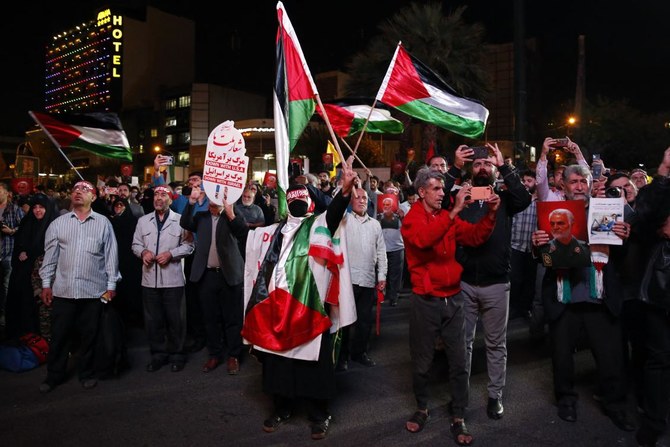
Iran, which does not recognize Israel and has made support for the Palestinian cause a centerpiece of its foreign policy since the 1979 Islamic Revolution, was one of the first countries to hail the Hamas assault.
The Palestinians had “the necessary capacity and will to defend their nation and recover their rights” without any help from Tehran, Kanani said.
“Talking about an Iranian role aims at turning public opinion (away from the facts) and at justifying the potential future actions” of Israel, the spokesman added.
Iran’s permanent mission to the United Nations also denied allegations the Islamic republic had any role in the Hamas attack, in a statement issued overnight.
It came after the Wall Street Journal reported that “Iranian security officials helped plan Hamas’s Saturday surprise attack on Israel and gave the green light for the assault at a meeting in Beirut last Monday,” citing senior members of Hamas and Lebanon’s Iran-backed Hezbollah movement.
On Sunday President Ebrahim Raisi said Iran supported the Palestinians’ right to self-defense and warned Israel must be held accountable for endangering the region.
Raisi — who has spoken with the leaders of Hamas and the Gaza-based Islamic Jihad group since the Hamas attack — also urged Muslim governments to “support the Palestinian nation.”
A US official said Sunday it was too soon to say if Iran was “directly” involved in the Hamas attack, adding however that there was little doubt that Hamas was “financed, equipped and armed” by countries including Iran.


![]()

Iran denies it had role in Hamas attack on Israel
Short Url
https://arab.news/vbhwf
Iran denies it had role in Hamas attack on Israel
- Foreign ministry spokesman: Islamic republic does not intervene ‘in the decision-making of other countries, including Palestine’


Latest updates


© 2026 SAUDI RESEARCH & PUBLISHING COMPANY, All Rights Reserved And subject to Terms of Use Agreement.