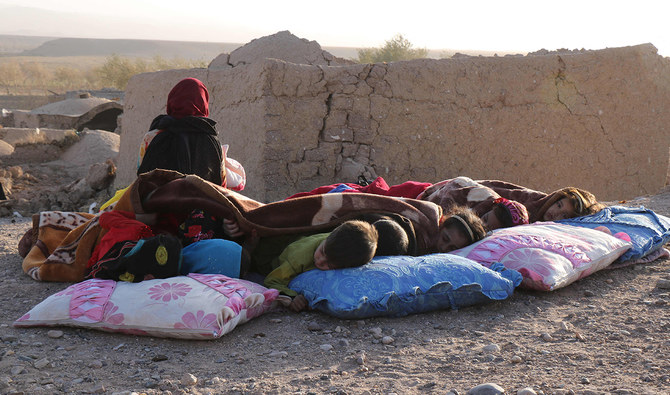
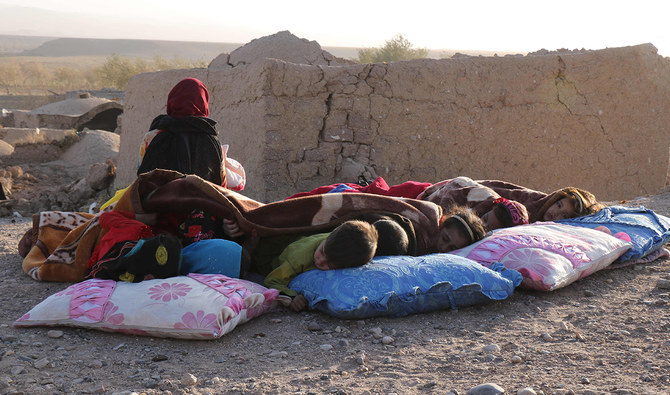
ISLAMABAD: Death toll from strong earthquakes that shook western Afghanistan rises to 2,000, said a Taliban spokesman, in one of the deadliest earthquakes to strike the country in two decades.
A powerful magnitude-6.3 earthquake followed by strong aftershocks killed dozens of people in western Afghanistan on Saturday, the country’s national disaster authority said.
Abdul Wahid Rayan, spokesman of the Ministry of Information and Culture, said the death toll from the earthquake in Herat is higher than originally reported. About six villages have been destroyed, and hundreds of civilians have been buried under the debris, he said while calling for urgent help.
The United Nations gave a preliminary figure of 320 dead, but later said the figure was still being verified. Local authorities gave an estimate of 100 people killed and 500 injured, according to the same update from the UN Office for the Coordination of Humanitarian Affairs.
The update also said 465 houses had been reported destroyed and a further 135 were damaged.
“Partners and local authorities anticipate the number of casualties to increase as search and rescue efforts continue amid reports that some people may be trapped under collapsed buildings,” the UN said.
Disaster authority spokesperson Mohammad Abdullah Jan said four villages in the Zenda Jan district in Herat province bore the brunt of the quake and aftershocks.
The United States Geological Survey said the quake’s epicenter was about 40 kilometers (25 miles) northwest of Herat city. It was followed by three very strong aftershocks, measuring magnitude 6.3, 5.9 and 5.5, as well as lesser shocks.
At least five strong tremors struck the city around noon, Herat city resident Abdul Shakor Samadi said.
“All people are out of their homes,” Samadi said. “Houses, offices and shops are all empty and there are fears of more earthquakes. My family and I were inside our home, I felt the quake.” His family began shouting and ran outside, afraid to return indoors.
The World Health Organization in Afghanistan said it dispatched 12 ambulance cars to Zenda Jan to evacuate casualties to hospitals.
“As deaths & casualties from the earthquake continue to be reported, teams are in hospitals assisting treatment of wounded & assessing additional needs,” the UN agency said on X, formerly known as Twitter. “WHO-supported ambulances are transporting those affected, most of them women and children.”
Telephone connections went down in Herat, making it hard to get details from affected areas. Videos on social media showed hundreds of people in the streets outside their homes and offices in Herat city.
Herat province borders Iran. The quake also was felt in the nearby Afghan provinces of Farah and Badghis, according to local media reports.
Abdul Ghani Baradar, the Taliban-appointed deputy prime minister for economic affairs, expressed his condolences to the dead and injured in Herat and Badghis.
The Taliban urged local organizations to reach earthquake-hit areas as soon as possible to help take the injured to hospital, provide shelter for the homeless, and deliver food to survivors. They said security agencies should use all their resources and facilities to rescue people trapped under debris.
“We ask our wealthy compatriots to give any possible cooperation and help to our afflicted brothers,” the Taliban said on X.
In June 2022, a powerful earthquake struck a rugged, mountainous region of eastern Afghanistan, flattening stone and mud-brick homes. The quake killed at least 1,000 people and injuring about 1,500.


![]()
Afghanistan’s death toll from powerful earthquake surges to 2,000
Short Url
https://arab.news/w4jhv
Afghanistan’s death toll from powerful earthquake surges to 2,000
- A powerful magnitude-6.3 quake, followed by aftershocks, shook Afghanistan on Saturday
- Afghanistan’s information minister says about six villages have been destroyed in the disaster
Latest updates


Recommended


© 2026 SAUDI RESEARCH & PUBLISHING COMPANY, All Rights Reserved And subject to Terms of Use Agreement.